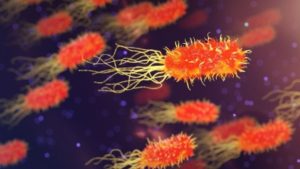
The World Health Organization has declared that an outbreak of mpox, a viral infection that spreads through close contact, represents a global health emergency for the second time in two years.
Here’s what that means.
WHAT IS A GLOBAL HEALTH EMERGENCY?
A “public health emergency of international concern” or PHEIC is WHO’s highest form of alert. It is announced when diseases are spreading in new or unusual ways, and is aimed at galvanising international co-operation and funding to tackle an outbreak. WHO’s declaration follows a similar label from the Africa Centres for Disease Control and Prevention earlier this week.
WHY IS MPOX AN EMERGENCY AGAIN?
Two years ago, WHO declared mpox was an emergency when a form of the disease began to spread globally, largely among men who have sex with men. That outbreak was brought under control after behaviour change and safe sex practices, plus vaccines, helped people at risk protect themselves in many countries.
But mpox has been a public health problem in parts of Africa for decades. The first ever human case was in Congo in 1970, and it has had outbreaks ever since.
The current outbreak, Congo’s worst ever, has seen 27,000 cases and more than 1,100 deaths since January 2023, largely among children. The disease causes flu-like symptoms and pus-filled lesions, and is usually mild but can kill. Children, pregnant women and people with weakened immune systems, such as those with HIV, are all at higher risk of complications.
Two strains of mpox are now spreading in the country: the endemic form of the virus as well as a new offshoot.
This new form of the virus has triggered global concern because it seems to be spreading quickly and little is known about it. It is transmitting through sexual contact as well as other close contact – such as among children in displacement camps in parts of Congo – and has now moved from eastern Congo to Rwanda, Uganda, Burundi and Kenya.
WHAT HAPPENS NOW?
Scientists hope that the emergency declarations will speed up efforts to get more medical tools and funding to Congo to help the authorities there tackle the outbreak. Better surveillance is needed to study the virus and help stop the spread.
But in 2022, a WHO appeal for $34 million to fight mpox got no take-up from donors, and there was huge inequity in who had access to vaccine doses. African countries had no access to the two shots used in the global outbreak, made by Bavarian Nordic and KM Biologics. Two years later, that remains the case, although there are efforts to change that, WHO said on Wednesday as it appealed for dose donations from countries with stockpiles. Africa CDC also said it has a plan to secure doses, without elaborating further, but stocks are currently limited.
HOW WORRIED SHOULD I BE?
Mpox is a significant health problem that is killing some of the most vulnerable people in the world, including children, and a form of it is possibly spreading in new ways and in new parts of Africa.
But it is not COVID-19. So far, there is no evidence that it spreads through the air easily like COVID, and there are tools that are proven to work to stop the spread and help those at risk.
The challenge now, which the emergency declarations aim to highlight, is making sure those tools reach those who need them most, in Congo and neighbouring countries.
(Reuters)