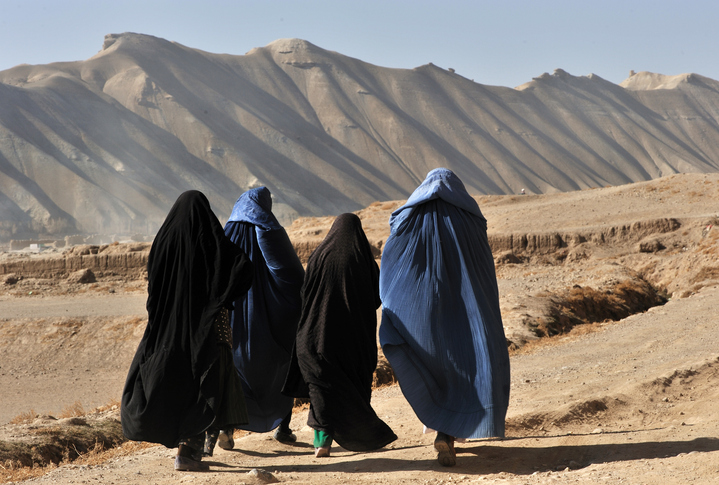
Restrictions imposed by the Taliban are jeopardising the lives of women and their children who are sometimes denied emergency treatment, a U.N. human rights expert said on Friday.
Regulations require sick or injured women to adhere to a dress code, be accompanied by a male guardian and be treated by male medics, Special Rapporteur on Afghanistan Richard Bennett told a press briefing.
Bennett said women were frequently denied ambulance services without a male guardian.
In one instance described in his report submitted to the U.N. Human Rights council this week, a woman was left to give birth on her own at the hospital gate since she was unaccompanied. Another woman lost her four-year-old son since she could not travel alone with him to a hospital.
“The Taliban’s restrictions must be reversed, otherwise they will be killing people,” Bennett told a press conference in Geneva.
“These policies are not isolated measures. They form an institutionalised system of gender discrimination that denies women and girls autonomy over their own bodies, health, and futures,” he said.
FEWER FEMALE MEDICS UNDER TALIBAN
Bennett said he shared his report with the Taliban authorities and requested input but did not receive a reply. The Taliban says it respects women’s rights in line with its interpretation of Islamic law.
The Taliban has restricted women’s movements and barred girls from education beyond primary school since coming back to power in 2021, via a series of morality laws that also limit expression and employment.
As of last year, around a quarter of Afghanistan’s medical workers were women. But a ban on their medical education has shut down the pipeline meaning that fewer will be available in future to treat female patients according to gender segregation policies, Bennett said.
“It’s a completely unjustifiable policy. It puts the entire health system in jeopardy, and unless reversed, it will lead to unnecessary suffering, illness and death,” he said.
Suraya Dalil, a former health minister of Afghanistan, said at the same press briefing that she was particularly worried about growing cases of deaths in childbirth.
“Unfortunately, we expect higher mortality – maternal mortality (and) infant mortality – in the coming years because of the fact that the health workforce are systematically restricted,” she said.
(REUTERS)