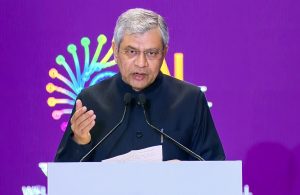









A high-level workshop on the implementation of the SHANTI Act, 2025 outlined a comprehensive roadmap to scale India’s nuclear power capacity to 100 GW, with a strong emphasis on public-private partnerships, energy security and clean power goals.
The workshop was organised by the Central Electricity Authority in collaboration with the Ministry of Power, Department of Atomic Energy and NTPC Limited at the Scope Convention Centre in New Delhi.
Senior officials highlighted that the SHANTI Act, 2025 serves as a key legislative framework to accelerate nuclear energy deployment while supporting India’s long-term climate commitments and net-zero targets.
Addressing the gathering, Seema Jain, Member (Finance), Department of Atomic Energy stressed the need for financial preparedness, robust risk-sharing mechanisms and strong institutional frameworks to support large-scale nuclear expansion. She also underlined the importance of global technological partnerships and innovative financing models.
Central Electricity Authority chairperson Ghanshyam Prasad described nuclear energy as essential for providing reliable, round-the-clock clean power to meet rising demand while adhering to climate goals. He emphasised the importance of ensuring uninterrupted nuclear fuel supply through diversification and long-term procurement strategies.
NTPC CMD Gurdeep Singh highlighted that the SHANTI Act opens the nuclear sector to private participation, enabling industries to explore nuclear energy as a viable clean power source. He called for faster preparatory work, including land identification and site studies, along with early formulation of rules and guidelines to expedite project execution.
The workshop deliberated on several critical areas, including regulatory provisions of the SHANTI Act, fuel security, site selection, project de-risking, and technology deployment. Experts stressed the need for stronger coordination with states, repurposing retiring thermal power plants, and building resilient supply chains.
Discussions also focused on cost competitiveness, tariff structures, and innovative financing mechanisms to make nuclear energy more viable. The role of Small Modular Reactors (SMRs) and Micro Modular Reactors (MMRs) was highlighted as a future pathway for flexible and faster deployment.
Participants further underlined the importance of localisation, skill development, and risk management frameworks, including insurance and liability mechanisms, to boost investor confidence and ensure sustainable sector growth.
The workshop saw participation from over 150 delegates representing 19 states, central ministries, regulators, public and private developers, academic institutions, and industry bodies, reflecting a broad-based approach to advancing India’s nuclear energy ambitions.