







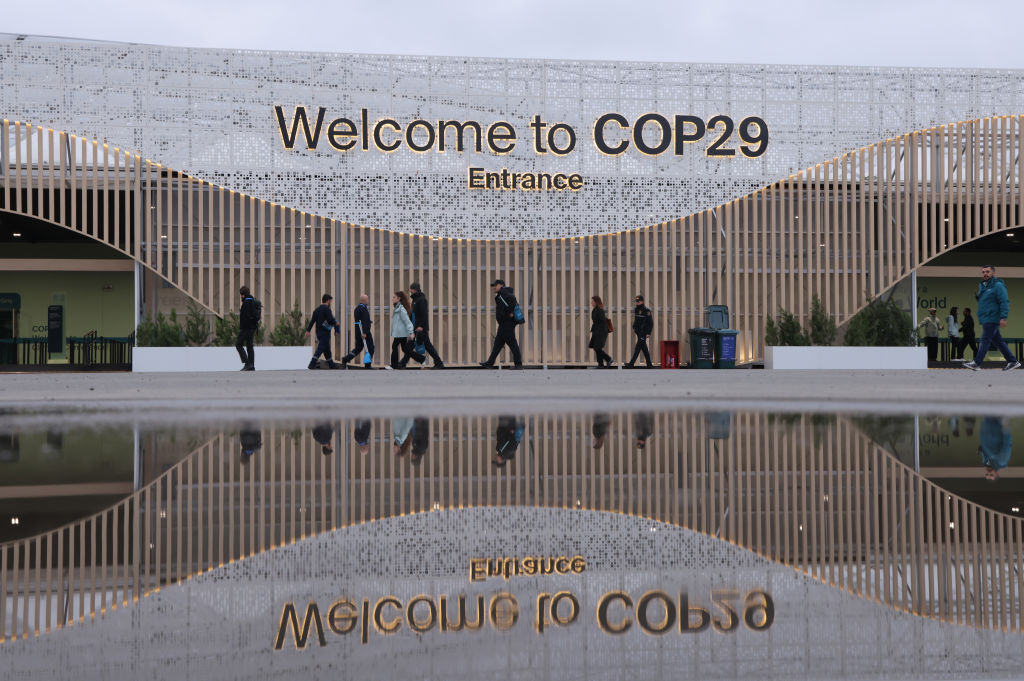
COP29 in Baku concluded with wealthy nations committing $300 billion annually by 2035 to help developing countries combat the escalating climate crisis. The agreement, reached after over two weeks of contentious talks, was hailed as a step forward but criticized as inadequate by vulnerable nations facing the brunt of climate disasters.
The negotiations were fraught with disagreements, boycotts, and protests. Talks nearly collapsed on Saturday when representatives of small island states and least-developed nations staged a walkout. After 30 hours of extended deliberations, a fragile consensus was reached early Sunday morning.
Simon Stiell, head of the United Nations Framework Convention on Climate Change, described the agreement as “an insurance policy for humanity” while acknowledging the difficult path to its finalization. “It has been a challenging journey, but we’ve delivered a deal,” he said. The funding is intended to help poorer nations manage devastating climate impacts and transition to clean energy.
However, the $300 billion pledge falls significantly short of the $1.3 trillion economists estimate is required annually to address the climate crisis in developing countries. India’s representative, Chandni Raina, condemned the sum as “a paltry amount,” calling the deal “nothing more than an optical illusion.” Marshall Islands climate envoy Tina Stege also criticized the agreement, stating it provided only “a small portion” of what vulnerable nations urgently need.
Stege further accused fossil fuel interests of undermining negotiations, claiming they “blocked progress” toward ambitious climate goals. Over 1,700 fossil fuel lobbyists attended COP29, outnumbering many national delegations, prompting sharp criticism from climate groups accusing them of derailing meaningful progress.
The agreement commits developed nations, including the US and European countries, to provide $300 billion annually by 2035, with aspirations to scale up to $1.3 trillion over time. Developing nations, however, pushed for a larger share of grants rather than loans to avoid debt burdens. The G77 group had initially demanded $500 billion annually, but wealthier nations deemed this financially unfeasible under current economic conditions.
Efforts to involve emerging economies like China and Saudi Arabia in mandatory contributions failed, with the agreement only “encouraging” such nations to make voluntary pledges.
Avinash Persaud, special advisor to the President of the Inter-American Development Bank, acknowledged the compromise, calling it “the boundary between what is politically achievable today and what is necessary for developing nations.”
The negotiations took place amid record-breaking climate disasters and a politically charged backdrop. Saudi Arabia, a major oil exporter, rejected the inclusion of fossil fuels in the agreement, while concerns over a potential return of Donald Trump to the US presidency loomed large, raising doubts about future global climate commitments.
Climate activists and developing nations sharply criticized the outcome. Friederike Otto, a climate scientist at Imperial College London, described COP29 as “another shady, oil-stained COP,” while Tasneem Essop of Climate Action Network accused wealthy nations of betraying the Global South. “This was meant to be the finance COP, but the Global North turned up with a plan to betray us,” she said.
Harjeet Singh of the Fossil Fuel Treaty Initiative called the agreement “false hope,” stressing the need for greater financial commitments and accountability. “We must persist in our fight,” he said, urging a significant increase in climate financing.
(Inputs from ANI)