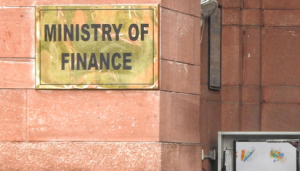
The Department of Investment and Public Asset Management (DIPAM) played a key role in strengthening public finances and enhancing value creation in Central Public Sector Enterprises (CPSEs) during 2025, according to Finance Ministry’s year-end review.
Through effective capital management, strategic disinvestment and focused capacity-building initiatives, DIPAM continued to advance market-oriented reforms while boosting non-tax revenue for the government.
Rising Dividend Receipts from CPSEs
Despite the gradual dilution of government shareholding in CPSEs through disinvestment, dividend payouts have consistently increased since FY 2020-21. This improvement has been attributed to efficient capital management, enhanced accountability mechanisms and the structured scheduling of disinvestment transactions.
Dividends from CPSEs remain a vital source of non-tax revenue and are deliberated through the inter-ministerial Committee for Monitoring of Capital Management and Dividends by CPSEs (CMCDC). Over the past five years, dividend receipts have exceeded the revised estimates in most years, reflecting improved financial performance.
According to official data, actual dividend receipts rose from ₹39,750 crore in 2020-21 to ₹74,017 crore in 2024-25, marking a sustained upward trend and underscoring stronger capital efficiency across CPSEs.
Successful Disinvestment via OFS in Mazagon Dock
DIPAM also leveraged the Offer for Sale (OFS) route to unlock value in CPSEs. In April 2025, the government disinvested 3.61 per cent of its equity in Mazagon Dock Shipbuilders Limited (MDL) through an OFS, reducing its shareholding from 84.83 per cent.
The issue witnessed strong investor demand, prompting the exercise of the Green Shoe Option in the non-retail category. The transaction yielded ₹3,673.42 crore for the government. Post-OFS, MDL’s share price generally trended upward, contributing to capital gains for investors.
Focus on Leadership and Capacity Building
As part of its value-creation strategy, DIPAM placed significant emphasis on leadership development and capacity building within CPSEs. In collaboration with the Capacity Building Commission, a workshop on enhancing leadership communication skills was organised in New Delhi in January 2025. The programme targeted CPSE executives involved in finance, strategy, business development and investor relations, helping them improve engagement with investors and analysts.
Additionally, DIPAM conducted a capacity-building programme on the basics of financial markets in partnership with the National Stock Exchange in August 2025 at the India Habitat Centre, New Delhi.
Driving Long-Term Value Creation
Through higher dividend mobilisation, successful market-based disinvestment and targeted capacity-building initiatives, DIPAM’s efforts in 2025 strengthened fiscal resilience, bolstered investor confidence and advanced long-term value creation in CPSEs, the ministry said.