



20/07/24 | 10:44 am

Print

405 Indian students evacuated from Bangladesh amid student protests

405 Indian students have been safely evacuated through the Dawki Integrated Check Post, according to Meghalaya Chief Minister Conrad Sangma. The evacuation, which took place on Friday, included approximately 80 students from Meghalaya, with the remainder hailing from other parts of India.

Chief Minister Sangma reported that the evacuation effort also extended to students from Nepal and Bhutan, as well as tourists caught in the turmoil. “We are aware of the situation in Bangladesh,” Sangma said.

The Meghalaya government has established nodal officers and is in direct communication with the Indian Embassy in Dhaka. Senior IPS officers are coordinating to facilitate any necessary movements. Sangma highlighted ongoing concerns about 36 students reportedly stranded at Eastern Medical College, noting that officials are closely monitoring the situation.

Addressing parental concerns, Sangma assured that while the immediate vicinity of the college appears stable, potential risks along evacuation routes necessitate cautious planning. “We will have to watch the situation,” he added, expressing hope for a clearer assessment within the next 24 hours.

The Chief Minister detailed preparations at the Dawki checkpoint, including medical attention, food, transportation, and security measures. He also mentioned coordination with authorities in Tripura to facilitate additional evacuations.

The Ministry of External Affairs has advised Indian nationals in Bangladesh to follow the guidelines issued by the High Commission of India in Dhaka, urging them to minimize travel and stay in touch with diplomatic missions for assistance.

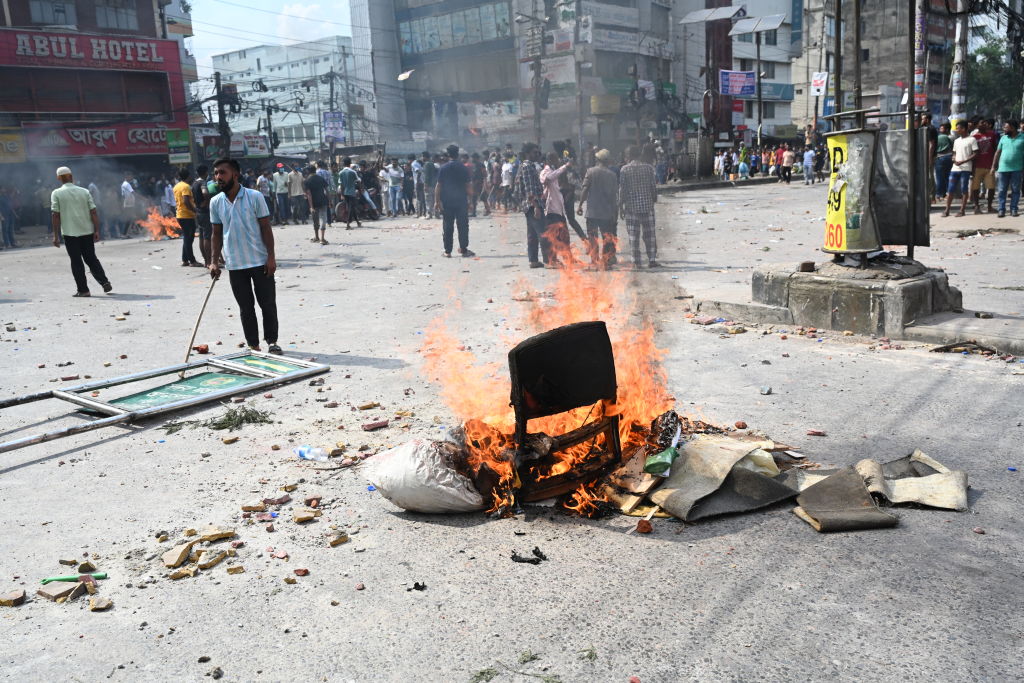
This evacuation effort comes in response to violent protests in Bangladesh over the country’s quota system for civil service jobs. The unrest has reportedly resulted in numerous casualties and injuries across multiple districts.

Violence on Thursday in 47 of Bangladesh’s 64 districts killed 27 and injured 1,500.

The total number of those dead from the protests reached 105 on Friday night, AFP separately reported, citing hospitals. Reuters could not immediately verify the reports and police have not issued a casualty toll.

The U.S. Embassy in Dhaka said that reports indicated more than 40 deaths and “hundreds to possibly thousands” injured across Bangladesh.

In a security alert, it said protests were spreading, with violent clashes being reported across Dhaka. The situation was “extremely volatile”, it said.

The protests initially broke out over student anger against quotas that set aside 30% of government jobs for the families of those who fought for independence from Pakistan.

The nationwide unrest – the biggest since Hasina was re-elected this year – has also been fuelled by high unemployment among young people, who make up nearly a fifth of a population of 170 million.

Some analysts say the violence is now also being driven by wider economic woes, such as high inflation and shrinking reserves of foreign exchange.

The protests have opened old and sensitive political fault lines between those who fought for Bangladesh’s independence from Pakistan in 1971 and those accused of collaborating with Islamabad.

The former include the Awami League party of Hasina, who branded the protesters “razakar” – making use of a term that described independence-era collaborators.

Violence linked to the protests also broke out in distant London, which is home to a large Bangladeshi population, and police had to quell clashes between large groups of men in the east of the British capital.

(Inputs from Agencies)

405 Indian students evacuated from Bangladesh amid student protests

405 Indian students have been safely evacuated through the Dawki Integrated Check Post, according to Meghalaya Chief Minister Conrad Sangma. The evacuation, which took place on Friday, included approximately 80 students from Meghalaya, with the remainder hailing from other parts of India.

Chief Minister Sangma reported that the evacuation effort also extended to students from Nepal and Bhutan, as well as tourists caught in the turmoil. “We are aware of the situation in Bangladesh,” Sangma said.

The Meghalaya government has established nodal officers and is in direct communication with the Indian Embassy in Dhaka. Senior IPS officers are coordinating to facilitate any necessary movements. Sangma highlighted ongoing concerns about 36 students reportedly stranded at Eastern Medical College, noting that officials are closely monitoring the situation.

Addressing parental concerns, Sangma assured that while the immediate vicinity of the college appears stable, potential risks along evacuation routes necessitate cautious planning. “We will have to watch the situation,” he added, expressing hope for a clearer assessment within the next 24 hours.

The Chief Minister detailed preparations at the Dawki checkpoint, including medical attention, food, transportation, and security measures. He also mentioned coordination with authorities in Tripura to facilitate additional evacuations.

The Ministry of External Affairs has advised Indian nationals in Bangladesh to follow the guidelines issued by the High Commission of India in Dhaka, urging them to minimize travel and stay in touch with diplomatic missions for assistance.

This evacuation effort comes in response to violent protests in Bangladesh over the country’s quota system for civil service jobs. The unrest has reportedly resulted in numerous casualties and injuries across multiple districts.

Violence on Thursday in 47 of Bangladesh’s 64 districts killed 27 and injured 1,500.

The total number of those dead from the protests reached 105 on Friday night, AFP separately reported, citing hospitals. Reuters could not immediately verify the reports and police have not issued a casualty toll.

The U.S. Embassy in Dhaka said that reports indicated more than 40 deaths and “hundreds to possibly thousands” injured across Bangladesh.

In a security alert, it said protests were spreading, with violent clashes being reported across Dhaka. The situation was “extremely volatile”, it said.

The protests initially broke out over student anger against quotas that set aside 30% of government jobs for the families of those who fought for independence from Pakistan.

The nationwide unrest – the biggest since Hasina was re-elected this year – has also been fuelled by high unemployment among young people, who make up nearly a fifth of a population of 170 million.

Some analysts say the violence is now also being driven by wider economic woes, such as high inflation and shrinking reserves of foreign exchange.

The protests have opened old and sensitive political fault lines between those who fought for Bangladesh’s independence from Pakistan in 1971 and those accused of collaborating with Islamabad.

The former include the Awami League party of Hasina, who branded the protesters “razakar” – making use of a term that described independence-era collaborators.

Violence linked to the protests also broke out in distant London, which is home to a large Bangladeshi population, and police had to quell clashes between large groups of men in the east of the British capital.

(Inputs from Agencies)
RELATED ARTICLES

1 hour ago | Cross-Border Hostilities

Yemen’s Houthis claim large-scale missile, drone attack on Saudi airport, oil facilities

Yemen’s Houthi group said Wednesday it had launched a large-scale missile and drone attack targeting an airport and oil facilities in Saudi Arabia, vowing to continue strikes against Saudi targets in the coming days. In a statement broadcast by Ho...

2 hours ago | Anita Anand

PM Modi, Canadian Foreign Minister Anita Anand Discuss Ties, Push for Early Conclusion of Negotiations on CEPA

Canadian Foreign Minister Anita Anand called on Prime Minister Narendra Modi on Wednesday, with the two leaders discussing ways to strengthen bilateral ties across key sectors, including trade, science and technology, defence, security, energy and ed...

4 hours ago | Crude Oil

Global oil demand to fall by 2.6 million barrels per day in 2026, diesel to account for 25 pc of decline: IEA

Global oil demand is expected to decline by 2.6 million barrels per day (mb/d) in 2026, with diesel accounting for 25 per cent of the dip, according to the International Energy Agency (IEA). In its latest report, the IEA noted that the Iran war is w...









