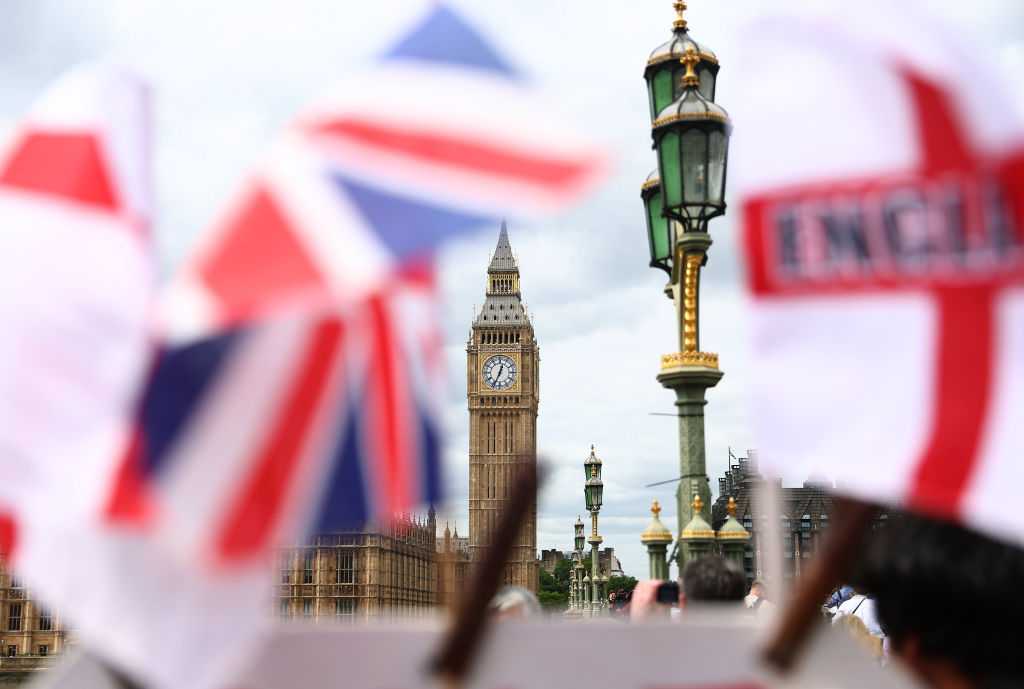
The centre-left Labour Party’s crushing victory in the British election stands in stark contrast to recent gains by the far right across Europe.
But the party’s triumph was not so much a rejection of populism by voters, but rather an echo of the same disenchantment with their political leaders.
Keir Starmer swept to power on Friday winning a large parliamentary majority and condemning Rishi Sunak’s Conservative Party to its worst defeat in history.
The victory comes days after Marine Le Pen’s far-right National Rally (RN) party scored historic gains to win the first round of the parliamentary election in France.
That followed similar advances by populist parties in last month’s European Parliament elections where German Chancellor Olaf Scholz’s Social Democrats recorded their worst result ever.
Before his poll triumph, Starmer said progressive politicians had to demonstrate that they had learned the lessons from the rise of nationalism and populism.
“We have to show … in the UK and across Europe and the world that only progressives have the answers to the challenges we face,” he said.
But rather than a bulwark against a European populism wave, Starmer’s success was built on the same voter desire for change and to punish perceived incompetence by incumbent governments that is driving support for the far right.
Britain, once renowned for political stability, has lurched from crisis to crisis since the 2016 vote to leave the European Union, through the COVID-19 pandemic, increasingly stretched public services and a cost of living crisis.
The Conservative Party – in power for 14 years – had increasingly followed a more populist agenda with a focus on immigration, including a plan to send asylum seekers to Rwanda, while facing a challenge from the even more staunchly right-wing, anti-EU, anti-establishment Reform UK party of Nigel Farage.
“I think there are cycles in politics and I think in a way the UK is coming out of a cycle of quite a populist flavoured government since the Brexit vote,” said Peter Ricketts, a former top official in Britain’s foreign office and a former ambassador to France.
“There does seem to be a trend after many of these populist governments come into power there are question marks about their competency in governing, and the cycle turns, and other parties get a chance.”
The Conservative government had increasingly become associated with scandals under former prime minister Boris Johnson and his successor Liz Truss’s disastrous 44-day premiership and her economic plans which brought chaos to financial markets. Sunak tried and failed to reverse that image.
Mujtaba Rahman, managing director for Europe at consultancy Eurasia Group, said there was fatigue with the Conservatives and a desire for stability and coherence.
“The lesson one draws from the UK experience is that it takes a long time for the pendulum to swing back in the other direction and it serves as something of a warning or a cautionary tale to other European countries … that look like they are about to embark on their own populist adventures, notably in France,” he said.
Rahman also noted that Britain’s first-past-the-post system “is a very cruel electoral system for small parties” and the reason why populist parties such as Reform can typically only win a small number of seats.
(Reuters)