











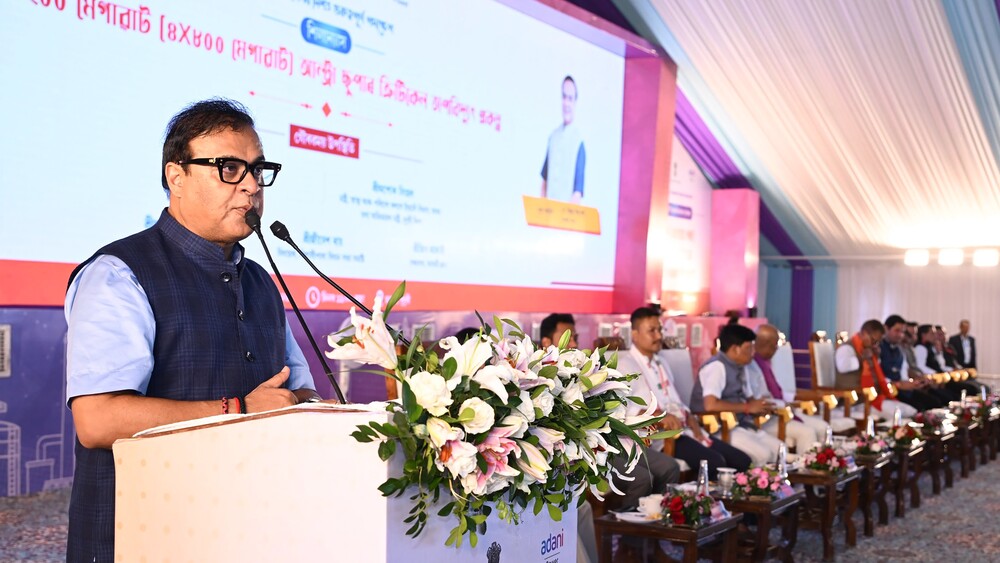
Assam is targeting 6,000 MW of renewable energy capacity by 2030 as part of its plans to make clean energy a key driver of the state’s economic growth, Chief Minister Himanta Biswa Sarma said on Tuesday.
In a post on X on Monday, Sarma said green energy would be at the heart of Assam’s “next growth story”, highlighting the state government’s focus on expanding renewable power generation and strengthening energy security.
“Green energy will be at the heart of Assam’s next growth story. With 6,000 MW of renewable energy targeted by 2030, we are laying the foundation for a cleaner and more energy secure Assam,” the Chief Minister said.
The target comes as Assam seeks to meet growing electricity demand driven by industrial expansion, infrastructure development and urbanisation. An increase in renewable generation could also help diversify the state’s power mix and reduce its dependence on conventional sources over the longer term.
Assam has significant renewable energy potential, particularly in solar power, with the government seeking greater public and private investment in clean energy projects as part of its broader development strategy.
The renewable energy push is also in line with the wider national focus on expanding non-fossil fuel-based power generation and reducing carbon emissions. For Assam, the expansion could support industrial and investment activity by improving power availability while creating opportunities in clean-energy infrastructure, manufacturing and allied sectors.
However, achieving the 6,000 MW target by 2030 would require substantial investment in generation capacity, transmission infrastructure, land and grid integration.
The announcement indicates that renewable energy is being positioned as part of Assam’s broader economic and infrastructure strategy. Meeting the target will require coordinated efforts involving government agencies, power utilities and private investors to develop and operationalise renewable energy capacity over the coming years.
(IANS Inputs)







