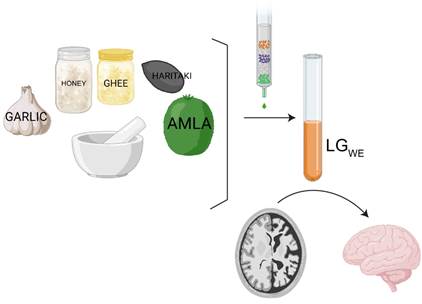
The integration of traditional wisdom with modern science is showing promise in the battle against Alzheimer’s disease and other neurodegenerative disorders. A new study from the Bose Institute in Kolkata has sparked optimism by demonstrating the potential of Ayurvedic medicine alongside chemically synthesized solutions to combat the damaging effects of amyloid beta aggregation, a critical factor in Alzheimer’s progression.
Alzheimer’s disease is often associated with the buildup of amyloid proteins in the brain, which form toxic clumps that disrupt normal function. Professor Anirban Bhunia and his team have focused on addressing this issue using two innovative strategies. They synthesized small peptides to prevent the aggregation of these proteins and repurposed an Ayurvedic formulation called Lasunadya Ghrita (LG), known for its benefits in treating depression-related illnesses, to target the same problem.
The team focused on characterizing the non-toxic compounds of LG and isolating a water-soluble extract, termed LGWE, to evaluate its effects. LGWE demonstrated remarkable capabilities by not only inhibiting the early formation of toxic amyloid aggregates but also disrupting the elongation stage of fibrillation, where harmful plaques tend to form. Most notably, the compounds exhibited greater efficacy in breaking down amyloid aggregates into smaller, non-toxic fragments compared to synthetic peptides, opening up new avenues for effective treatments.
The findings gained recognition in two prestigious scientific journals. The first, published in Biochemistry by the American Chemical Society, highlighted the safety and stability of chemically designed peptides, showing their effectiveness in inhibiting and disaggregating amyloid beta proteins.
Meanwhile, a complementary study published in Biophysical Chemistry by Elsevier underscored the unparalleled efficiency of LG compounds in mitigating the effects of amyloid toxicity. This work involved collaboration with an Ayurvedic expert, Professor Sanjeev Rastogi, and researchers from Saha Institute of Nuclear Physics and IIT-Guwahati.
The research paints a hopeful picture for patients and families grappling with Alzheimer’s disease. It not only validates the therapeutic potential of Ayurveda but also underlines the importance of merging traditional medicine with modern advancements. By fostering a holistic approach to some of the most pressing healthcare challenges, this study has set the stage for further exploration into natural remedies that could improve the quality of life for millions worldwide.