








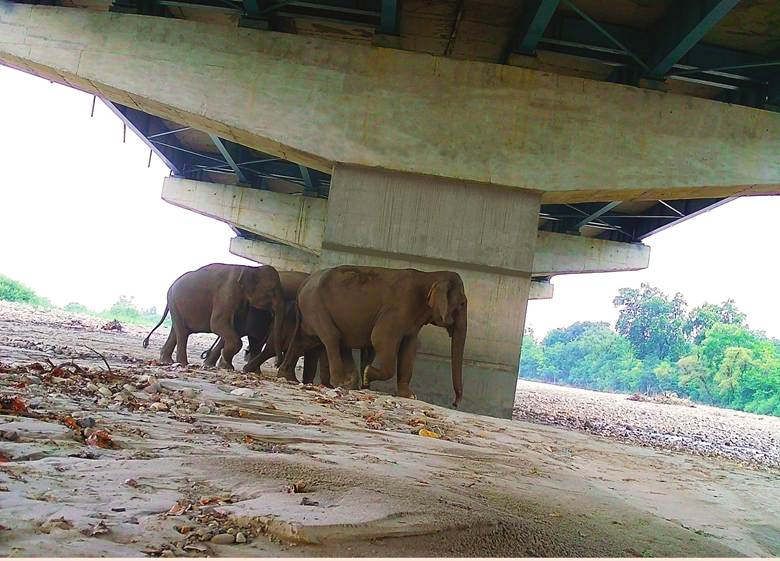


In a step towards balancing infrastructure growth with environmental conservation, the National Highways Authority of India in collaboration with the Wildlife Institute of India has released a study highlighting the effectiveness of wildlife mitigation measures along the Delhi–Dehradun Economic Corridor.
Titled ‘Landscapes Reconnected’, the report presents the first documented evidence of wildlife actively using specially designed animal underpasses on the corridor. The findings underline that highway development in ecologically sensitive regions can coexist with biodiversity conservation when supported by scientific planning.
Study area and objectives
The study was conducted along an 18-kilometre stretch between Ganeshpur and Asharodi, a forested region in the Shivalik landscape known for its rich biodiversity, including species such as elephants, tigers, greater hornbills and king cobras.
The objective was to assess how wildlife uses the underpasses, identify factors influencing their movement, and evaluate the effectiveness of these structures in maintaining ecological connectivity.
The 20-kilometre stretch of the corridor includes 10.97 kilometres of dedicated animal underpasses. It also features one of Asia’s largest wildlife elevated corridors, built at an average height of 6 to 7 metres to allow safe passage for large mammals.
Scientific monitoring and findings
The research involved a 40-day monitoring exercise using 150 camera traps and 29 acoustic recorders. The study generated over 1.11 lakh images capturing humans, domestic animals and wildlife activity.
Out of these, more than 40,000 images were of wildlife, documenting the movement of 18 species through the underpasses. Frequently recorded species included golden jackal, nilgai, sambar and spotted deer, along with smaller mammals such as the Indian hare.
Notably, the study recorded 60 instances of elephants using the underpasses, indicating that even large animals are adapting to the infrastructure while maintaining their natural movement patterns.
Role of sound and habitat design
The study also examined the impact of sound levels on wildlife behaviour. It found that while some species have adapted to traffic noise, others—such as elephants and spotted deer—prefer quieter sections of the corridor.
Researchers suggested that targeted noise reduction measures, including sound barriers in high-use zones, could further improve the effectiveness of wildlife passages.
Reducing conflict and ensuring connectivity
According to the findings, the corridor has helped reduce the likelihood of human-wildlife conflict and prevented habitat fragmentation in the Shivalik region. By enabling safe animal movement, the project supports long-term ecological balance and species survival.
Way forward
The report reinforces the role of data-driven planning in infrastructure projects. The NHAI stated that it will continue to integrate sustainable practices and innovative mitigation strategies in highway development to ensure that economic growth does not come at the cost of environmental conservation.
The Delhi–Dehradun Economic Corridor is being seen as a model for future infrastructure projects, demonstrating how development and ecology can be aligned through careful design and scientific assessment.