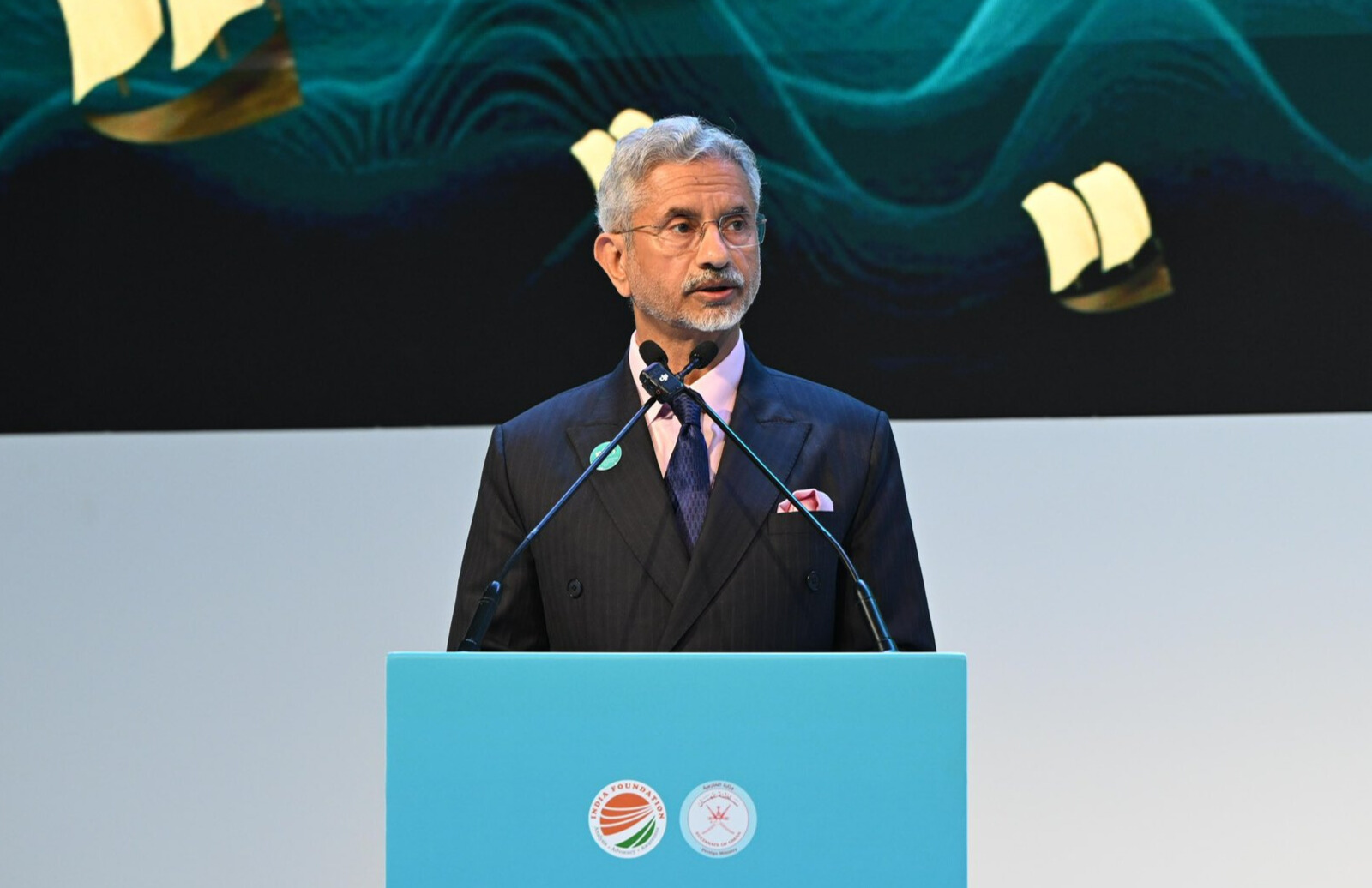
External Affairs Minister (EAM) S. Jaishankar, during his meeting with Bangladesh Foreign Affairs Advisor Touhid Hossain in Muscat earlier this week, conveyed that it is important for Bangladesh to not normalize terrorism, the Ministry of External Affairs (MEA) revealed on Friday.
Jaishankar held a series of meetings with his counterparts from neighboring countries, including Bangladesh, on the sidelines of the Indian Ocean Conference in Muscat on February 16.
While Jaishankar stated that his discussion with Hossain, the Foreign Affairs Advisor of the interim government in Dhaka, focused on bilateral relations and BIMSTEC, the Bangladeshi side raised the issue of holding a SAARC Standing Committee meeting and urged India to consider the matter.
“Regarding whether SAARC came up for discussion or not… Yes, the matter was brought up by the Bangladesh side when the EAM met with Bangladesh’s Foreign Advisor in Muscat. It was acknowledged that everyone in South Asia is aware of which country and what activities are responsible for obstructing SAARC. The EAM conveyed that it is important for Bangladesh to not normalize terrorism,” MEA spokesperson Randhir Jaiswal told reporters in New Delhi during a media briefing.
EAM Jaishankar and Hossain had last met on the sidelines of the UN General Assembly in New York in September. This marked the first high-level engagement between India and Bangladesh’s interim government after the ouster of Sheikh Hasina’s Awami League government in August 2024.
Bangladeshi media also reported that during their brief meeting, Jaishankar and Hossain emphasized the importance of overcoming challenges in bilateral relations. They also discussed the possibility of arranging a meeting between Chief Advisor Professor Muhammad Yunus and Prime Minister Narendra Modi on the sidelines of the BIMSTEC Summit in Bangkok later this year.
The 6th Bay of Bengal Initiative for Multi-Sectoral Technical and Economic Cooperation (BIMSTEC) Summit is scheduled to be held in Bangkok, Thailand, from April 2-4, where Bangladesh will assume the BIMSTEC chairmanship.
While India continues to advocate for the normalization of bilateral ties, the interim regime in Dhaka has faced massive criticism for political crackdowns, human rights abuses, and targeting minorities, particularly the Hindu community. Since the dramatic ouster of Hasina’s Awami League government, Bangladesh has witnessed escalating political instability and accusations against the interim administration.
In December, Foreign Secretary Vikram Misri visited Dhaka and conveyed New Delhi’s concerns, particularly regarding the safety and welfare of minorities in Bangladesh, to the top leadership of the interim government.
(Inputs from IANS)