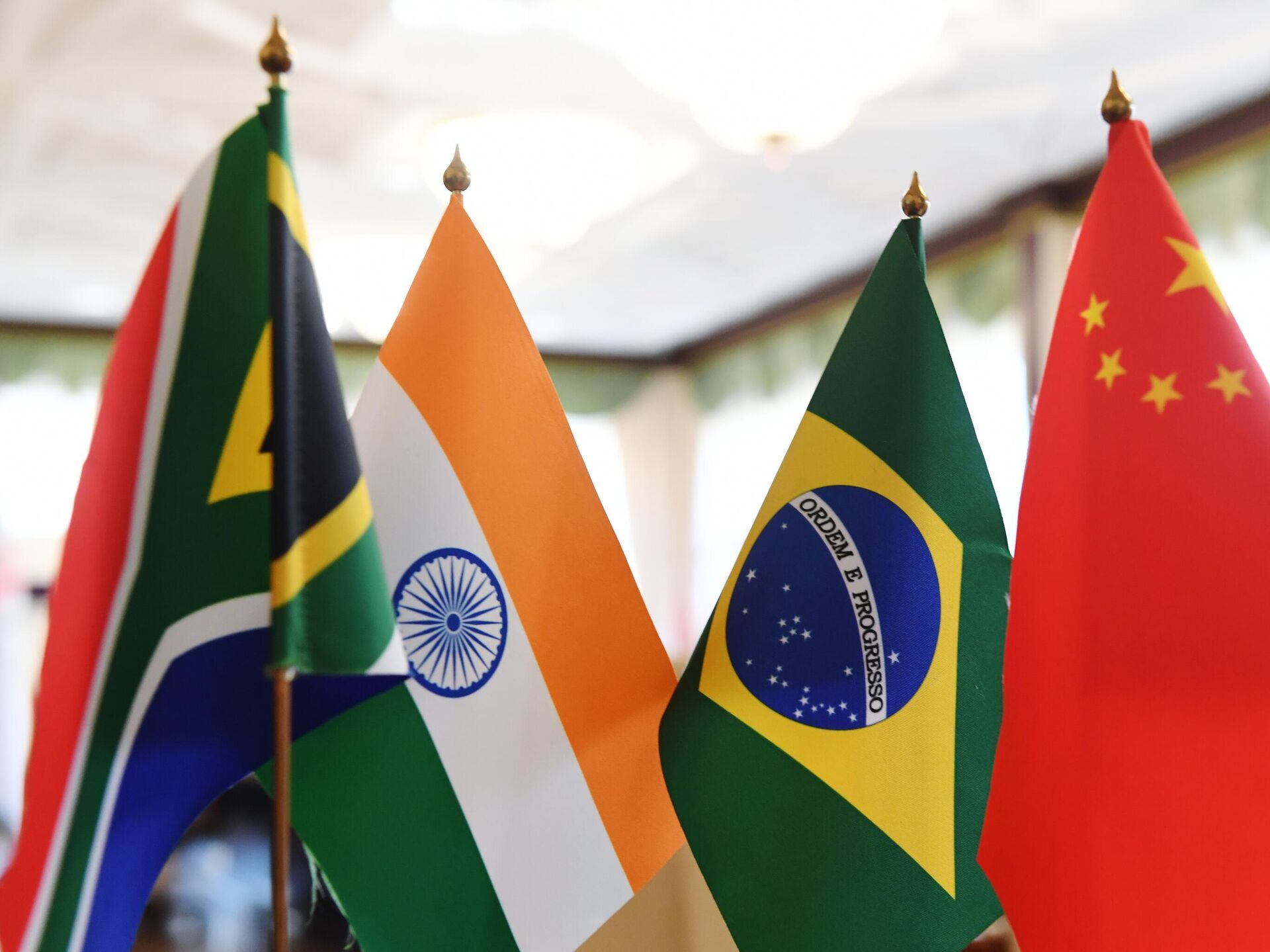
Rich countries have left a “leadership void” in climate politics and must provide trillions of dollars to help developing nations cut their greenhouse gas emissions, the BASIC bloc of Brazil, South Africa, India and China said late on Wednesday.
Ministers from the four countries met in Wuhan, China, earlier this week, and expressed concern that industrialised nations were “backtracking” on their climate pledges, according to a joint statement published by China’s environment ministry.
They called on developed countries to set ambitious new targets to reach net-zero “significantly ahead of 2050 (and) preferably by 2030” and to achieve “net-negative” emissions immediately after that, the statement said.
The bloc said the main task of this year’s COP29 climate talks in Azerbaijan will be setting a new climate finance target, known as the New Collective Quantified Goal, which they described as “the key enabler” for developing countries to set ambitious new targets ahead of next year’s deadline.
Signatories to the Paris Agreement are committed to submitting new “Nationally Determined Contributions” to the United Nations by February next year, and to show enhanced ambition if they are able to do so.
The BASIC countries said climate finance provided to the developing world needed to increase “from billions to trillions” of U.S. dollars per year, and said it should be divided equally between climate change mitigation and adaptation.
Much of the discussion about the new financing goal has surrounded the donor base, with some richer countries arguing that nations like China or Saudi Arabia – though still considered “developing” – should also make contributions.
The BASIC statement said that developed countries were seeking to “dilute” their climate finance obligations and that calls to broaden the contributor base were a distraction from “core issues”.
The four countries also criticised “unfair” trade policies like the European Union’s Carbon Border Adjustment Mechanism (CBAM), saying that “protectionist measures by some developed countries seriously threaten the global green transition.”
They called on developed nations to end “trade-distorting subsidies” for agriculture and energy, which were affecting sustainable development in the developing world.
(REUTERS)