








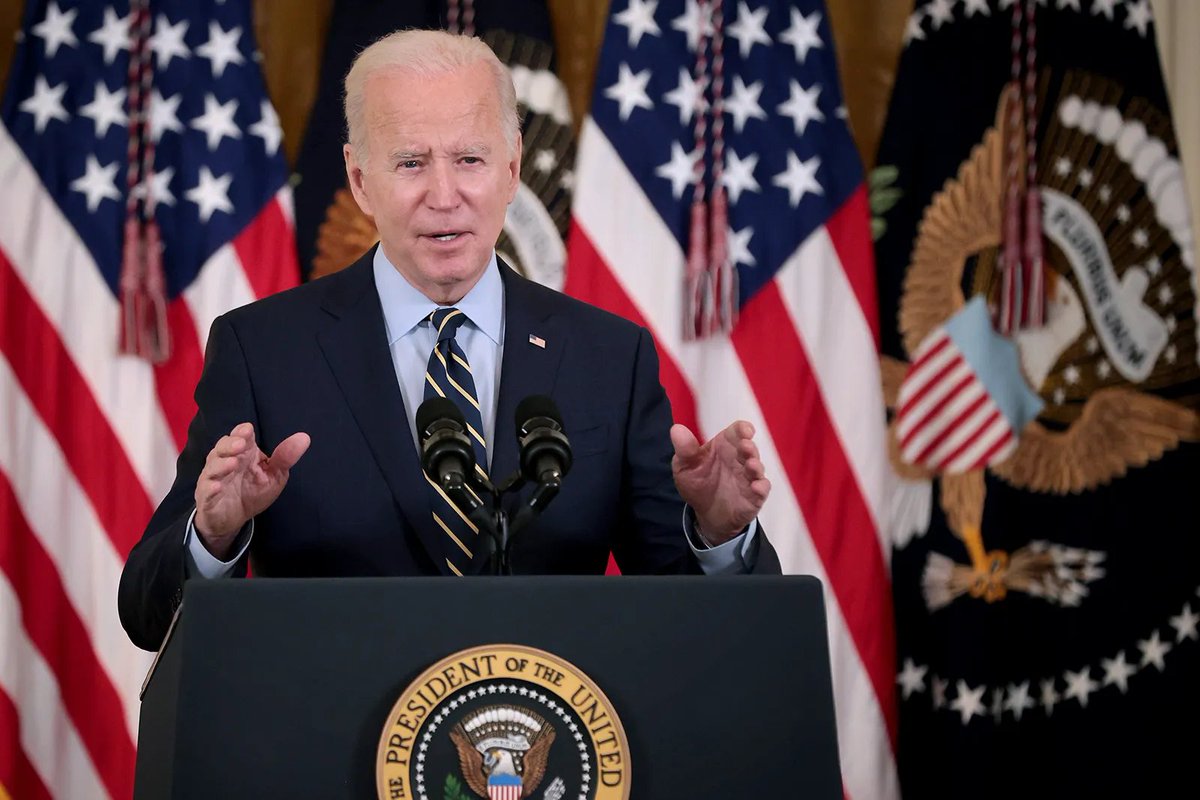
President Joe Biden quietly has authorized Kyiv to launch U.S.-supplied weapons at military targets inside Russia that are supporting an offensive against the northeastern Ukrainian city of Kharkiv, four U.S. officials said on Thursday.
The decision marks a policy shift by Biden, who had steadfastly refused to allow Ukraine to use American weaponry for strikes inside Russia.
Russia’s embassy in Washington and Russia’s mission to the United Nations in New York did not immediately respond to a request for comment.
The U.S. officials, speaking on condition of anonymity, said Biden’s decision applies only to targets inside Russia near the border with the Kharkiv region, where an offensive launched by Moscow on May 10 has overrun some villages.
“The President recently directed his team to ensure that Ukraine is able to use U.S.-supplied weapons for counter-fire purposes in the Kharkiv region so Ukraine can hit back against Russian forces that are attacking them or preparing to attack them,” said one U.S. official.
Russia is building up forces near the northern part of the region, but it lacks the troop numbers to stage a major push, Ukraine’s top commander said on Thursday.
Kharkiv, Ukraine’s second largest city, is 19 miles (30 km) from the border with Russia.
It is the second time this year that Biden has quietly relaxed his policy on weapons supplies for Ukraine, bending to calls to send long-range missiles known as ATACMS to Kyiv.
“The Biden administration has come a long way from their hypersensitivity to and misunderstanding of the risk of escalation,” said Alexander Vindman, a retired Army lieutenant colonel and former director for European affairs at the White House National Security Council under the Trump administration.
He applauded the shift in Biden’s policy, which he said “unties Ukraine’s hands.”
“Of course it’s the right move,” Vindman said.
The U.S. is the biggest supplier of weapons to Ukraine in its battle against the full-scale invasion launched by Russian President Vladimir Putin in February 2022.
The officials said that U.S. policy would continue to prohibit the Ukrainian military from using ATACMS, which have a range of up to 186 miles (300 km), and other long-range U.S.-supplied weapons for deep strikes inside Russia.
Biden’s decision also does not mean the U.S. now approves of drone attacks that Ukraine has been launching against Russian petroleum facilities, they said.
Some NATO allies and U.S. lawmakers have been calling on Biden to relax the restriction on U.S. weapons to allow Ukraine to strike missile launchers and other military sites inside Russia that are backing Moscow’s drive toward Kharkiv.
Russia jetfighters flying inside Russia out of reach of Ukrainian air defenses have been supporting the offensive by loosing highly precise glide bombs at Ukrainian defense lines and into Kharkiv, where they have caused numerous civilian casualties.
Putin on Tuesday warned NATO members against allowing Ukraine to fire their weapons into Russia and he raised anew a risk of nuclear war.
Some experts dismissed his remarks as bluster. They noted that Putin has failed to act on similar threats in the past and already has committed the bulk of his conventional forces to Europe’s biggest land war since World War Two.
“I don’t think we can or should be bullied by Vladimir Putin,” said U.S. Representative Gerry Connolly, a Democratic member of the House of Representatives Foreign Affairs Committee. “Is he really willing to risk nuclear war and a conflict with NATO?”
Connolly co-signed a May 20 letter with Representative Michael Turner, the Republican chairman of the House Intelligence Committee, and other lawmakers urging the Biden administration to allow Ukraine to use U.S. weapons to hit strategic targets inside Russia.
For some time, critics have urged NATO allies to relax restrictions on use of their weapons against military targets inside Russia. Those voices have grown within the alliance since Russia launched the Kharkiv offensive.
Countries that have called for relaxing restrictions or done so for their own arms sent to Ukraine include Britain, the Netherlands, Sweden, the Baltic states, Finland, Denmark, Germany and France.
Biden faced the potentially embarrassing prospect that as he hosts a NATO summit in July, Russian forces would be advancing on Kharkiv and in Ukraine’s east as the alliance marks its 75th anniversary, analysts said.
(Reuters)