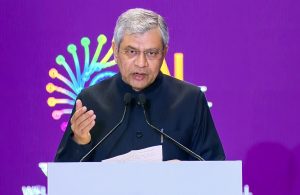
External Affairs Minister S. Jaishankar on Monday outlined a decisive shift in India’s response to cross-border terrorism, calling it a “new normal” that leaves no room for compromise on national security.
Speaking in the Lok Sabha during a special discussion on Operation Sindoor, Jaishankar presented a five-point doctrine that redefines India’s posture towards Pakistan-sponsored terrorism.
“This is not business as usual anymore,” Jaishankar said. “Operation Sindoor represents a turning point. We are no longer in an era of strategic restraint — we are setting new terms.”
Jaishankar elaborated on the evolving doctrine: terrorists will not be treated as proxies; cross-border attacks will be met with direct and appropriate responses; there will be no dialogue except on terrorism — talks and terror cannot go hand-in-hand; India will not bow to nuclear intimidation; and good neighbourly ties are incompatible with terrorism — “blood and water cannot flow together,” he said.
The EAM made it clear that these principles would guide all future engagement with Pakistan, signalling a tougher national security stance.
Amid speculation about external mediation, Jaishankar firmly refuted any claim that the U.S. had played a role in easing tensions between India and Pakistan following the Pahalgam terror attack.
“Let me be absolutely clear — Washington had no part in de-escalating the situation in May,” he asserted.
Contrary to rumours of high-level backchannel diplomacy, Jaishankar clarified that Prime Minister Narendra Modi and then-U.S. President Donald Trump spoke only twice during that period: first on April 22, the day of the Pahalgam attack, and again on June 17 while PM Modi was in Canada. “There was no call in between,” he said, dispelling any notion of American involvement.
EAM Jaishankar also denied that trade discussions were linked to the conflict or factored into any of the India-U.S. exchanges at the time.
Jaishankar stressed the need for political unity within India on the issue of terrorism. “We will only achieve zero tolerance against terrorism if we have a unified voice at home,” he said, urging opposition parties to rise above partisanship.
The EAM also pointed to the conduct of Indian parliamentary delegations abroad during the crisis.
“They stood united while engaging with foreign governments during Operation Sindoor. I hope that same spirit is reflected here in this House,” he said.
—IANS