





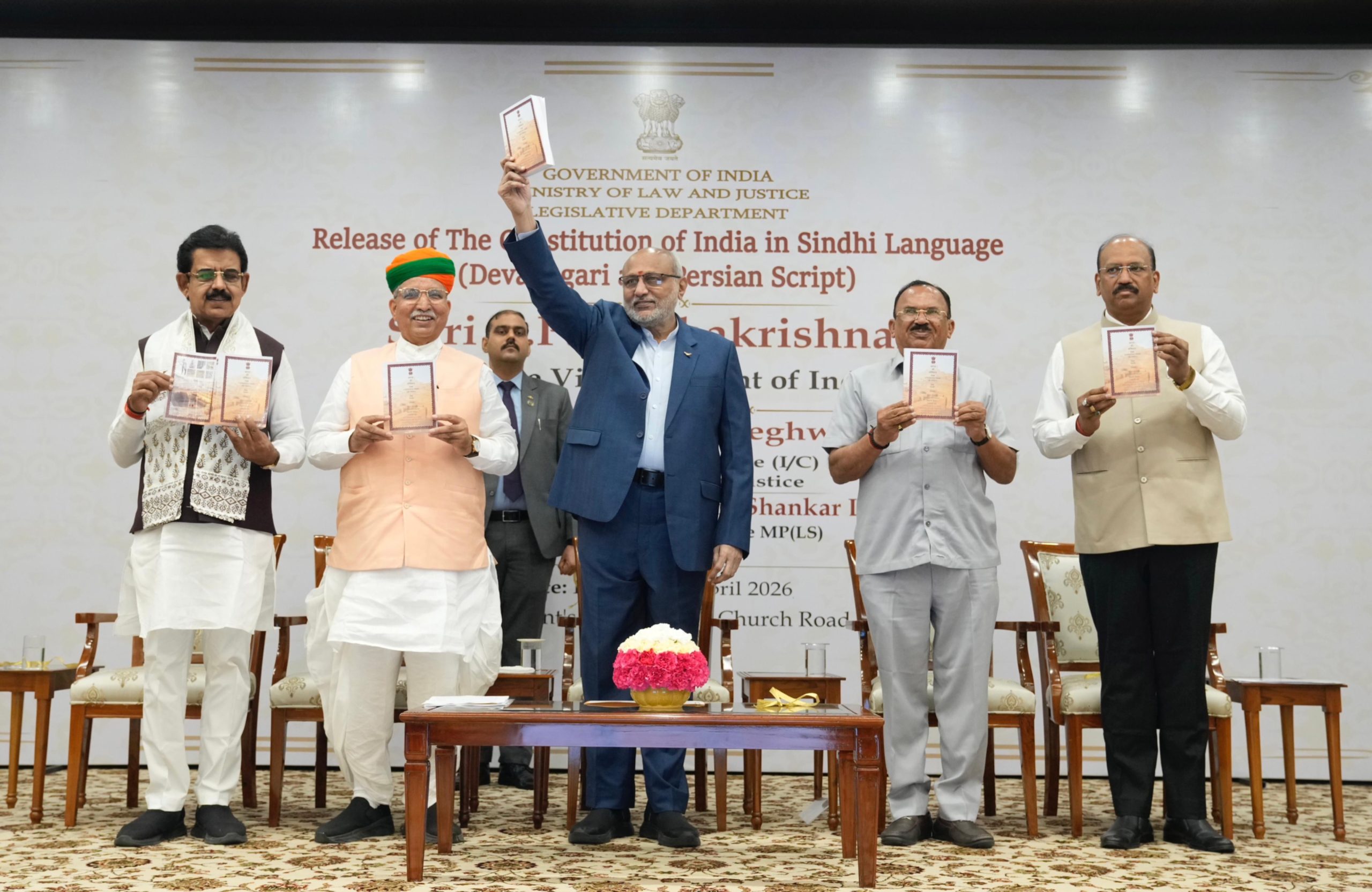
The Vice-President of India, C. P. Radhakrishnan, on Thursday released the latest version of the Constitution of India in the Sindhi language, in both Devanagari and Persian scripts, at an event held at Uprashtrapati Bhawan.
The release coincided with the observance of Sindhi Bhasha Diwas, with the Vice-President extending greetings to the Sindhi-speaking community. He described Sindhi as one of the oldest and melodious languages, noting that its literary tradition reflects a blend of Vedantic philosophy and Sufi thought, promoting values of unity, love and brotherhood.
Highlighting the significance of the initiative, he said that making the Constitution available in Sindhi—particularly in the Devanagari script for the first time since Independence—marks a step forward in promoting linguistic inclusivity. He observed that the Constitution is not merely a legal document but a living guide that reflects the aspirations of the nation and safeguards democratic values.
The Vice-President appreciated the efforts of the government under Prime Minister Narendra Modi to make the Constitution accessible in multiple Indian languages. He noted that access to the Constitution in one’s mother tongue helps deepen citizens’ understanding of their rights and responsibilities, thereby strengthening democratic participation.
Referring to similar initiatives in recent years, he mentioned that translations have been made available in languages such as Bodo, Dogri, Santhali, Tamil, Gujarati and Nepali. He said these efforts reflect India’s commitment to preserving linguistic diversity while reinforcing democratic engagement.
Recalling the historical journey of the Sindhi community, the Vice-President noted that the language became a symbol of resilience and unity after Partition. He also pointed out that Sindhi was included in the Eighth Schedule of the Constitution through the 21st Constitutional Amendment in 1967, ensuring its recognition and preservation.
Emphasising the role of language in nation-building, he said languages are carriers of culture, tradition and identity, and called for equal respect for all languages. He underlined that India’s strength lies in its diversity.
The Vice-President also commended the Ministry of Law and Justice for its efforts in making the Constitution accessible in regional languages. He expressed confidence that such initiatives would empower citizens and contribute to the vision of a developed India by 2047.