











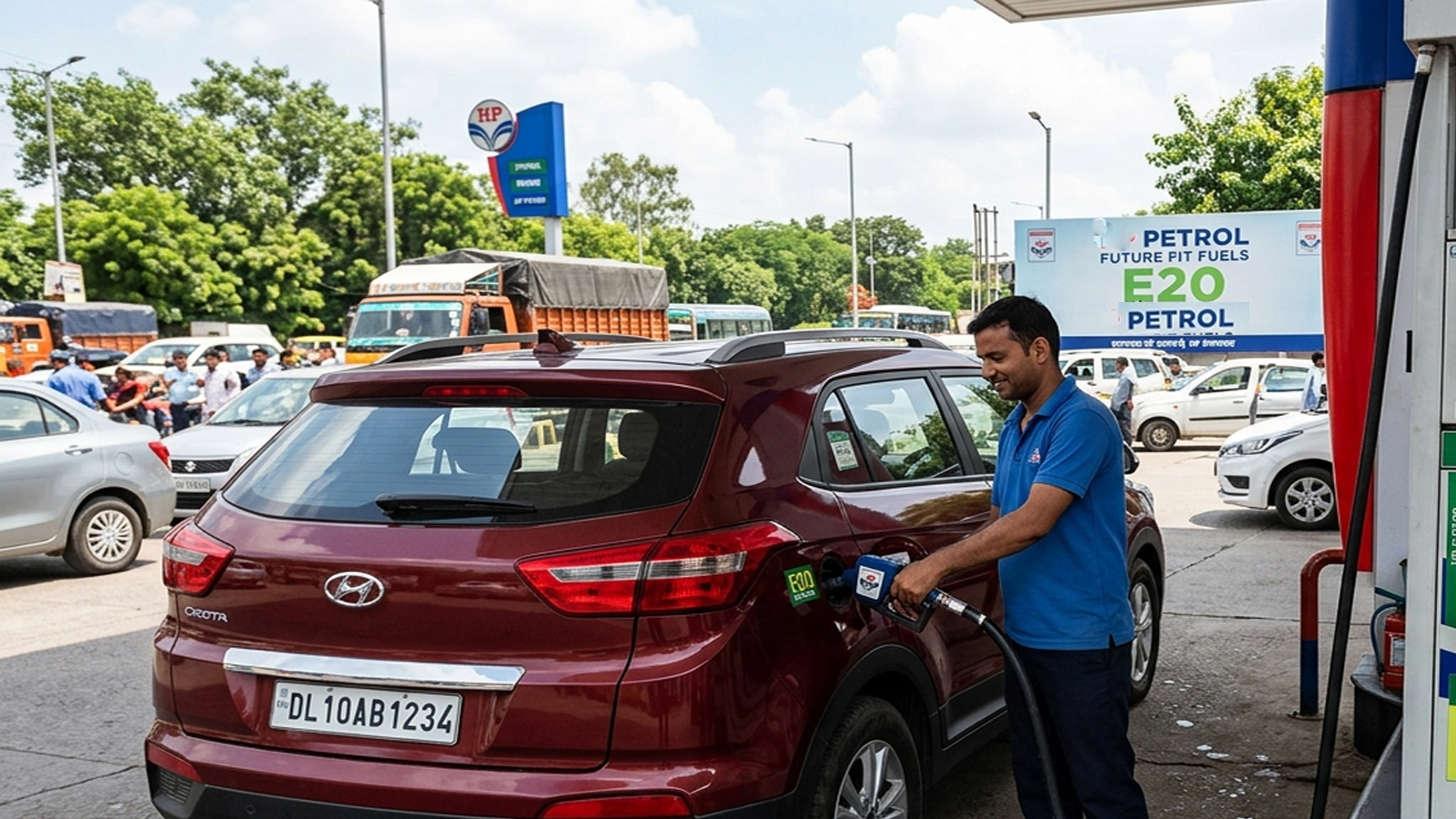
The Petroleum and Natural Gas Ministry on Friday issued a fresh clarification defending the Ethanol Blended Petrol (EBP) Programme, saying the transition to E20 fuel has been gradual, scientifically validated and backed by automobile manufacturers, while dismissing concerns over vehicle compatibility, fuel pricing and supply as “misinformation”.
The clarification, issued in the form of a detailed set of frequently asked questions (FAQs), comes weeks after the ministry had released an earlier clarification on June 23 and following similar assurances from automobile manufacturers during a July 4 press conference. The ministry said concerns about the programme continued to be raised despite these clarifications.
Rejecting claims that India had rushed into adopting higher ethanol blending, the ministry said the programme dates back more than two decades, beginning with pilot projects in 2001, followed by policy interventions in 2013, reforms under the National Policy on Biofuels in 2018 and major capacity expansion from 2021 onward.
It said ethanol blending had increased in a phased manner from about 8.1 per cent in the 2020-21 ethanol supply year to 20 per cent during November-June of the 2025-26 supply year, after consultations with automobile manufacturers, oil marketing companies, testing agencies and other stakeholders.
Addressing concerns over older vehicles, the ministry said extensive laboratory testing and field validation had been conducted before the rollout of E20 fuel and asserted there was no evidence of widespread engine damage or corrosion.
It cited data from Maruti Suzuki, saying the company serviced 2.84 crore vehicles during 2025-26, including around 1.5 crore older non-E20-certified vehicles, without reporting E20-linked corrosion, abnormal wear or component-life damage. Hero MotoCorp had reported similar field experience, it added.
The ministry also said vehicle manuals mentioning compatibility with E10 fuel reflected fuel specifications prevailing when the vehicles were certified and should not be interpreted as meaning they are unsafe to operate on E20 fuel after regulatory approval and scientific validation.
On demands that consumers should have the option of buying pure petrol, E10 or E20, the ministry said maintaining parallel nationwide supply chains for multiple grades of petrol would create major logistical challenges and increase costs across India’s fuel distribution network.
It also said nearly ₹1 lakh crore had been invested in ethanol production and related infrastructure, and reverting to lower blending levels would undermine investments made by farmers, cooperatives, entrepreneurs, financial institutions and public sector companies.
The ministry acknowledged that some vehicles may experience a 3-5 per cent reduction in fuel economy with E20 but said the blend offered higher octane, improved combustion, lower emissions and better energy security benefits.
Explaining why E20 is not cheaper than conventional petrol, the ministry said domestically procured ethanol currently costs around ₹71.86 per litre before taxes and handling charges, making E20 costlier to produce than pure petrol when international crude prices are around USD 70 per barrel. It said ethanol blending was intended to reduce dependence on imported crude and shield consumers from global price volatility rather than lower pump prices.
According to the ministry, the ethanol blending programme has so far helped save more than ₹1.97 lakh crore in foreign exchange, substituted nearly 316 lakh metric tonnes of crude oil, reduced around 952 lakh metric tonnes of carbon dioxide emissions and transferred over ₹1.66 lakh crore to farmers.
The ministry urged consumers not to be misled by “misinformation, scaremongering or unverified content” circulating on social media, reiterating that E20 fuel had been validated by automobile manufacturers, testing agencies, oil marketing companies and regulatory authorities.










