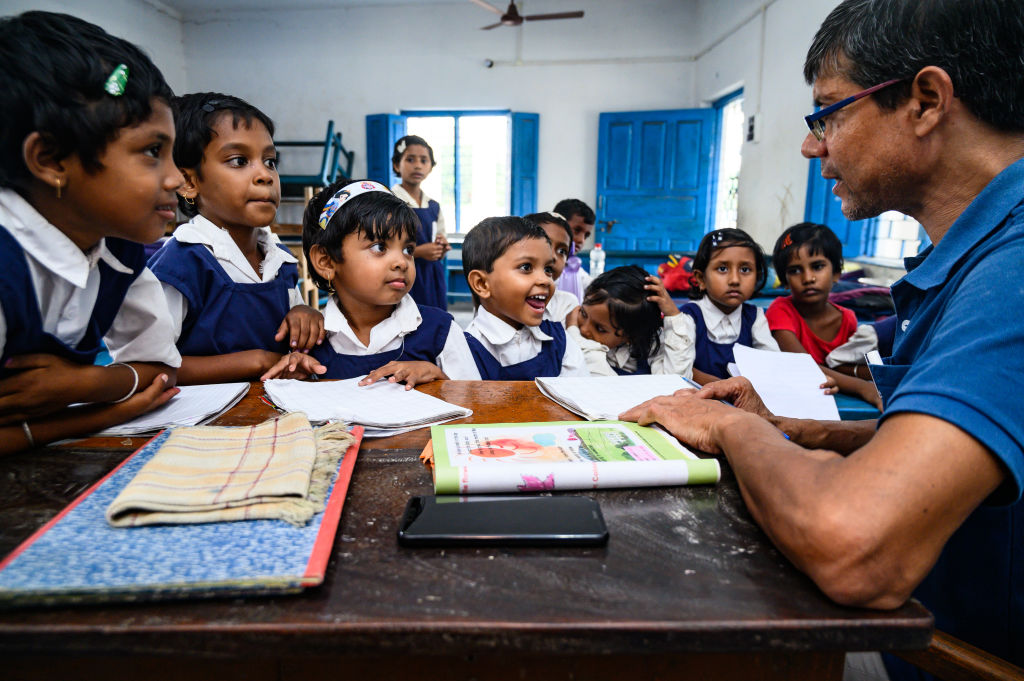
The Central Government on Wednesday issued guidelines for the co-location of Anganwadi Centres (AWCs) with primary schools, detailing minimum infrastructure requirements and operational criteria for effective implementation.
India has over 14.02 lakh Anganwadi Centres, of which 2.9 lakh are already co-located with schools. The new initiative aims to expand co-location to ensure better resource utilization, improved school readiness among children, and stronger convergence between education and nutrition services.
The guidelines, jointly prepared by the Ministry of Women and Child Development and the Department of School Education and Literacy, provide a clear framework of models, norms, and responsibilities for rolling out co-located facilities nationwide.
States and Union Territories (UTs) have been advised to prioritize AWCs without their own buildings, those operating from rented premises, or those lacking adequate facilities. Special attention is to be given to centres serving children from marginalized communities, including economically weaker sections, tribal groups, and migrant families.
To ensure accessibility, the guidelines recommend that the distance between an AWC and its co-located school should not exceed 500 meters in urban areas and 1 kilometre in rural areas, though States and UTs may exercise flexibility based on local conditions.
Schools selected to house co-located AWCs must provide sufficient indoor space, along with facilities such as outdoor play areas, child-friendly toilets, safe drinking water, a designated kitchen for hot cooked meals, and space for a Poshan Vatika (nutrition garden).
For safety and security, the guidelines recommend separate entry and exit gates for AWCs within school premises. Where this is not possible, streamlined access for all beneficiaries — including pregnant women and lactating mothers — must be ensured.
States and UTs have also been directed not to co-locate more than two AWCs in a single primary school. If both cannot be accommodated, the nearest AWC should be chosen, while others may be mapped under an alternative model. Where physical co-location is not feasible, AWCs should be linked to the nearest school with Grade 1 to ensure a smooth transition for children into formal schooling.
As an initial step, States and UTs have been asked to rationalize data on AWCs, including block- and district-level details of functional centres and building ownership (government-owned, community-based, or rented). This will help identify centres already co-located and those requiring relocation.
The guidelines also encourage States to use the Gati Shakti portal to map AWCs with nearby schools and plan future expansion. These measures will align with the Saksham Anganwadi and Poshan 2.0 initiatives, strengthening early childhood care and nutrition.
-ANI