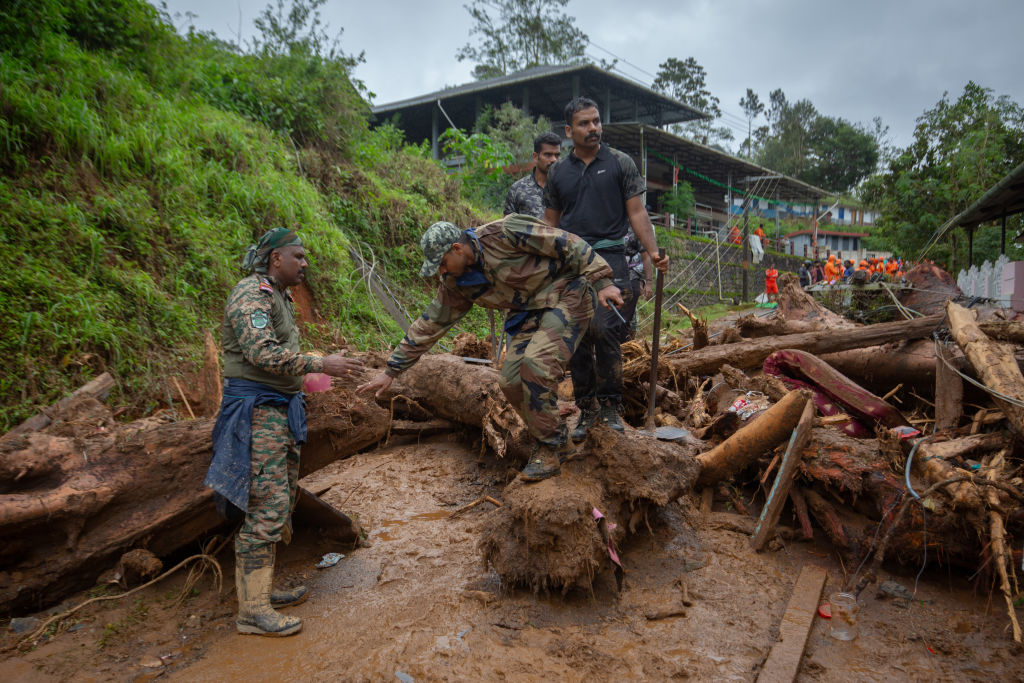
Heavy rain made about 10% stronger by human-caused climate change triggered the landslides that killed more than 200 people in Wayanad, Kerala last month, a team of international scientists has concluded.
The landslides on July 30 were Kerala’s worst disaster since the 2018 floods, which killed more than 400 people.
The study, released on Wednesday by the World Weather Attribution group, which examines the role of climate change in extreme weather, found that single-day monsoon downpours in Wayanad have become 10% heavier because of climate change.
Kerala Chief Minister Pinarayi Vijayan had blamed unexpectedly heavy rainfall for the casualties, saying the region received 572 millimetres (23 inches) of rain over the preceding 48 hours, more than double the 204 millimetres (8 inches) forecast.
One-day bursts of rain in Kerala will become another 4% heavier if the world does not move away from fossil fuels and global warming reaches 2 degrees Celsius, the study said.
“The increase in climate change-driven rainfall found in this study is likely to increase the potential number of landslides that could be triggered in the future,” it said.
Minimising deforestation and quarrying, reinforcing susceptible slopes, and building retaining structures to protect vulnerable areas were some of the other measures it recommended to prevent similar disasters in future.
Some experts told Reuters earlier this month that heavy rainfall in the fortnight before the landslides, which softened the soil, as well as over-development and unchecked tourism in the state may also have been contributing factors.
“In addition to mitigation, adaptation is critical”, said Maja Vahlberg, one of the authors of the study, calling for more stringent assessment of landslides and better early warning and evacuation systems.
The landslides were the latest in a series of weather-related calamities in India that some experts have linked to climate change, from soaring temperatures and long heatwaves to torrential rains and cyclones.
The World Weather Attribution group concluded in a report in May that extreme temperatures in Asia the preceding month were made worse by human-driven climate change.
(REUTERS)