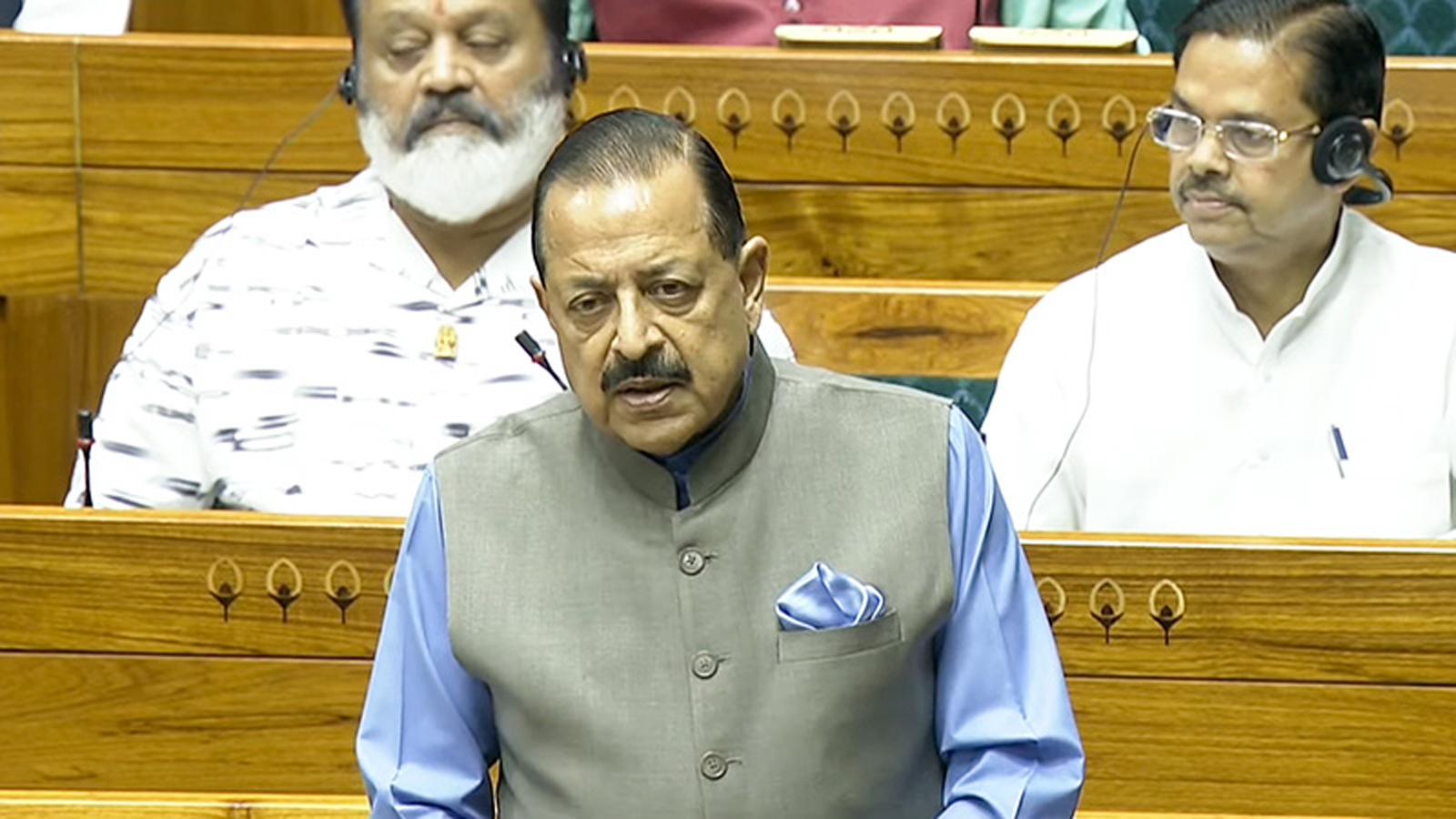
Union Minister of State (Independent Charge) for Science & Technology and Earth Sciences Dr. Jitendra Singh on Wednesday informed the Lok Sabha that El Niño conditions, which developed in May 2026, are likely to persist until February 2027, according to the latest assessment by the Indian National Centre for Ocean Information Services (INCOIS). However, he clarified that the phenomenon alone does not determine the performance of the Indian monsoon, as several other climate systems also influence rainfall.
In a written reply in the Lok Sabha, the Minister said INCOIS’ indigenous Artificial Intelligence and Machine Learning (AI/ML)-based El Nino Southern Oscillation (ENSO) prediction system, together with the Global Ocean Data Assimilation System, projects a 70-90 per cent probability of El Niño persisting from June 2026 to February 2027.
Singh explained that while El Nino has historically been associated with weaker Indian Summer Monsoon rainfall over parts of the country, its impact varies depending on the interaction of several climatic factors. These include the Indian Ocean Dipole (IOD), the Madden-Julian Oscillation (MJO) and regional ocean-atmosphere interactions, all of which play a crucial role in shaping the monsoon.
He said the eventual impact of El Nino on this year’s monsoon will depend on the evolution of ocean-atmosphere conditions, including prevailing wind patterns and the behaviour of the Indian Ocean Dipole. The government, he added, is closely monitoring the evolving situation through advanced forecasting systems.
The Minister noted that the developing El Nino could influence atmospheric circulation over the Arabian Sea and the Bay of Bengal, increasing the likelihood of marine heatwaves due to persistent warming in these regions. Such changes may affect ocean mixing, nutrient availability and marine biological productivity, potentially influencing fish distribution and coastal ecosystems. Variations in wave and swell conditions could also impact navigation, offshore operations and other coastal activities.
Highlighting the government’s preparedness, Singh said INCOIS has significantly strengthened its Ocean State Forecasting and marine multi-hazard early warning services through high-resolution forecasting models capable of predicting storm surges, high waves, swell surges and ocean currents.
He said forecasting capabilities have been enhanced through an expanded ocean observation network comprising ocean gliders, moored buoys, Argo floats, tide gauges and satellite observations, integrated with advanced data assimilation systems.
The Minister said the government has also improved round-the-clock operational monitoring, impact-based forecasting and multi-platform dissemination of advisories, while conducting stakeholder training programmes, mock exercises and awareness campaigns to enhance disaster preparedness among coastal communities.
Singh further informed the House that ₹145.06 crore has been allocated under the Deep Ocean Mission during the current financial year for mapping marine resources. The programme includes expanded biodiversity surveys of seamounts within India’s Exclusive Economic Zone (EEZ) and the deployment of advanced Autonomous Underwater Vehicles (AUVs) and Remotely Operated Vehicles (ROVs) to explore hydrothermal vents, mineral-rich zones and other marine resources.
He added that INCOIS provides coastal states, including Tamil Nadu, with Ocean State Forecast services offering up to 10-day forecasts for waves, winds, swells, currents and sea surface temperatures. The Centre also issues regular high-wave, swell surge and high-current advisories and has established tide gauge stations, Coastal Wave Rider Buoys and tsunami preparedness programmes in collaboration with state governments to strengthen coastal resilience.
Reiterating the government’s commitment to climate preparedness, Singh said continued investments in indigenous forecasting technologies, advanced ocean observation systems and scientific decision-support tools are helping improve the accuracy of climate and ocean predictions, enabling timely advisories for governments, fishermen, coastal communities and other stakeholders.