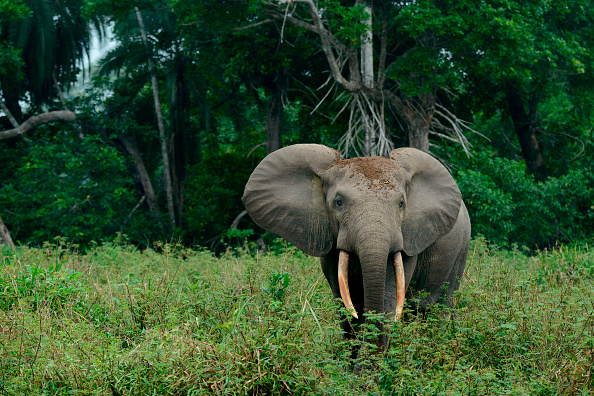
There are thousands more endangered African forest elephants than previously thought, thanks to a new counting method using the DNA extracted from their dung, a study showed on Thursday.
The species of elephant, important in helping rainforests to regenerate, is notoriously hard to assess since they are spread across remote, dense jungles in 22 African countries, precluding aerial counts.
But scientists have come up with a new method: counting individual elephants based on an analysis of their genetic “fingerprints” from dung samples.
This has revealed the population to be some 135,690, nearly a fifth higher than 2016 estimates and with a far greater degree of accuracy, according to the study by the International Union for Conservation of Nature (IUCN).
Past techniques also included dung analysis, but counts were rough since it was all but impossible to know which faeces belonged to which elephant in the herd, and to avoid double counting.
“This is good news. There are more of them than we thought,” Dr. Benson Okita-Ouma, one of the authors of the report and co-chair of the IUCN’s African Elephant Specialist Group, told Reuters. “But we can’t be complacent. There is still a lot of work to be done.”
The study is being presented at a U.N. wildlife trade bodymeeting in Samarkand, Uzbekistan where protection measures for a wide array of species are being discussed.
The African forest elephant, found mostly in Gabon, was only recognised as a separate species from the better-known and more abundant savannah elephant in 2021.
The two split over 3 million years ago and the forest version is smaller, with rounder ears and straighter tusks.
Both are endangered, with the forest elephant categorised as “critically endangered” – the highest level of alert on the IUCN’s Red List of species before extinction.
Since their diet is mostly fruit, they play an important role in dispersing seeds through their dung, helping trees regenerate. “If you remove them from that ecosystem, then it means that forest slowly will also go extinct,” said Okita-Ouma.
Poaching was for years a major threat but rates have declined thanks in part to national bans on ivory sales.
However, loss of habitat rising from deforestation and railway, mining and agriculture projects continues to pressure the species, the IUCN said, and in some regions like West Africa only small, fragmented herds remain.
(Reuters)