












India’s rural economy is witnessing a quiet but significant transformation as digital technology reshapes the way traditional artisans connect with consumers. From handwoven Chanderi sarees in Madhya Pradesh and intricately carved marble handicrafts in Rajasthan to exquisite Pashmina products from Jammu & Kashmir, thousands of rural artisans—particularly women organised through Self-Help Groups (SHGs)—are finding new opportunities to expand their businesses through the eSARAS platform.
Developed by the Ministry of Rural Development under the Deendayal Antyodaya Yojana–National Rural Livelihoods Mission (DAY-NRLM), eSARAS has emerged as a flagship initiative that combines Digital India’s technological framework with grassroots entrepreneurship. By providing women-led SHGs with direct access to national markets, institutional support and digital commerce infrastructure, the platform is strengthening rural livelihoods while preserving India’s rich craft traditions.
Over the past eleven years, the Digital India programme has transformed governance and public service delivery by making them more transparent, accessible and efficient. This digital transformation has extended well beyond urban centres into villages, where technology is increasingly serving as a catalyst for economic empowerment and community-led enterprise. Within this broader digital ecosystem, eSARAS has become one of the most notable examples of how technology can create meaningful economic opportunities for rural communities.
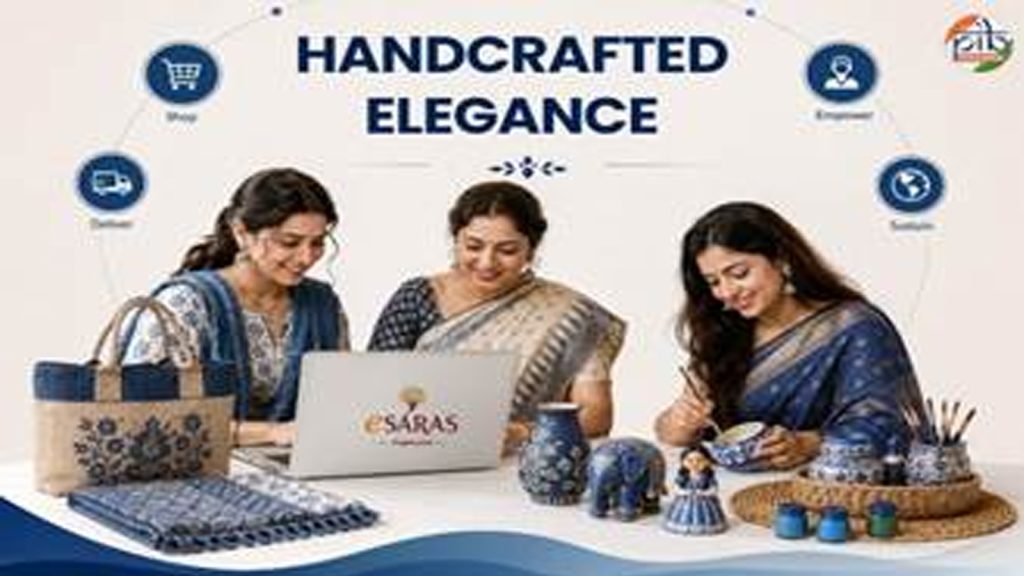
Designed exclusively as the official online marketplace for products made by women Self-Help Groups and their federations, eSARAS enables artisans to sell directly to consumers without relying on multiple intermediaries. Every product showcased on the platform reflects the craftsmanship, culture and traditions of rural India while allowing consumers to connect directly with the people behind these handmade creations.
The marketplace offers a diverse range of products spanning home and living items, women’s and men’s apparel and accessories, personal care products, food items, and toys and accessories for children. Beyond functioning as an online marketplace, eSARAS provides marketing assistance, branding support and logistics services, helping rural entrepreneurs build sustainable businesses.
The platform has significantly expanded its reach over the years. More than 8.62 crore women Self-Help Group members now have access to a digital storefront through eSARAS, with around 85 per cent directly linked to the Ministry of Rural Development’s network as of February 2024. Supporting this ecosystem is the extensive reach of DAY-NRLM, which covers 7,627 blocks across the country and has developed a community cadre of 1.51 crore members to strengthen grassroots enterprises.
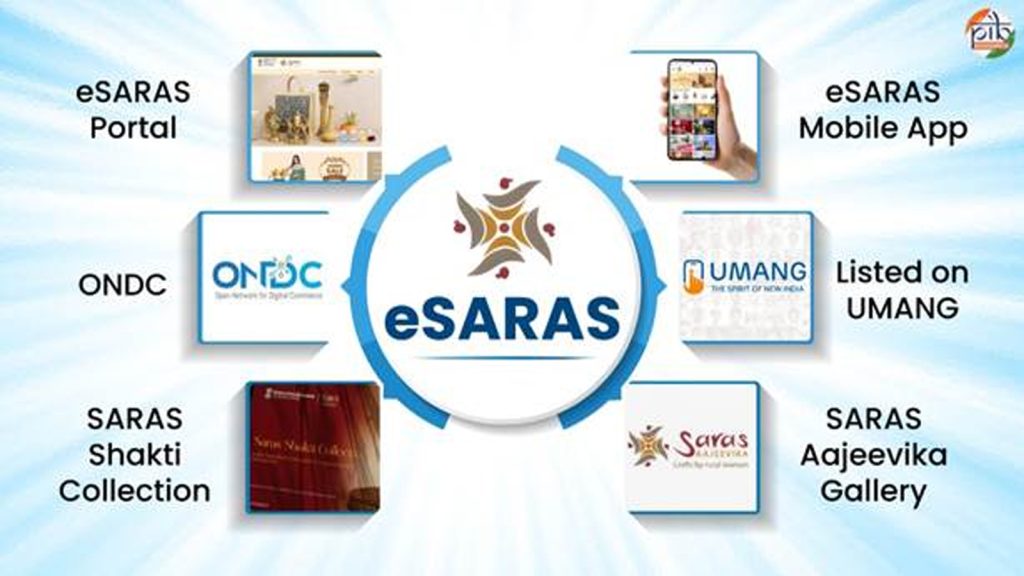
What began as a simple web portal has evolved into a comprehensive e-commerce ecosystem. The launch of the eSARAS portal laid the foundation for better marketing of SHG products, while the subsequent introduction of the eSARAS mobile application, along with a dedicated fulfilment centre, streamlined product processing, packaging and shipping.
The platform’s integration with the Open Network for Digital Commerce (ONDC) has further expanded market access by making SHG products available across more than 11 buyer applications, collectively reaching over 20 crore potential buyers. More than 800 handcrafted products are currently listed through this integration, significantly widening the visibility of rural artisans.
eSARAS has also been integrated with the UMANG platform, which, as of June 2026, hosts 2,572 government services and has recorded over 796.69 crore transactions. This integration further strengthens the accessibility of rural products through India’s growing digital public infrastructure.
To cater to institutional and corporate buyers, the Ministry has introduced the premium “SARAS Shakti Collection”, a curated range of products launched during the Rashtriya Gramin Vikas Sammelan 2026. Complementing its digital presence, the establishment of the permanent SARAS Aajeevika Gallery at Baba Kharak Singh Marg in New Delhi provides a physical retail space where curated SHG products can be showcased to a wider audience.
The continued expansion of eSARAS across digital platforms reflects the government’s broader vision of creating sustainable livelihood opportunities while strengthening women’s entrepreneurship. By integrating rural producers with modern e-commerce ecosystems and preserving traditional craftsmanship, the initiative is helping build a digitally empowered and self-reliant rural economy.
As eSARAS continues to expand its presence across platforms such as ONDC and UMANG, it is positioning India’s rural artisans to compete in larger markets without losing the authenticity of their craft. The initiative represents a convergence of technology, entrepreneurship and cultural preservation, demonstrating how digital infrastructure can become a powerful instrument for inclusive growth and women-led rural development.












