






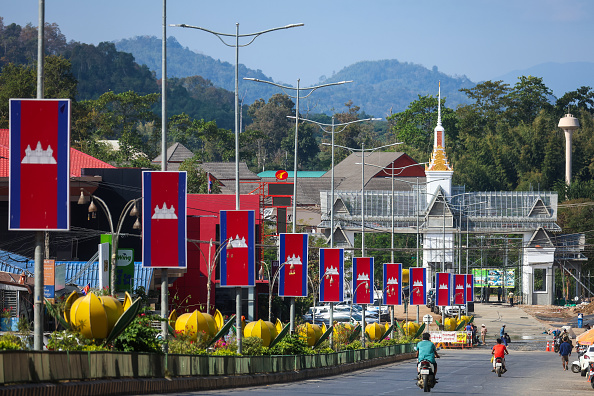
On December 27, 2025, in a tense border checkpoint straddling Cambodia’s Pailin Province and Thailand’s Chanthaburi Province, the defense ministers of two Southeast Asian neighbors affixed their signatures to a joint statement agreeing on an immediate ceasefire. The agreement, effective from noon local time, commits both sides to halting all hostilities, involving all types of weapons, attacks on civilians, infrastructure, and military targets. The agreement also pledges cooperation on demining hazardous border zones and, notably, the release of 18 Cambodian soldiers detained by Thailand since July, provided the truce holds for 72 hours. ASEAN observers will monitor compliance, with direct high-level communication channels established to avert misunderstandings.
The Path to Renewed Conflict
This accord marks the second major attempt this year to quell a conflict that has remained at the center of this year with alarming intensity. What began as five days of ferocious fighting in late July, artillery barrages, airstrikes, and ground assaults that claimed dozens of lives and displaced thousands civilians, appeared resolved through Malaysian mediation and pressure from US President Donald Trump, who brokered a formal peace in October. Yet, the core issues remained unsolved: accusations of landmine placements, provocative troop movements, and propaganda wars eroded the first peace agreement. By early December, violence reignited, escalating into weeks of combat that killed and wounded hundreds, and uprooted more than half a million on both sides.
Historical Roots of a Modern Dispute
The border frictions between Thailand and Cambodia are part of longstanding geopolitical disputes. The 817-kilometer frontier between Thailand and Cambodia, etched during the French colonial era in Indochina, remains a palimpsest of contested lines. Thailand contends that 1907 maps, drawn under French auspices, deviated from natural watershed boundaries stipulated in a 1904 Franco-Siamese treaty, arbitrarily ceding territory. Cambodia, inheriting the colonial demarcation upon independence, views any revisionism as encroachment on sovereign soil.
At the heart of this millennia-old enmity lies the Preah Vihear Temple, an 11th-century Khmer masterpiece perched dramatically atop a 525-meter escarpment in the Dângrêk Mountains. Dedicated to Shiva, this UNESCO World Heritage Site, registered in 2008 amid Thai protests, symbolizes the zenith of Angkorian architecture, its long north-south axis aligning with the cliff’s precipice rather than the conventional eastward orientation.
In 1962, the International Court of Justice (ICJ) awarded the temple itself to Cambodia, accepting Phnom Penh’s historical use and the colonial maps’ validity. Yet the ruling sidestepped the surrounding 4.6 square kilometers, leaving ambiguity that has fueled periodic flare-ups, most notably deadly clashes in 2008-2011. A 2013 ICJ clarification affirmed Cambodian sovereignty over the promontory but stopped short of resolving broader demarcations.
Cultural Heritage Under Fire
The 2025 conflict has inflicted damages not merely on soldiers and civilians but on humanity’s shared patrimony. Cambodian authorities report substantial damage to Preah Vihear from Thai artillery and airstrikes, including impacts on pagodas, staircases, and facilities tied to an ongoing Cambodia-India conservation project. Nearby, the 11th-century Ta Krabey (or Ta Krabei) Temple, a lesser-known but exquisite Khmer ruin in disputed terrain, was allegedly struck by missiles, with smoke plumes captured in harrowing images. Prasat Ta Muen Thom (Ta Moan Thom), another ancient complex, saw intense fighting in its vicinity.
Thailand has disputed these claims, insisting its forces targeted only military fortifications, alleging Cambodian troops had occupied and militarized the sites, thus forfeiting protections under the 1954 Hague Convention. One particularly inflammatory incident involved Thai forces demolishing a modern Vishnu statue erected in 2014 near Preah Vihear, described by Bangkok as an administrative measure against unauthorized structures in contested areas. UNESCO has voiced alarm, and India, long involved in restoring Khmer monuments, expressed deep concern over harm to the Preah Vihear complex.
Temples as Symbols of Identity
In this theater of war, temples transcend stone and mortar; they are vessels of identity, pride, and grievance. For Cambodians, these sites evoke the grandeur of the Khmer Empire, which once dominated Southeast Asia from the 9th to 15th centuries. For Thais, contesting access underscores a narrative of historical equity against colonial impositions. Nationalism, amplified by domestic politics in both nations, has repeatedly transformed diplomatic impasses into kinetic confrontations.
Prospects for Lasting Peace
The latest ceasefire, while welcome, carries the weight of precedent. Previous truces, facilitated by ASEAN’s principled non-interference yet quiet diplomacy, have crumbled under mutual suspicions. External actors, from Trump’s deal-making pragmatism (motivated in part by trade leverage) to China’s subtle influence and Malaysia’s chairmanship of ASEAN, highlight the region’s entanglement in great-power dynamics. Yet sustainable peace demands more than signatures.
As displaced families tentatively eye returns and demining teams prepare to clear lethal remnants, the Dângrêk Mountains stand sentinel over a border scarred by history’s long shadow.