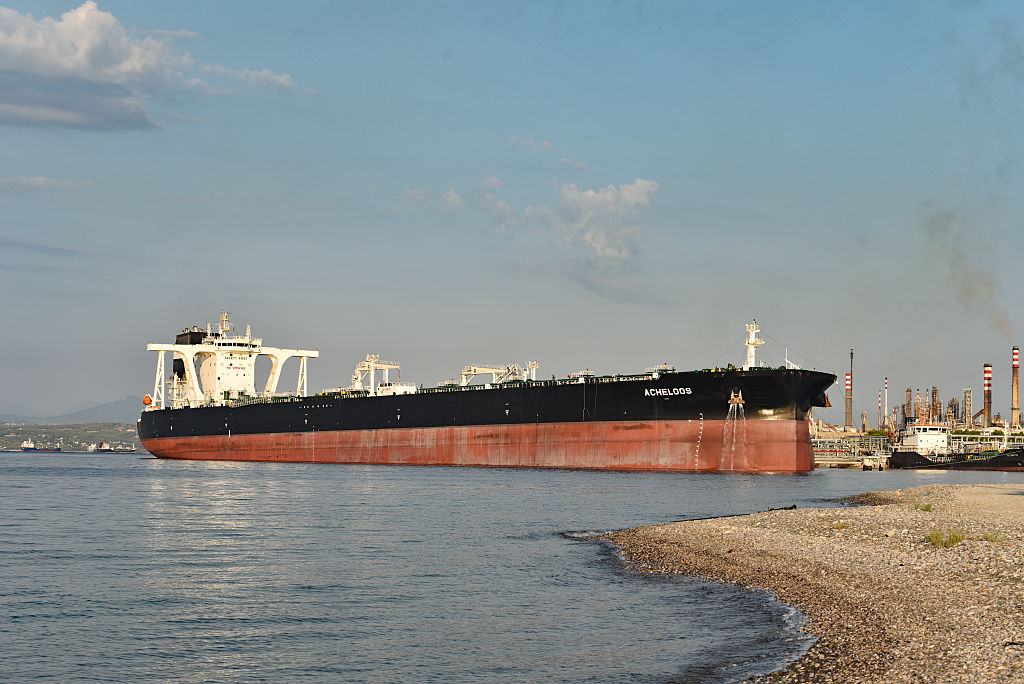
An average of 10 commodity ships transited the Strait of Hormuz per day over the past 10 days, the lowest since May, according to shipping data on Monday, after U.S. and Iranian strikes on tankers.
The 10-day moving average was 10 on Sunday, down from more than 15 on Friday and nearly 13 on Saturday, data from analytics firm Kpler found.
Only two vessels passed through the strait on Saturday while six went through on Sunday, mostly using the Iranian route.
U.S. forces struck three Iranian oil tankers on Saturday, U.S. Central Command said, including one off Kharg Island, Iran’s key oil export hub, following attacks by Iran’s Islamic Revolutionary Guard Corps on U.S. warships in the region.
In retaliation, the IRGC navy said on Saturday it targeted three oil tankers travelling unauthorized routes in the strait as well as three additional U.S. vessels in other areas.
The three Iranian tankers were Downy, Stark I and Kylo, also known as Noxen, maritime intelligence firm Marisks said in a note.
The Saturday attacks represented a “major escalation in the maritime conflict”, Marisks said.
“Commercial tankers are now being deliberately used as instruments of reciprocal economic pressure, substantially weakening the previous distinction between military confrontation and commercial shipping,” it added.
“Risk is therefore assessed as extreme for Iranian/Iran-linked tonnage and materially elevated for U.S.-linked or U.S.-escorted shipping throughout the Strait of Hormuz and Gulf of Oman.”
There have been 27 projectile strike incidents since July 6, resulting in damage to vessels operating in and around the Strait of Hormuz, the United Kingdom Maritime Trade Operations (UKMTO) said in its weekly report.
On Sunday, one very large crude carrier and three bulk carriers laden with metals, grains or oilseeds entered the strait, Kpler data showed.
A tanker carrying refined products loaded from a Saudi port attempted to exit but was turned back, data from LSEG showed.
There has been no VLCC exiting the strait since Wednesday, according to Kpler data.
-Reuters