








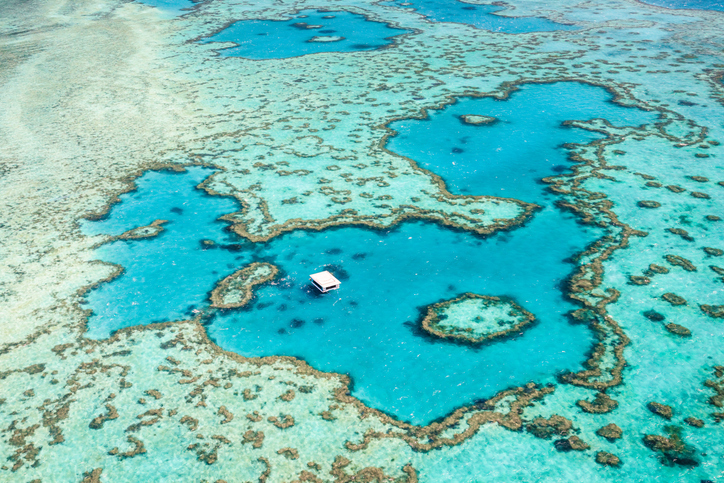
Water temperatures in and around Australia’s Great Barrier Reef have risen to their warmest in 400 years over the past decade, placing the world’s largest reef under threat, according to research published on Thursday.
The reef, the world’s largest living ecosystem, stretches for some 1,500 miles (2,400 km) off the coast of the northern state of Queensland. The research is rare in putting the effects of man-made climate change into historical context, as other surveys on damage to the reef have a shorter time frame.
A group of scientists at universities across Australia drilled cores into the coral and, much like counting the rings on a tree, analysed the samples to measure summer ocean temperatures going back to 1618.
Combined with ship and satellite data going back around a hundred years, the results show ocean temperatures that were stable for hundreds of years begin to rise from 1900 onwards as a result of human influence, the research concluded.
From 1960 to 2024, the study’s authors observed an average annual warming for January to March of 0.12°C (0.22°F) per decade.
Since 2016, the reef has experienced five summers of mass coral bleaching, when large sections of the reef turn white due to heat stress, putting them at greater risk of death.
These summers were during five of the six warmest years in the last four centuries, the study showed.
“The world is losing one of its icons,” said Benjamin Henley, an academic at the University of Melbourne and one of the study’s co-authors.
“I find that to be an absolute tragedy. It’s hard to understand how that can happen on our watch in our lifetime. So it’s very, very sad.”
The last temperature data point, from January to March of this year, was the highest on record and “head and shoulders” above any other year, Henley said.
Coral reefs protect shorelines from erosion, are home to thousands of species of fish, and are an important source of tourism revenue in many countries.
At least 54 countries and regions have experienced mass bleaching of their reefs since February 2023 as climate change warms the ocean’s surface waters, the U.S. National Oceanic and Atmospheric Administration (NOAA) has said.
The Great Barrier Reef is not currently on UNESCO’s list of world heritage sites that are in danger, though the UN recommends it should be added.
Australia has lobbied for years to keep the reef – which contributes A$6.4 billion ($4.2 billion) to the economy annually – off the endangered list, as it could damage tourism.
Lissa Schindler, Great Barrier Reef campaign manager at the Australian Marine Conservation Society, said the research showed Australia needed to do more to reduce its emissions.
“Australia must increase its ambition, action and commitments to battle climate change and protect our greatest natural asset,” she said
(Reuters)