








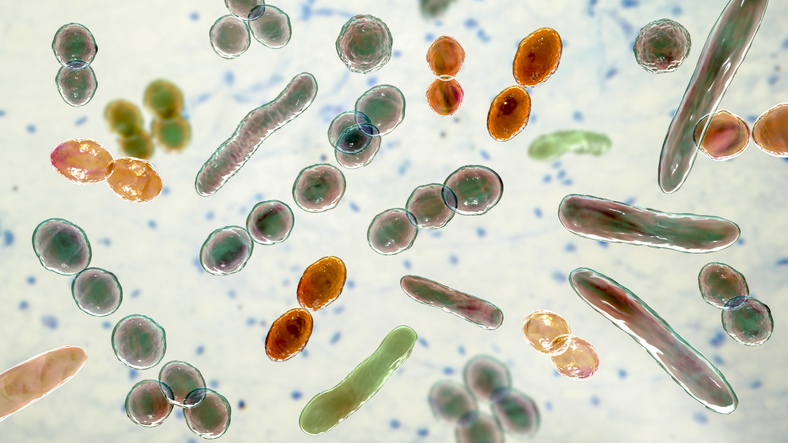
Scientists at the Indian Institute of Technology (IIT) Roorkee have uncovered a crucial regulatory mechanism in Acinetobacter baumannii—a highly drug-resistant superbug responsible for life-threatening infections.
Their study, published in the journal mBio, reveals how the pathogen regulates its virulence and antibiotic resistance mechanisms, paving the way for new treatment strategies.
Acinetobacter baumannii poses a serious threat in healthcare settings due to its ability to resist multiple antibiotics. It causes severe hospital-acquired infections, including pneumonia, bloodstream infections, and urinary tract infections.
To attack competing microbes, the superbug uses the Type 6 Secretion System (T6SS)—a bacterial secretion system that functions like a molecular weapon. However, how A. baumannii regulates its antibiotic resistance has remained unclear until now.
The research team, led by Prof. Ranjana Pathania, discovered that A. baumannii switches T6SS on or off based on environmental conditions. They found that a small RNA molecule, AbsR28, plays a key role in this regulation, influenced by manganese levels.
When manganese levels are high, AbsR28 binds to an essential gene (tssM) required for T6SS function. This not only leads to its degradation but also prevents the activation of T6SS, the researchers explained.
Increased manganese levels also enable A. baumannii to retain plasmid pAB3, which carries multiple antibiotic resistance genes.
“The study found that activating T6SS makes A. baumannii more susceptible to antibiotics and oxidative stress. So, the bacteria must carefully regulate this system to survive in different conditions,” said Prof. Pathania.
“Our discovery sheds light on how this pathogen adapts during infections, helping it evade both antibiotics and the immune system,” she added.
The findings suggest that targeting AbsR28 could disrupt the superbug’s regulatory system, making it more susceptible to antibiotics without directly attacking resistance genes. The discovery opens new avenues for precision medicine and novel drug development against multidrug-resistant infections.
(Inputs from IANS)