






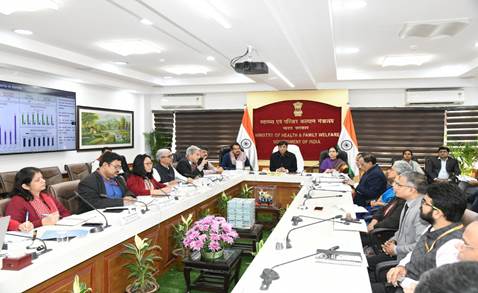
The objective was to assess the prevailing situation and evaluate the readiness of India's public health system. The meeting centered around devising strategies for surveillance, containment, and efficient management of the escalating COVID-19 cases.
Emphasizing that the battle against COVID is ongoing, Dr. Mandaviya urged states to closely monitor emerging evidence of COVID-19 cases, symptoms, and severity to formulate effective public health responses. He stressed the importance of a collaborative and unified approach between the Centre and the states to address the situation.
The health minister directed the reinforcement of the surveillance system, particularly for the entire genome sequencing of positive cases, facilitated through the Indian SARS-CoV-2 Genomics Consortium (INSACOG) network. This enhancement aims to ensure the timely detection of newer variants and the swift implementation of necessary public health measures.
States and Union Territories were encouraged to intensify testing and forward a significant number of COVID-19-positive samples daily to INSACOG Genome Sequencing Laboratories (IGSLs) for sequencing. This initiative is designed to track new variants, if any, ensuring a proactive response to the evolving situation.
Dr. Mandaviya underscored the importance of collective efforts in facing emerging challenges, urging states to maintain sufficient stocks of medicines, oxygen cylinders, concentrators, ventilators, and vaccines. He recommended conducting mock drills every three months at both the central and state levels to assess the functionality of essential medical equipment.
The health minister also called for heightened awareness campaigns on respiratory hygiene and the dissemination of accurate information to counter misinformation, effectively managing the infodemic and preventing panic. He encouraged states to share real-time information on cases, tests, and positivity on the COVID portal for timely monitoring and efficient public health interventions.
The presentation also addressed the emergence of the new JN.1 variant of SARS-CoV-2. Although currently under intense scientific scrutiny, the variant was stated not to be an immediate cause for concern. No clustering of cases related to JN.1 has been observed in India, and all reported cases have recovered without complications.
In response to the situation, the Centre issued an advisory to states, emphasizing the need for constant vigilance and prompt reporting of district-wise Influenza-like Illness (ILI) and Severe Acute Respiratory Illness (SARI) cases. The advisory also stressed the importance of increased testing, including a higher number of RT-PCR tests, and sending positive samples for genome sequencing to INSACOG laboratories.
By Ranu Jain