







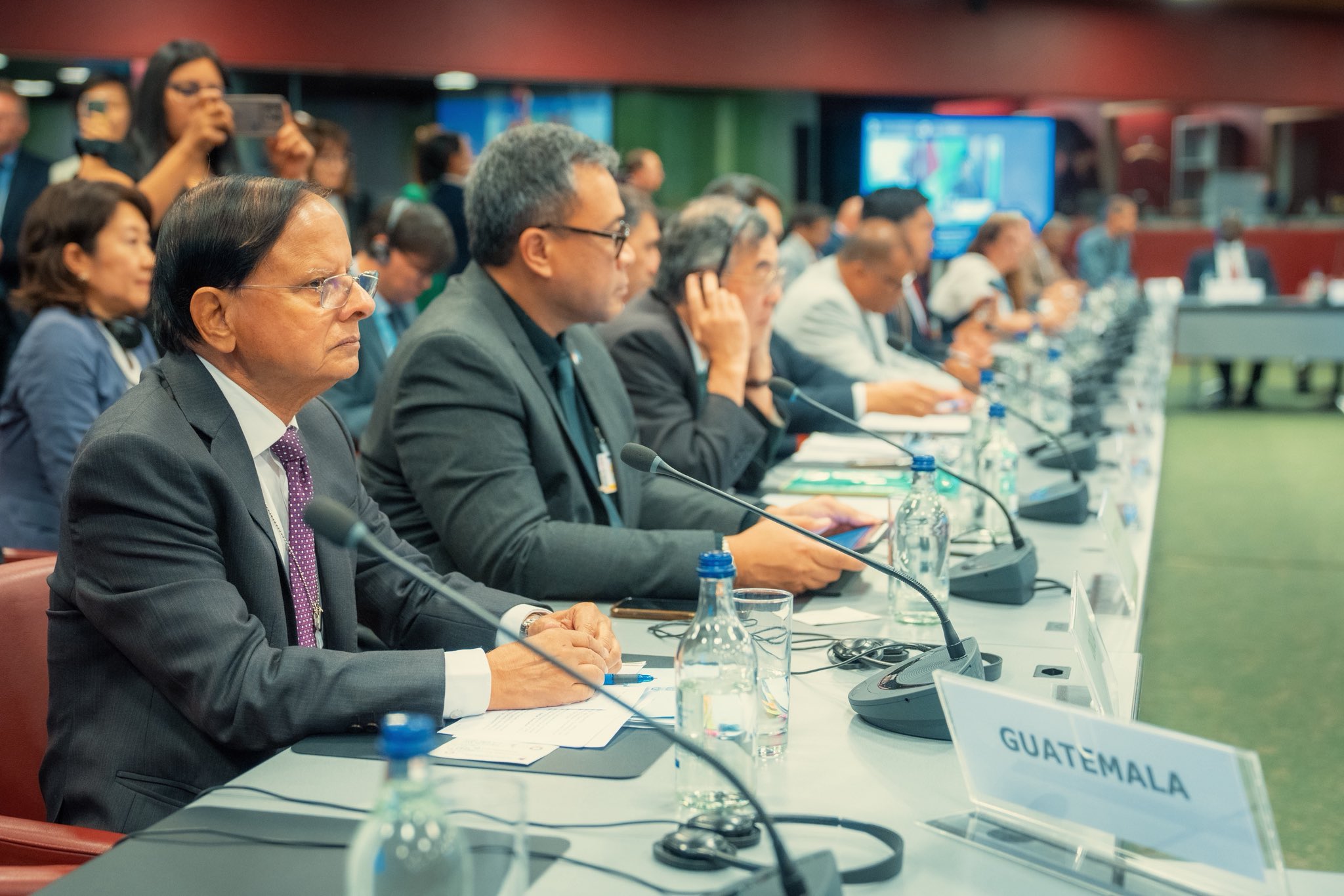
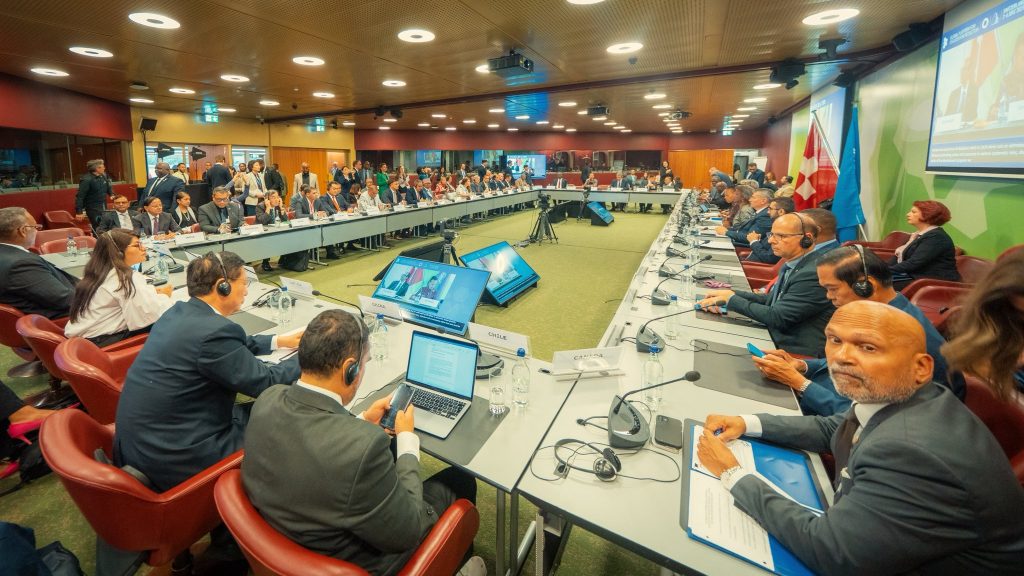
India urged the international community to adopt concrete, time-bound measures and establish a dedicated global facility to support Disaster Risk Reduction (DRR) financing, Principal Secretary to the Prime Minister Dr. P. K. Mishra said today at the Ministerial Roundtable on DRR Financing in Geneva. He praised the United Nations Office for Disaster Risk Reduction (UNDRR) and its partners for convening the discussion and acknowledged Brazil and South Africa for sustaining global dialogue through their G20 presidencies.
Dr. Mishra told delegates that financing for disaster risk reduction bears directly on a country’s ability to protect development gains as climate and disaster threats grow. He noted that, in India’s early years, Finance Commission allocations for DRR amounted to only INR 60 million (approximately USD 0.7 million). Today, outlays under the 15th Finance Commission top INR 2.32 trillion (around USD 28 billion). “Over time, India has transformed DRR financing from a reactive measure into a planned, predictable framework,” he said, explaining that the Disaster Management Act of 2005 laid the groundwork for rule-based fund transfers from national authorities down to states and districts.
According to Dr. Mishra, India’s approach rests on ensuring that budgets cover preparedness, mitigation, relief, and recovery in one integrated flow of funds. He emphasized that the needs of vulnerable communities remain at the forefront of allocation decisions. He added that, by making resources accessible at every level—central, state, and local—the government ensures timely assistance for all affected areas. “We have built accountability and transparency into every stage of expenditure, so outcomes can be measured and lessons learned applied,” he explained.
Dr. Mishra stressed that while each country must design a financing system suited to its governance, fiscal context, and risk profile, guidance from global benchmarks is essential. He said: “Countries need to take ownership of DRR financing, while benefiting from technical support and experience sharing. At the same time, international cooperation can help mobilize resources that go beyond traditional public finance.”
He proposed that risk-pooling arrangements, insurance schemes, and other innovative tools be developed in line with local fiscal capacity, noting that these instruments can complement public budgets without imposing unsustainable debt burdens. “It is not enough to wait for disasters and then allocate funds; we need a mix of financial instruments that can smooth the impact of shocks,” he argued.
At the global level, Dr. Mishra observed that no dedicated international mechanism currently exists to help countries set up or strengthen DRR financing frameworks. He called for the creation of a global facility under the UN system and in partnership with multilateral development banks, one that would provide catalytic funding, technical assistance, and a platform for knowledge exchange. “Such a facility would help countries move from intent to action with clear, time-bound milestones,” he said.