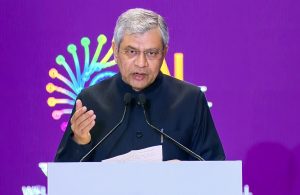
Despite global turbulence caused by trade friction and geopolitical shocks, India has been able to stand out as a rare anchor of stability in a volatile world, RBI Governor Sanjay Malhotra said on Friday.
In his address at the fourth Kautilya Economic Conclave in Delhi, Malhotra said policy continuity, institutional resilience and reform momentum have enabled India to avoid major financial crises and remain among the fastest-growing large economies, with inflation projected to return to the RBI’s safe zone of 4 per cent by February 2026.
The RBI Governor highlighted the contrast between India and the advanced economies in managing the fallout of the US tariff turmoil and other global economic uncertainties.
“India’s macroeconomic fundamentals have continued to remain very strong with low inflation, healthy foreign exchange reserves, a narrow current account deficit, and the very strong balance sheets of banks and corporates,” he said.
“It is the combined efforts of the government’s policy makers, regulators, and regulated entities. All in all, despite recent odds, the economy seems well settled into an equilibrium of resilient growth,” he added.
Against this backdrop, Malhotra noted that over the past two decades, central banks worldwide have been forced to pivot from being “steady guardians of price stability” to first responders in an era of relentless shocks, from the 2008 financial crisis and the eurozone debt meltdown to Covid-19, Russia’s war in Ukraine, and climate-related disruptions.
“You cannot control the storm, but you can certainly steer the ship,” he remarked.
For India, that steering involved a calibrated mix of aggressive monetary easing during the pandemic, decisive liquidity support with clearly defined exit timelines, and a rapid tightening cycle once inflation breached tolerance levels in 2022, Malhotra said.
Looking ahead, the global economy would likely underperform its true potential for years. High tariffs, stretched public debt, and complacent equity markets presented risks that weren’t fully priced in, raising the spectre of fiscal dominance constraining monetary policy in several economies, he pointed out.
“Perhaps gold prices now are showing the kind of movement that oil used to – that is, acting as a barometer of global uncertainty,” Malhotra remarked.
(IANS)