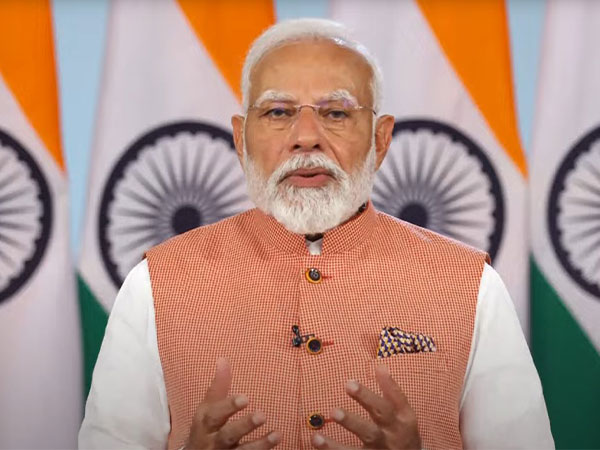
Prime Minister Narendra Modi will visit Thailand from April 3-4 to participate in the 6th Bay of Bengal Initiative for Multi-Sectoral Technical and Economic Cooperation (BIMSTEC) Summit.
As part of his visit, PM Modi will hold a bilateral meeting with Thai Prime Minister Paetongtarn Shinawatra on April 3. The two leaders are expected to review bilateral cooperation and outline future partnerships between India and Thailand.
“India and Thailand are maritime neighbours with shared civilizational bonds which are underpinned by cultural, linguistic, and religious ties,” the Ministry of External Affairs said in a statement.
Thailand’s investments in India have grown significantly in recent years, with key sectors including infrastructure, real estate, agro-processing, electronics, automotive, food processing, hospitality, and renewable energy.
A major highlight of this economic collaboration came in 2021, when Global Renewable Synergy Co., Ltd. made the largest-ever Thai investment in India’s renewable energy sector, amounting to $453.29 million.
Bilateral trade growth has been supported by initiatives like the Early Harvest Scheme (EHS), covering 83 products under the India-Thailand Comprehensive Economic Cooperation Agreement (CECA), which was implemented in September 2004. Additionally, the ASEAN-India Trade in Goods Agreement (AITIGA) has facilitated increased trade. ASEAN and India are currently reviewing AITIGA to simplify and enhance its trade facilitation for businesses.
According to Thailand’s Ministry of Commerce, bilateral trade between India and Thailand reached $16.04 billion in 2023. Indian exports to Thailand were valued at $5.92 billion, while imports from Thailand to India stood at $10.11 billion.
Among ASEAN nations, Thailand is India’s fourth-largest trading partner, following Singapore, Indonesia, and Malaysia.
Key Indian exports to Thailand include silver bars, gold, machinery and parts, metal scrap and products, chemicals, vegetables, medicinal products, seafood (fresh, chilled, frozen, processed), vehicle parts and accessories, iron, steel, electrical machinery, household appliances, and fabrics.
On the other hand, major imports from Thailand include animal and vegetable fats and oils, chemicals, polymers of ethylene and propylene, precious stones and jewellery, and iron and steel products.
(With IANS inputs)