In an important move aimed at strengthening India’s defence capabilities and achieving the vision of ‘Aatmanirbhar Bharat,’ the Ministry of Defence (MoD) has signed contracts worth a total of Rs 10,147 crore with three prominent Indian companies: the Economic Explosives Ltd (EEL), Munitions India Ltd (MIL), and Bharat Electronics Ltd (BEL).
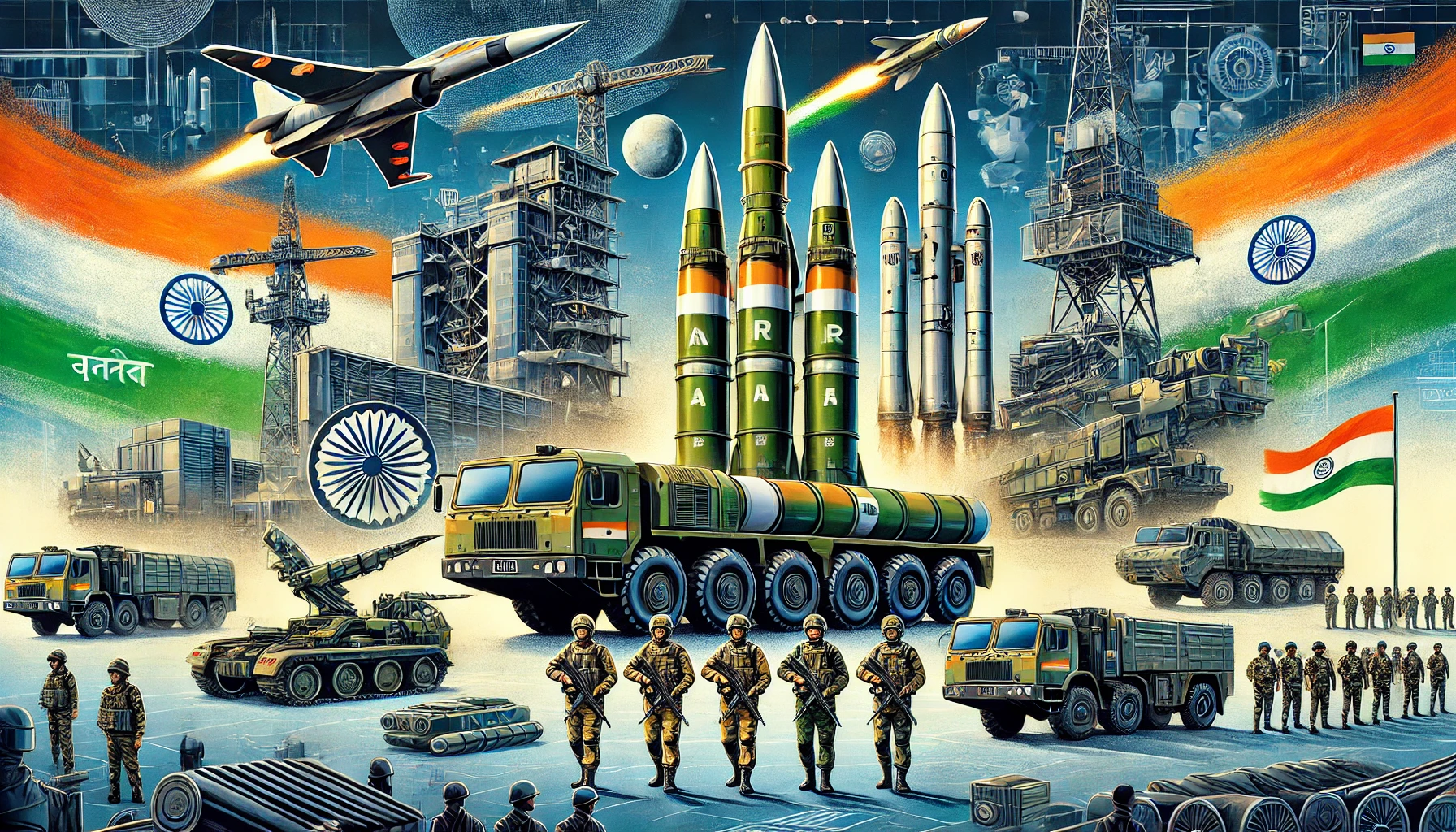
The contracts aim to enhance the Indian Army’s firepower with advanced rockets for the PINAKA Multiple Launch Rocket System (MLRS). This is a big step towards a major milestone in the modernisation of India’s artillery forces.
Under the contracts, the EEL will supply the Area Denial Munition (ADM) Type-1 (DPICM), and the MIL will provide the High Explosive Pre Fragmented (HEPF) Mk-1 (Enhanced) rockets. These advanced rockets are set to enhance the army’s ability to strike with precision and lethality. They will also be increasing the range of operations deep into enemy territory.
The ADM Type-1 rockets are equipped with specialised warheads designed to deliver sub-munitions over a large area, targeting enemy mechanised forces, vehicles, and personnel, thus denying access to specific areas. Meanwhile, the HEPF Mk-1 (Enhanced) rockets, an upgraded version of the in-service HEPF rockets, offer an extended range, making them ideal for high-precision strikes deep into enemy lines.
The procurement of these cutting-edge munitions represents a pivotal move in the modernisation of the Artillery Rocket Regiments, aligning with India’s ongoing efforts to enhance its defence infrastructure. The new rockets will provide the Indian Army with the capability for long-range, highly accurate strikes, boosting the nation’s firepower on the front lines.
Moreover, a contract for upgrades to the SHAKTI Software has been signed with Bharat Electronics Ltd (BEL), further contributing to the technological enhancement of India’s defence systems.
Beyond boosting defence capabilities, these initiatives are expected to generate significant employment opportunities, particularly in the Indian MSME sector, through the manufacturing of components. The projects are also in line with the government’s vision of self-reliance in defence production, supporting indigenous industries to play a central role in national security.
This strategic move reaffirms India’s commitment to developing a robust and self-sufficient defence infrastructure, solidifying its position as a key player in global defence technology and a proud flag-bearer of the ‘Aatmanirbhar Bharat’ initiative.
(Inputs from IANS)