







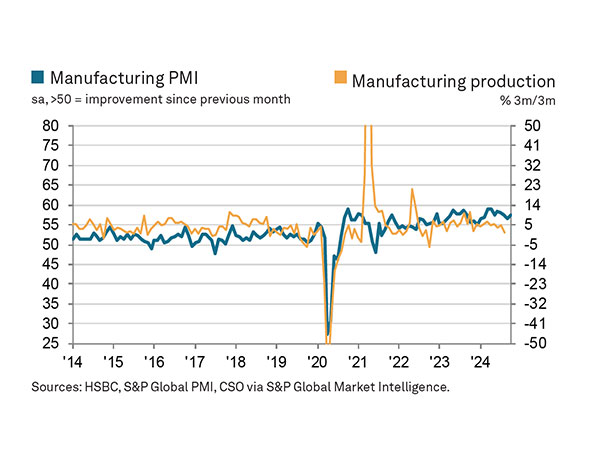
India’s manufacturing sector showed promising signs of growth in October, with the HSBC India Manufacturing Purchasing Managers’ Index (PMI) climbing from September’s 56.5 to 57.5. This upward trend represents the strongest performance recorded since early 2024 and highlights a rise in demand both domestically and internationally, supported by new orders and increased production.
According to the latest report from HSBC, compiled by S&P Global, October saw faster expansions in both total new orders and exports, driven by increased demand from markets across Asia, Europe, Latin America, and the U.S. Businesses reported that new products and successful marketing campaigns were significant factors in boosting sales.
This rise in demand led to an increase in production, with consumer and investment goods experiencing particularly strong growth. To meet this surge, companies raised their purchases of raw materials, with suppliers able to meet these needs smoothly. This increase in activity also spurred hiring across manufacturing firms, with nearly one in ten companies reporting new job additions.
Price pressures, however, are beginning to mount. The costs of raw materials, labour, and transportation have pushed input price inflation to a three-month high, as per the report.
Pranjul Bhandari, Chief India Economist at HSBC, said, “India’s headline manufacturing PMI picked up substantially in October as the economy’s operating conditions continue to broadly improve. Rapidly expanding new orders and international sales reflect strong demand growth for India’s manufacturing sector.”
Bhandari also pointed out that both input and output prices are on the rise due to ongoing inflationary pressures related to materials, labour, and transportation costs. As the third fiscal quarter begins, business confidence remains robust, driven by expectations of sustained consumer demand, upcoming product launches, and pending sales approvals. In light of these factors, many companies have opted to raise their selling prices to mitigate the impact of rising operational costs.
(ani)