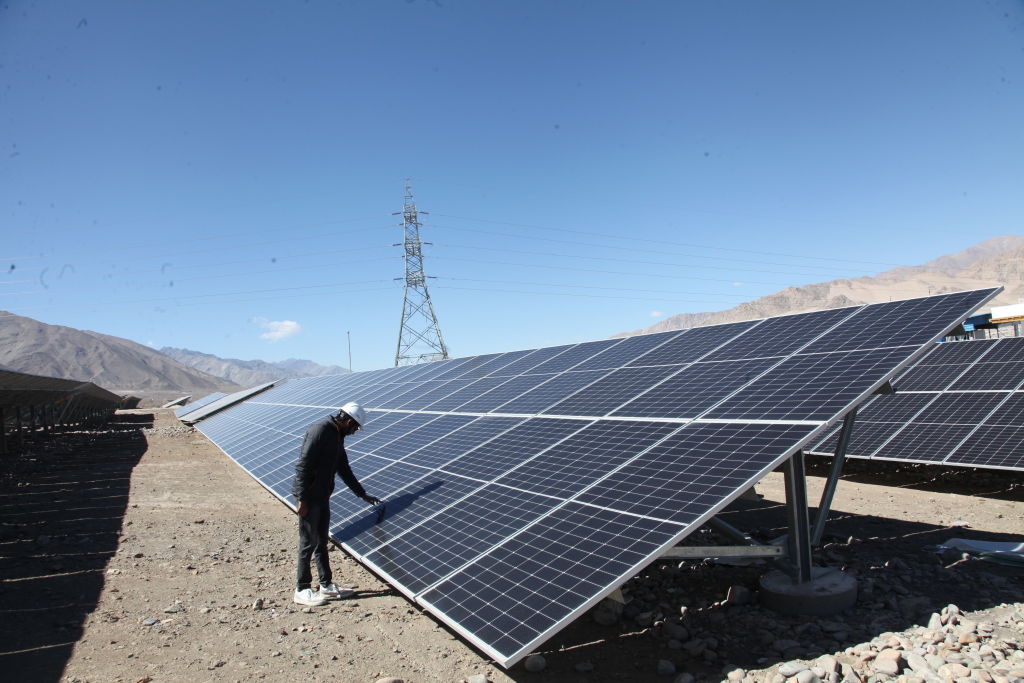
India’s rooftop solar energy capacity is expected to rise significantly from 17 GW to an estimated 25–30 GW between FY25 and FY27, according to a report released on Tuesday..
This projected surge is aligned with the country’s broader energy transition goals as solar power continues to emerge as a central pillar in India’s clean energy roadmap.
As per CareEdge Ratings, rooftop solar—especially in the commercial and industrial (C&I) segment—is set to play a critical role in India’s renewable growth trajectory. The nation’s total renewable energy capacity stood at 220 GW as of FY25, with a target of reaching 300 GW of solar capacity by 2030.
Rooftop solar capacity reached 17.02 GW in FY25. Increased awareness among businesses about reducing operational costs and meeting sustainability goals is driving its rapid adoption.
The report highlights that government incentives, declining technology costs, and supportive policies—such as net metering and Production Linked Incentive (PLI) schemes—are expected to further accelerate rooftop solar deployment.
“Rooftop solar installations in India have gained momentum. With the growing C&I demand backed by an improving policy ecosystem, we expect the market to reach nearly 25–30 GW over the next two years,” said Tanvi Shah, Director at CareEdge Advisory and Research.
The PM Surya Ghar Muft Bijli Yojana, which aims to install rooftop solar in one crore households with subsidies up to Rs. 78,000, is poised to strengthen residential adoption. The scheme is designed to support low- and middle-income households by reducing electricity bills while also creating nearly 17 lakh jobs, thus boosting the entire solar value chain.
In a notable development, India’s rooftop solar initiative crossed the milestone of 10 lakh installations as of March 10.
Among states, Gujarat continues to lead the way through its ambitious ‘Surya Gujarat’ programme. Maharashtra is also witnessing strong C&I uptake, particularly from MSMEs and urban commercial centres.
The report notes that the rooftop segment currently accounts for around 20% of India’s total solar capacity. Its growing importance is attributed to its distributed nature and direct consumer engagement, despite utility-scale solar remaining the dominant contributor.
(With IANS inputs)