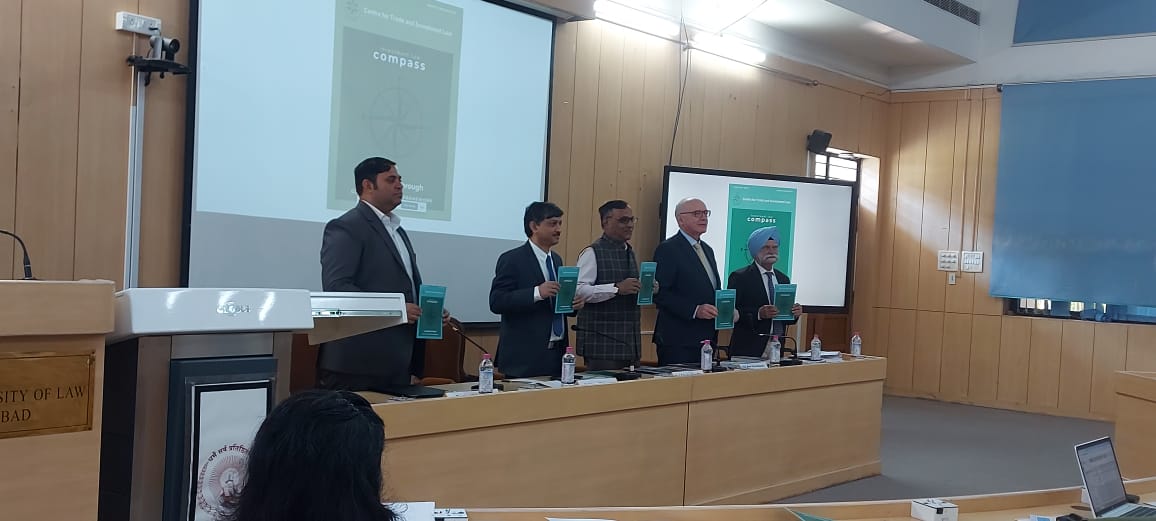
A three-day international conference, organized by the Centre for Trade and Investment Law (CTIL), concluded in Delhi on Thursday, highlighting India’s evolving industrial policy, the role of Production Linked Incentive (PLI) schemes in boosting manufacturing competitiveness, and the importance of green transition and inclusive sustainability. The event brought together policymakers, scholars, and industry experts to examine key themes influencing India’s industrial landscape amid shifting global dynamics.
The three-day conference, titled “Navigating the Future: Industrial Policy and Global Competitiveness,” was hosted in collaboration with the Centre for International Trade and Business Laws, NALSAR University of Law, and the World Trade Institute (WTI), University of Bern. Held from January 17-19 at NALSAR University of Law in Hyderabad, the conference focused on addressing industrial policy challenges, including the critical role of WTO disciplines in maintaining a rules-based international trading system.
Discussions at the conference underscored the relevance of green industrial policies to foster innovation and technology, particularly in light of the global shift towards sustainability. Prof. James J. Nedumpara, Head of CTIL, emphasized the importance of aligning India’s industrial strategies with international trade norms and embracing policies that promote environmental sustainability.
Prominent speakers, including Ujal Singh Bhatia and Professor Peter Vanden Bosche, both former members of the WTO Appellate Body, highlighted the need for coherence between trade and industrial policies to ensure long-term growth and global competitiveness. Dammu Ravi, Secretary (Economic Relations), Ministry of External Affairs, highlighted India’s potential to drive energy transition and play a pivotal role in global raw material supply chains.
Montek Singh Ahluwalia, Former Deputy Chairman of the Planning Commission, drew attention to the global shift from free trade to protectionism and the challenges posed by China’s rise and evolving U.S. policies. He stressed the need for transparent and cost-effective industrial interventions, particularly through initiatives like PLIs, while ensuring compliance with WTO rules.