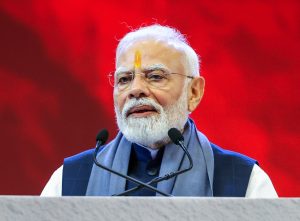
In a development for cultural diplomacy, Kuwait has launched a Hindi radio program on its national broadcasting network. This initiative has garnered attention not only from the Indian diaspora in Kuwait but also from Prime Minister Narendra Modi, who spoke about this initiative in the 111th edition of his Mann Ki Baat radio program in June 2024.
To discuss this remarkable step in Indo-Kuwaiti relations, we have with us today Dr. Adarsh Swaika, Ambassador of India to Kuwait.
Prime Minister Narendra Modi talked about the Hindi program on Radio Kuwait in his popular radio program Mann Ki Baat’s 111th edition. What are your thoughts on this?
Dr. Swaika: It is a matter of immense satisfaction that the recently broadcast program on Kuwait National Radio, “Namaste Kuwait,” found mention in Prime Minister Narendra Modi ji’s Mann Ki Baat episode. What’s more important is that this was the first Mann Ki Baat episode after the parliament elections and the Prime Minister’s re-election for a third term. This is strong encouragement for the propagation of Hindi abroad, including its role in strengthening cultural ties between countries like India and Kuwait.
How did the idea for a Hindi program on Radio Kuwait come about? Have you had any discussions with the Kuwaiti government regarding their motivations for launching a Hindi program?
Dr. Swaika: The idea for this program came from the fact that Indians today are the largest expatriate community in Kuwait. They are called the community of first preference, numbering almost over a million. We were trying to find ways to bridge information gaps for the large Indian community. We thought this would provide not only information but also entertainment for our people in Kuwait.
We made this proposal to the Ministry of Information of Kuwait, and I must acknowledge that the Minister of Information and Culture personally, and the Under Secretary of Information, were both very receptive to this proposal. Today, we see it come to fruition with this program being aired every Sunday at 8:30 p.m. on both FM and AM channels.
What type of content is featured in the India broadcast program?
Dr. Swaika: The program is essentially produced by Kuwait National Radio. If you’ve heard the episodes over the last three to four months, it focuses on recent developments in both India and Kuwait. It covers sports, the film industry – Bollywood is very popular in Kuwait – Bollywood music, and also snippets about the India-Kuwait historical relationship.
For example, in one episode, they spoke about a Kuwaiti lady who has historical connections with India; her family lived in Mumbai, and they recounted those experiences.
More importantly, the radio show is hosted by two of our Indian nationals. I think this broadly covers the content of the program, but I’m sure it will develop as we go on.
How has the program been received by the Indian community in Kuwait? Have you received any feedback?
Dr. Swaika: I must say that this has been widely received not only by Indians in Kuwait but also back home in India and by Kuwaitis as well. I have received feedback from Kuwaiti friends that this is a very good gesture to bring both our communities together. Obviously, the Indians in Kuwait widely welcome this initiative.
What impact do you believe this program has on promoting Indian culture in Kuwait?
Dr. Swaika: I believe it will go a long way in fostering greater cultural cooperation between our two countries. This program helps disseminate information related to both the culture of India and the culture of Kuwait, among the Indians in Kuwait as well as the Kuwaitis. I think it will be a very good platform to further strengthen our cultural exchanges.
Do you think this initiative could serve as a model for other countries with significant Indian communities?
Dr. Swaika: Absolutely. I think this is something which should be replicated in countries across the world. I must thank the Kuwaiti government and the Kuwaiti people for agreeing to this and for implementing it. I’m sure there will be other takers in other countries in the region as well. So this is an idea which could be replicated in many other countries.
By – Vinod Kumar (Dubai)