







Iran executed its most significant missile barrage of the year against Israel early Sunday morning as part of Operation “True Promise 3,” with Wave 20 targeting Ben Gurion Airport, biological research centers, and command and control facilities. The Islamic Revolutionary Guard Corps confirmed the strikes were launched in response to recent U.S. and Israeli airstrikes on Iranian territory, marking a dangerous escalation in the ongoing West Asian conflict that has now entered its second week.
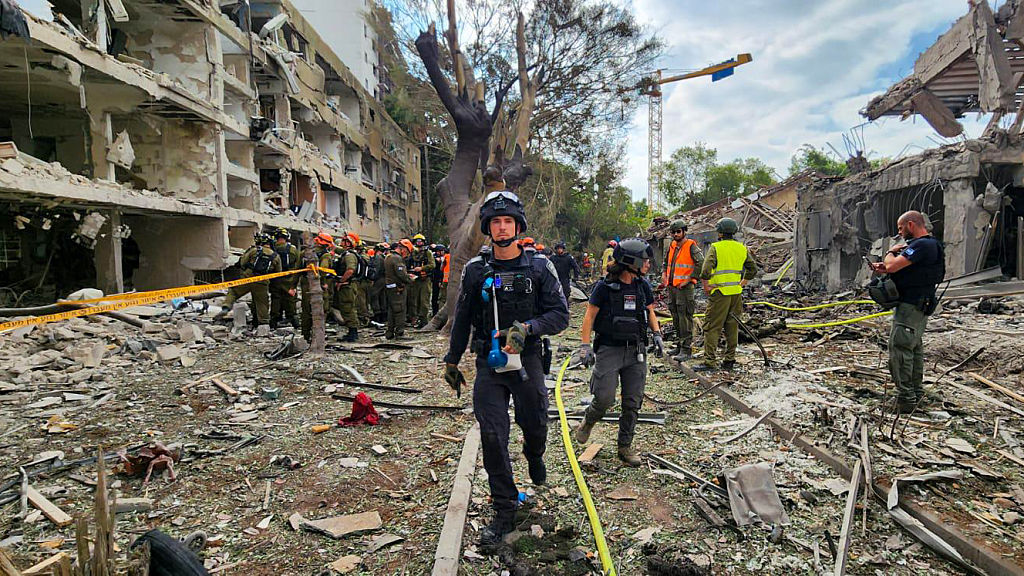
At least 23 people were wounded by Iranian missiles in Haifa, with three seriously injured including a teenager, while a woman died of a heart attack in Karmiel. Israeli officials report at least 18 Iranian missiles penetrated Israel’s missile defense system overnight, representing what sources describe as the highest percentage of successful hits this year. The Iranian missile barrage consisted of approximately 30 ballistic missiles, according to Israeli defense sources, with precision-guided solid and liquid fuel missiles alongside Shahed 136 suicide drones targeting central occupied Palestine and Ben Gurion Airport.
The risk of a full-scale regional war in West Asia is growing rapidly as tensions between Iran, Israel, and the United States threaten to spiral out of control.
The fallout would not be limited to the battlefield. Economic disruption on a global scale is seen as a near certainty if hostilities escalate.
Iran’s extensive network of allied proxy groups, including Hezbollah in Lebanon, the Houthis in Yemen, and various militias in Iraq, are expected to intensify attacks on U.S. allies and strategic interests, potentially expanding the conflict into Lebanon, Syria, Iraq, Saudi Arabia, and beyond.
The Strait of Hormuz, a vital artery for the world’s oil and natural gas, could be closed or partially blocked, causing oil prices to surge dramatically and triggering inflation across major economies. Global supply chains would also suffer, with shipping routes through the Red Sea and Persian Gulf rendered unsafe. Rerouting via alternative paths, such as around the Cape of Good Hope, would significantly increase freight costs and delivery times, hitting global trade hard. Foreign investment in the region would likely collapse, with capital flight halting key development initiatives and crippling already fragile economies.