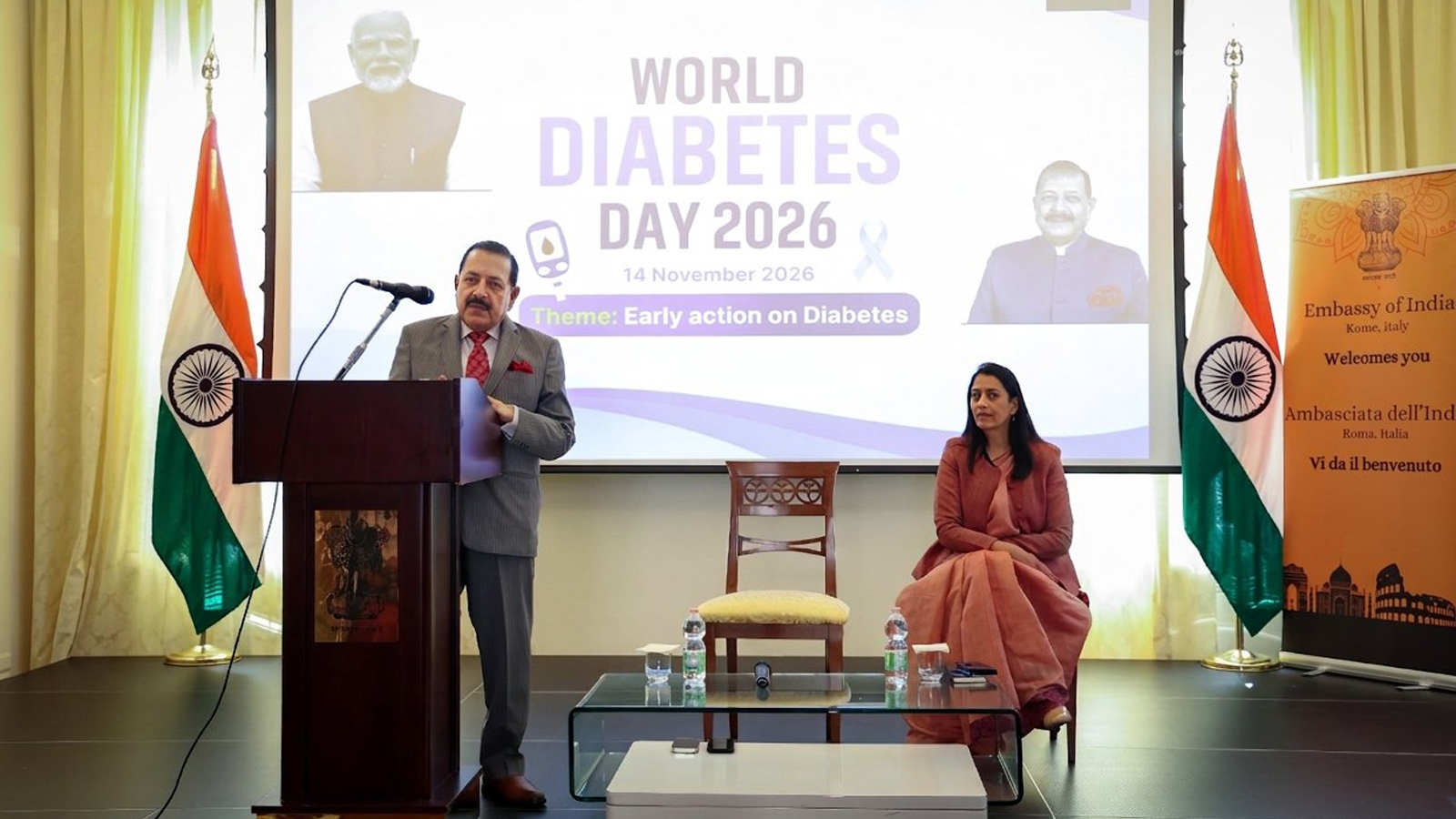
Union Minister of State (Independent Charge) for Science and Technology and Earth Sciences Dr. Jitendra Singh on Saturday called for greater emphasis on diabetes prevention, particularly among young people, stressing that lifestyle modification, healthy dietary habits, regular physical activity and obesity control remain essential to tackling the growing burden of the disease.
Addressing a World Diabetes Day programme at the Embassy of India in Rome, Singh said that although several new categories of medicines have emerged for treating Type 2 Diabetes Mellitus, the fundamental approach to diabetes management continues to be lifestyle modification and control of obesity.
Referring to this year’s theme, ‘Early Action on Diabetes’, the Minister said it captures the essence of effective diabetes management through early detection, timely intervention and sustained control of blood glucose levels. He emphasised that pharmaceutical and non-pharmaceutical measures must be adopted together to prevent complications and reduce the spread of the disease.
Singh, a noted diabetologist and professor, expressed concern over the changing age profile of diabetes, observing that a condition once associated largely with middle and older age groups is increasingly affecting young people in their prime. Diabetes at an early age can adversely affect professional productivity and quality of life, while requiring longer-term blood glucose management to prevent damage to vital organs, including the kidneys, eyes and heart.
Highlighting the close metabolic links between obesity, diabetes, dyslipidemia, hypertension and cardiovascular disease, the Minister said the Government of India has accorded priority to addressing these interconnected health challenges. He also pointed to the particular vulnerability of Indians to central obesity, an independent risk factor for several metabolic disorders, including diabetes.
Recalling Prime Minister Narendra Modi’s repeated emphasis on controlling obesity, Singh underlined the need to strengthen preventive healthcare and encourage people to adopt healthier lifestyles.
The Minister highlighted the integrated approach adopted by the Government since 2014 to address metabolic disorders and lifestyle-related diseases. He referred to the establishment of the Ministry of Ayush, the introduction of wellness centres and the annual observance of the International Day of Yoga on June 21. The International Day of Yoga was proposed by PM Modi and unanimously adopted by the United Nations.
He said these initiatives contribute to promoting preventive healthcare and reducing the burden of lifestyle-related diseases. Singh also highlighted measures to strengthen early detection and access to treatment, including mass screening for diabetes and healthcare access initiatives under Ayushman Bharat.
Emphasising the importance of everyday habits, he said dietary discipline, balanced eating, adequate physical activity and attention to physical and mental stress are essential components of diabetes prevention and management.
The Minister also noted that India’s substantial experience in managing diabetes, given the large number of people living with the condition in the country, places Indian medical experts in a position to share their knowledge and expertise internationally. He said India could contribute meaningfully to global efforts to address the growing public health challenge.
The World Diabetes Day event in Rome witnessed enthusiastic participation from members of the Indian diaspora, including students, women, entrepreneurs and professionals from diverse fields. Participants expressed pride in India’s progress in science, technology, research and healthcare, and appreciated the country’s growing contribution to global scientific advancement under PM Modi’s leadership.
The programme also provided an opportunity for the Minister to interact with members of the Indian community in Italy. It was organised as part of Singh’s official visit to Italy from November 11 to 15.
Reiterating the central message of World Diabetes Day, Singh said efforts to address diabetes must extend beyond treatment and focus on prevention, early diagnosis and sustained management, with particular attention to the younger population.
(PIB)