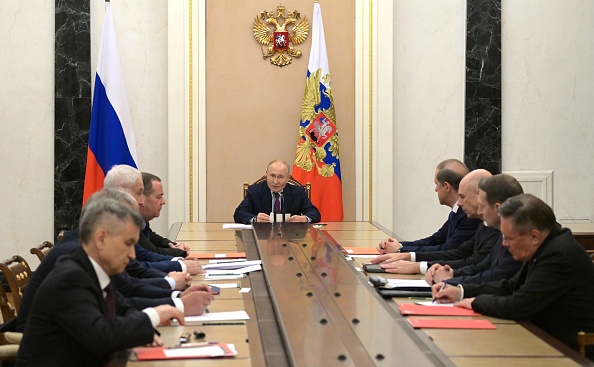
The Kremlin said on Thursday that changes to Russia’s nuclear weapons doctrine outlined by President Vladimir Putin should be considered a signal to Western countries that there will be consequences if they participate in attacks on Russia.
Putin said on Wednesday that Russia could use nuclear weapons if it was struck with conventional missiles, and that Moscow would consider any assault on it supported by a nuclear power to be a joint attack.
The decision to change Russia’s official nuclear doctrine is the Kremlin’s answer to deliberations in the United States and Britain about whether or not to give Ukraine permission to fire conventional Western missiles into Russia.
Kremlin spokesman Dmitry Peskov said adjustments to a document called “The Foundations of State Policy in the Sphere of Nuclear Deterrence” had been formulated.
Asked by reporters if the changes were a signal to the West, Peskov said: “This should be considered a definite signal.”
“This is a signal that warns these countries about the consequences if they participate in an attack on our country by various means, and not necessarily nuclear ones,” Peskov said.
The world, Peskov said, was witness to an “unprecedented confrontation” which he said was provoked by the “direct involvement of Western countries, including nuclear powers” in the Ukraine war.
Peskov said a decision on whether or not to publish the nuclear documents would be made at a later date.
Russia’s current published nuclear doctrine, set out in a 2020 decree by Putin, says Russia may use nuclear weapons in case of a nuclear attack by an enemy or a conventional attack that threatens the existence of the state.
Asked if rejecting a post-Soviet moratorium on nuclear tests had been discussed as part of the changes, Peskov said he could not answer the question as Wednesday’s meeting had been mostly top secret.
(Reuters)