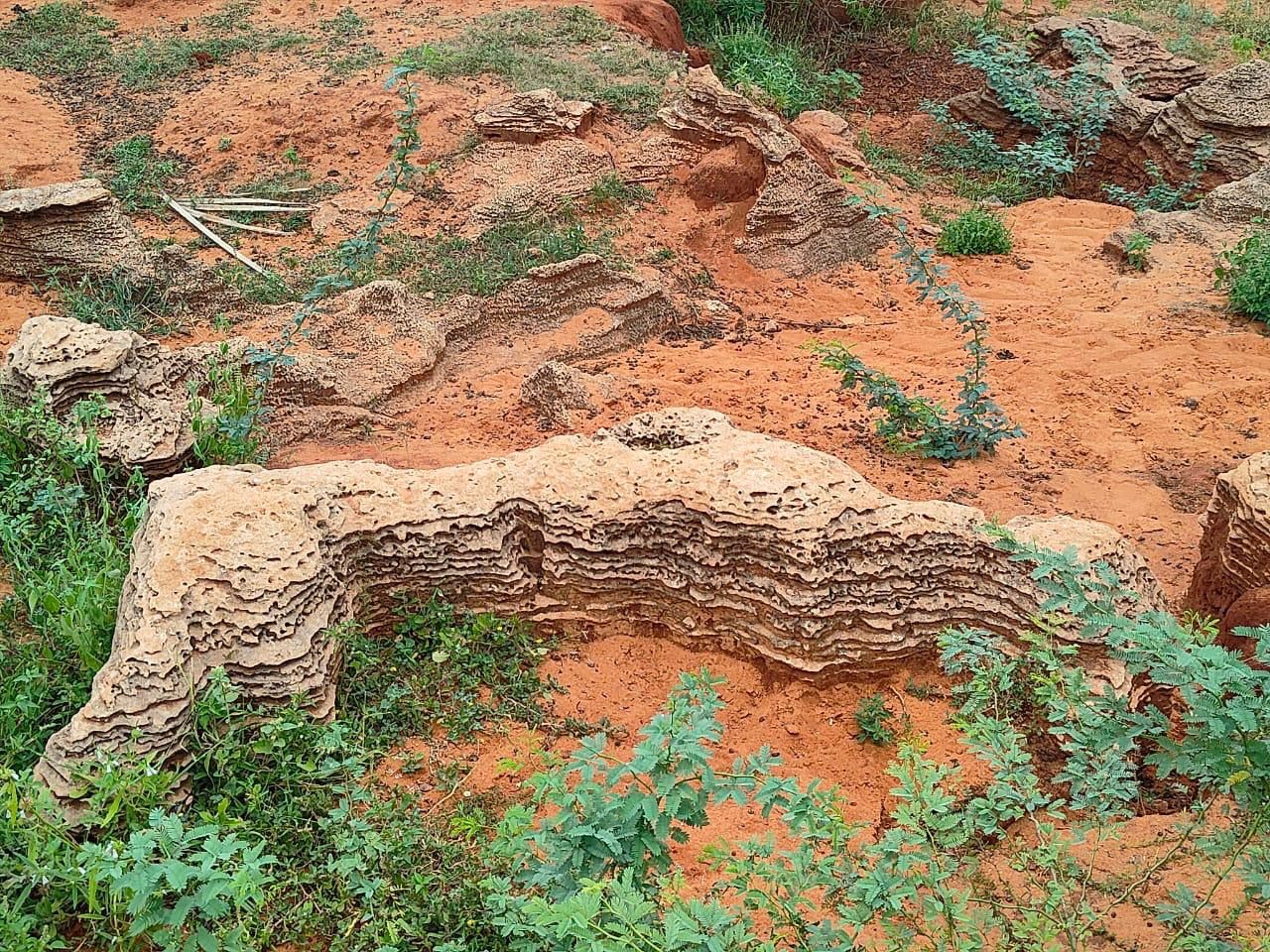
Marine fossils dating back 8,000–12,000 years have been unearthed in Thoothukudi district of Tamil Nadu, offering fresh insights into the region’s ancient coastline.
The site, located in Panaiyur village under Kulathur South Panchayat, about 25 km from Thoothukudi, was first flagged by a local enthusiast in December 2025. A team from the Zoological Survey of India subsequently conducted geological and palaeontological studies between January 5 and 10.
During the survey, scientists collected 104 fossil specimens, primarily comprising marine organisms such as bivalves and gastropods. Researchers said the fossils belong to the Holocene epoch, indicating they date back roughly 8,000 to 12,000 years.
The findings suggest that the area was once submerged, likely due to rising sea levels during the post-glacial period, leading to the formation of these fossil deposits. Notably, the site lies 5–7 km inland from the present coastline, pointing to significant shifts in coastal geography over time.
Experts have recommended conservation measures for the site, along with radiocarbon dating to establish a more precise age profile of the fossils. The discovery is being seen as a key addition to the scientific understanding of the region’s geological and marine history.
In a post on X, Union Environment Minister Bhupender Yadav said the survey was conducted at the request of the district administration after fossil beds were exposed by heavy rainfall in 2023. He noted that the assessment confirmed a Holocene-era fossil bed, adding valuable data to India’s Quaternary fossil record.
Yadav said the discovery would help deepen understanding of India’s ancient environment, biodiversity, and climate, and commended the ZSI for its scientific response in documenting and safeguarding the find.
Meanwhile, Antony Ravindran of the Department of Geology at VO Chidambaram College, Thoothukudi, said the Kulathur–Panaiyur site exhibits distinct fossil forms and subsurface geological features. The area is dominated by sedimentary formations, including sandstone layers and lateritic red soils.
He noted that much of the terrain had remained buried under sand until heavy rainfall in 2023 exposed the underlying deposits. The site also shows features such as water-cut channels through sedimentary layers, indicating past marine activity and sediment movement.
Scientists say further studies at the site could yield crucial evidence on sea-level changes and coastal evolution along Tamil Nadu’s southeastern coast.
(With ANI inputs)