











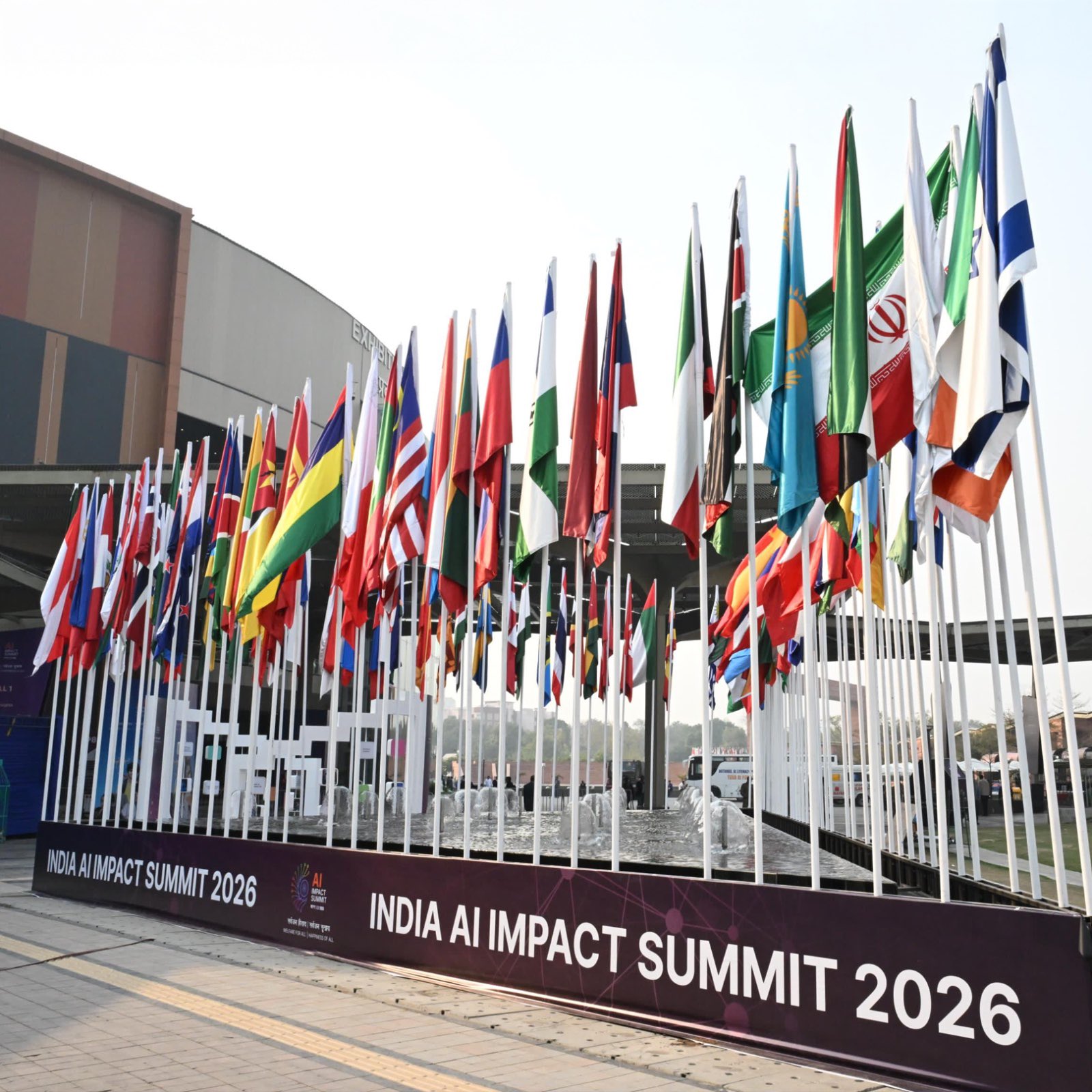
The Ministry of Earth Sciences (MoES) on Thursday led a high-level discussion on leveraging Artificial Intelligence (AI) for sustainable ocean management and Blue Economy growth during the India AI Impact Summit 2026 at Bharat Mandapam in New Delhi.
The panel discussion, titled “AI for Our Oceans of Tomorrow: Data, Models and Governance,” brought together senior government officials, international representatives, scientists, industry leaders, start-ups and financial experts to explore how AI can transform ocean science, governance and disaster resilience.
Participants underlined that AI has the potential to significantly strengthen India’s ocean governance frameworks, improve marine disaster preparedness, enhance livelihoods dependent on coastal resources and accelerate the growth of the Blue Economy.
Delivering the keynote address, Dr. M. Mohapatra, Director General of the India Meteorological Department, highlighted the central role oceans play in climate regulation, disaster risk reduction, food security and livelihoods. He noted that India has developed strong capabilities in ocean observation, cyclone forecasting, marine data systems and early warning services, which have contributed to a substantial reduction in loss of life during extreme weather events.
He stressed the growing importance of integrating data-driven and AI-enabled models with traditional physical models, especially in the face of climate change challenges such as ocean warming, acidification and sea-level rise. Mohapatra also pointed to the Deep Ocean Mission as a flagship initiative aimed at deep-sea exploration, offshore energy development, biodiversity conservation and the sustainable use of marine resources.
Addressing the gathering, Norway’s Ambassador to India, Ms. May-Elin Stener, highlighted the expanding cooperation between India and Norway in the oceans and Blue Economy domain. She observed that AI can significantly enhance fisheries management, shipping efficiency, port operations and coastal resilience when built on open, interoperable and trusted digital systems. Stener added that India’s leadership in digital public infrastructure positions it well to develop a global digital ocean framework based on open data and shared standards.
The panel discussion that followed featured experts from government, academia, industry and international institutions. The speakers noted that India is uniquely placed to lead the Global South by building a Digital Ocean Infrastructure integrating open data, AI-driven analytics and robust governance frameworks. They emphasized that AI will be critical for scaling marine livelihoods, lowering operational costs and enabling timely, data-driven decisions across Blue Economy sectors.
Panelists also pointed out that despite increasing data availability, oceans remain complex and relatively data-scarce environments. They called for the development of physics-informed AI and stronger international collaboration to create open, interoperable digital public goods that reflect the transboundary nature of oceans. Supportive policies, data liquidity, blended finance and risk-sharing mechanisms were identified as essential for unlocking the Blue Economy’s long-term potential as a sustainable growth engine for India and other Global South nations.
The session concluded with remarks by Dr. (Cdr) P. K. Srivastava, Scientist G and Adviser at the Ministry of Earth Sciences, who reiterated the Ministry’s commitment to building a structured pathway for integrating AI across ocean-related programmes.







