








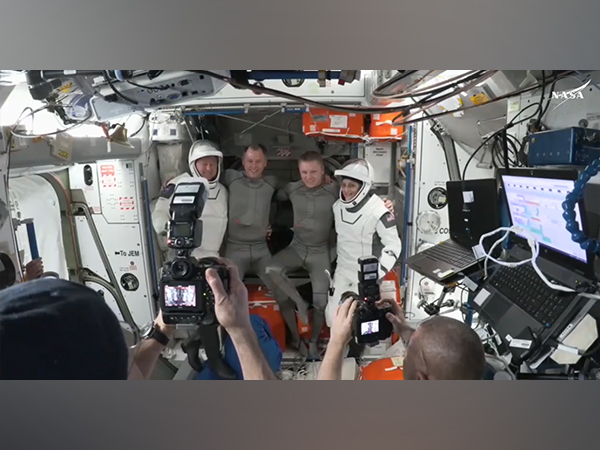
NASA astronauts Sunita Williams and Butch Wilmore have begun a 45-day rehabilitation program to help them adapt to Earth’s gravity after spending nine months in space.
The duo made a safe return to Earth early Wednesday, as SpaceX’s Crew-9 mission successfully splashed down off the coast of Florida. Having spent months in microgravity, the astronauts will undergo intensive physical reconditioning to help their bodies readjust to Earth’s gravity.
Astronauts returning from space often experience physiological changes, including fluid shifts that cause puffy faces, muscle atrophy leading to “chicken legs,” temporary height increase, and reduced bone density.
Microgravity affects various aspects of the human body, including aerobic capacity, muscle strength, endurance, stamina, balance, coordination, bone density, and neurovestibular function. Astronaut Strength, Conditioning, and Rehabilitation (ASCR) specialists have implemented a structured reconditioning program aimed at restoring the astronauts’ physical health.
The rehabilitation process begins immediately upon landing and involves two-hour daily sessions, seven days a week, for 45 days. The program is customized for each astronaut based on test results, medical status, and mission roles.
The rehabilitation is divided into three phases. The first phase starts on landing day and focuses on mobility, flexibility, and muscle strengthening. The second phase incorporates proprioceptive exercises and cardiovascular training, while the third and longest phase prioritizes functional development.
Past cases have shown that astronauts often regain and, in some cases, even improve upon their pre-flight physical condition after completing this program.
Williams and Wilmore’s prolonged stay in space was unplanned. They launched aboard Boeing’s Starliner on June 5 last year for what was supposed to be an eight-day mission.
However, technical issues with the spacecraft’s propulsion system forced it to return without them, extending their stay aboard the ISS. Their situation gained widespread attention, sparking debates about space travel safety and even political discussions.
The return process began after Crew-10 arrived at the ISS on Sunday, allowing Williams, Wilmore, NASA’s Nick Hague, and cosmonaut Aleksandr Gorbunov to begin preparations for their journey home.
Seventeen hours after departing the ISS, their SpaceX Dragon capsule safely splashed down at 3:27 a.m. IST. Following their retrieval from the capsule, they were immediately sent for medical evaluations before beginning their rehabilitation.
(IANS)