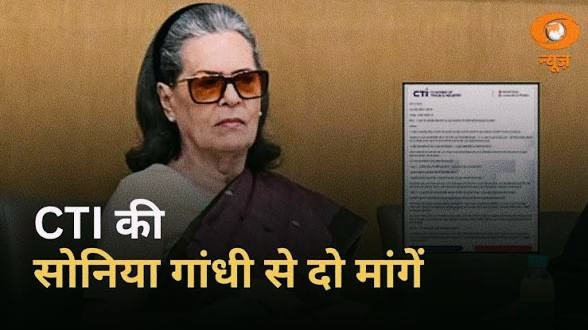
More than a decade has passed since the investigation into the National Herald case began, focusing primarily on Congress leaders Sonia Gandhi and Rahul Gandhi. On the surface, the case appears straightforward, but the Congress party’s rhetoric and claims of victimhood, allegedly driven by its leaders, have undermined the principles of equality under Article 14. The political narrative has overshadowed the legal merits, complicating public understanding of the issue.
The National Herald case centres on allegations of financial misconduct by Congress leaders. According to the Enforcement Directorate’s chargesheet, Sonia Gandhi and Rahul Gandhi are among the primary accused.
Initiated in 2012 by Subramanian Swamy, the case alleges that Congress orchestrated a scheme to control valuable real estate owned by Associated Journals Limited (AJL), the publisher of the historic National Herald newspaper.
Congress allegedly loaned AJL Rs. 90.25 crore, which AJL could not repay, leading to the debt’s transfer to Young Indian Private Limited (YIL), a non-profit controlled by Sonia and Rahul Gandhi.
YIL acquired 99% of AJL’s shares for Rs. 50 lakh, gaining influence over properties valued at Rs. 2,000–5,000 crore.
In essence, AJL had an outstanding interest-free debt of Rs. 90 crore owed to Congress by the late 2000s. In 2010, YIL was established with over 75% of its stake held by Sonia and Rahul Gandhi, raising questions about its purpose and shareholding structure.
The debt was then transferred from Congress to YIL, and AJL’s real estate assets, worth Rs. 2,000–5,000 crore, came under YIL’s control through a shareholding structure that appears designed to prioritize real estate over revival. Congress defends this as a legitimate effort to preserve a freedom-struggle legacy, emphasizing YIL’s non-profit status. Yet, more than a decade later, critical questions remain unanswered.
Why did AJL, despite its Rs. 90 crore debt and seven-decade legacy as a newspaper, fail to secure a bailout from any of its stakeholders, over a thousand in number, or attract promoters to sustain operations? Surely, a publication with such historical significance would have had enough well-wishers to step forward. Why did none emerge?
Was Young Indian Private Limited (YIL), established in 2010 during the UPA’s peak with nearly 75% of its stake held by Sonia and Rahul Gandhi, specifically created to address AJL’s debt owed to Congress, and why was the majority stake concentrated with one family? The shareholding patterns of AJL were opaque, but why did YIL allocate a 76% stake to only two shareholders from one family?
Why was the most obvious solution—liquidating assets—not pursued before converting the debt into equity? During the UPA’s tenure at the Centre and Congress rule in several states, why were some AJL properties not sold to sustain the newspaper, and couldn’t the government have addressed any restrictions on such sales to support its continuation? This could have prolonged the newspaper’s operations, yet it was overlooked. Why?
How did YIL, launched in 2010 with just Rs. 50 lakh in paid-up capital, convert AJL’s Rs. 90 crore debt into 9 crore shares, acquiring 99% of them, and why did this equity-for-debt swap prioritize control over resolving the debt? YIL appears to have focused on securing real estate assets rather than addressing the mounting debt.
Was the transaction involving AJL’s Rs. 90 crore interest-free loan a real estate deal or an insolvency arrangement, and given Congress’s presumed indirect shareholding in AJL with no notional loss except the principal, does this raise questions about the deal’s legitimacy? Many question Congress’s indirect role in AJL, followed by the creation of YIL, suggesting assets were transferred among entities controlled by the same individuals through a complex shareholding structure.
Section 25 indicates that Congress, as a non-profit, did not directly profit from the acquired properties, but with YIL, controlled by the Gandhi family, now directing AJL’s operations, how can one assume YIL could not influence how AJL spends its generated income? Did YIL ever direct AJL to donate to a political party or foundation? The movement of funds remains opaque, fuelling scepticism.
Is the 2010 acquisition of AJL by YIL, primarily tied to real estate and its income, indicative of a potential revival of the National Herald in 2025, and what role has YIL played in advancing the newspaper’s idealistic cause over the past 15 years? In 2025, the National Herald persists with a diminished presence. How should one evaluate YIL’s contributions?
Beyond the legal technicalities, which some experts view as clear-cut, the political rhetoric continues to escalate. While Congress maintains that no profits were pocketed, the opaque shareholding pattern—from AJL to Congress to YIL—raises concerns about financial misconduct. Courts have previously dismissed petitions from the Gandhis, and as the ED’s chargesheet provides further details, more clarity is expected.
Rahul Gandhi carries a copy of the Constitution during his political campaigns, emphasizing equality under Article 14. The National Herald case will test his commitment to those principles as the legal process unfolds.
Tushar Gupta is a Senior Journalist and a Political Analyst based out of Delhi