A study by Indian scientists has unveiled a new method to distinguish between pollen of cultivated crops and wild grasses, offering fresh insights into the origins of agriculture in the Central Ganga Plain.
The research, conducted by scientists from the Birbal Sahni Institute of Palaeosciences (BSIP), provides a powerful tool to reconstruct ancient farming practices and human influence on landscapes over thousands of years.
Cracking a long-standing scientific challenge
Cereal crops such as wheat, rice, barley and millets belong to the Poaceae family. However, their pollen closely resembles that of wild grasses, making it difficult for scientists to differentiate between the two under a microscope.
This limitation has long posed a challenge in tracing early agriculture, as pollen preserved in sediments is a key indicator of past vegetation, human settlement and environmental change during the Holocene epoch.
New biometric benchmark established
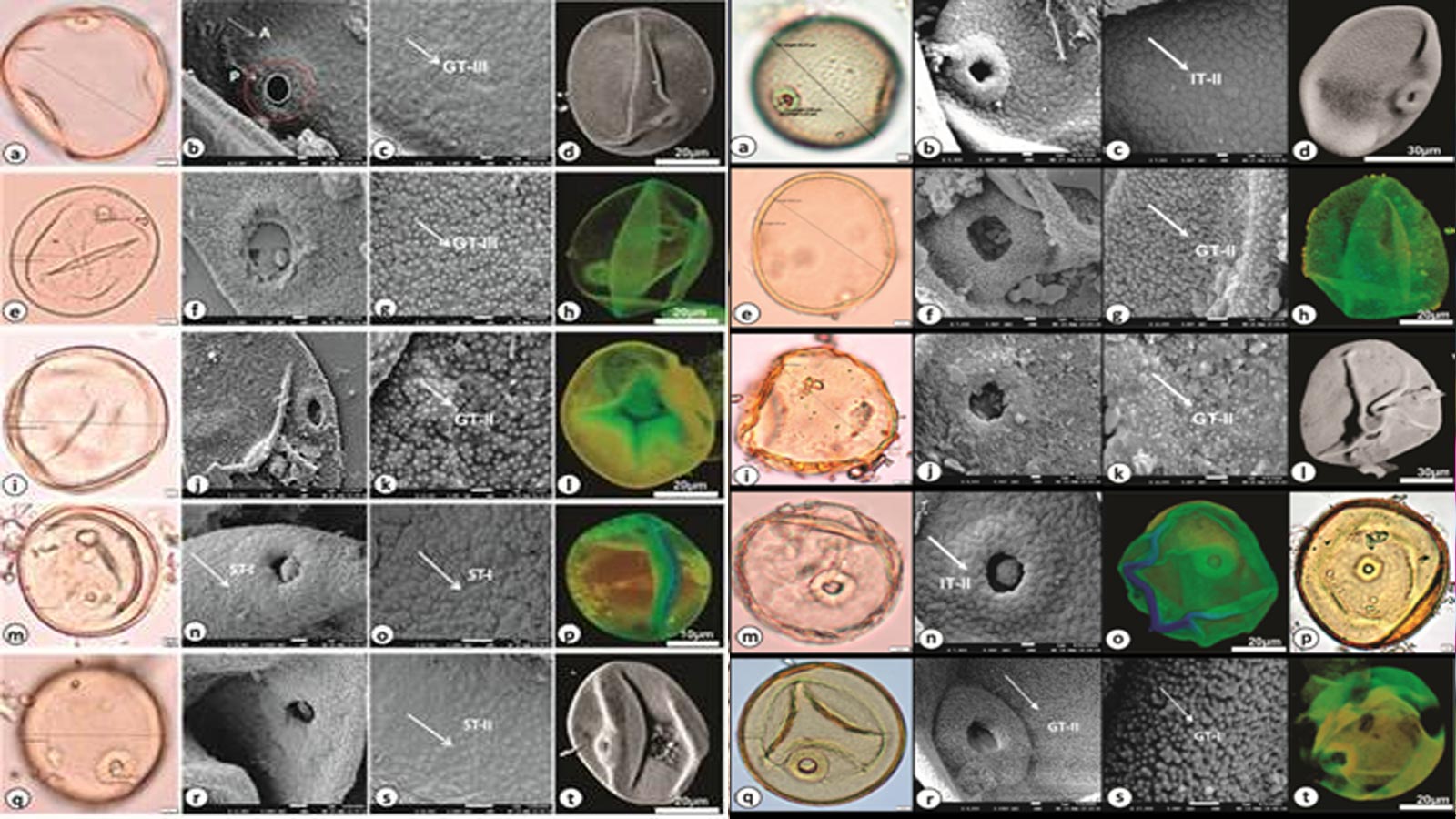
In a first-of-its-kind effort in India, researchers analysed 22 cereal and non-cereal grass species using advanced imaging techniques, including light microscopy and electron microscopy, to establish clear identification criteria.
Published in the journal The Holocene, the study introduces a “paired biometric threshold” to distinguish crop pollen from wild varieties. According to the findings, cereal pollen typically exceeds 46 micrometres in grain size and 9 micrometres in annulus diameter, while wild grass pollen falls below these values.
This region-specific benchmark allows scientists to more accurately identify ancient crop remains in sediment records.
Rewriting India’s farming history
The findings are particularly significant for the Central Ganga Plain, one of India’s most fertile and densely cultivated regions. By applying this new framework, researchers can now reconstruct past ecosystems, track changes in vegetation, and better understand how early human societies shaped the landscape.
Importantly, the study relies on indigenous data rather than European reference models, marking a major step forward in India-centric archaeological and environmental research.
Implications for archaeology and environmental studies
The Ministry of Science & Technology say the discovery will enhance the accuracy of studies on early agriculture, land use and human impact on ecosystems. It is expected to help archaeologists and historians trace the gradual transformation of the Ganga plains into a major agricultural hub.
The research was led by Dr. Swati Tripathi of BSIP, with contributions from scientists from institutions including the Botanical Survey of India, Lucknow University and the Indian Institute of Geomagnetism.
The Ministry noted that the study provides India with its first robust, region-specific scientific tool to trace the origins of farming and human settlement with much greater precision, opening new avenues for understanding the country’s agricultural past.