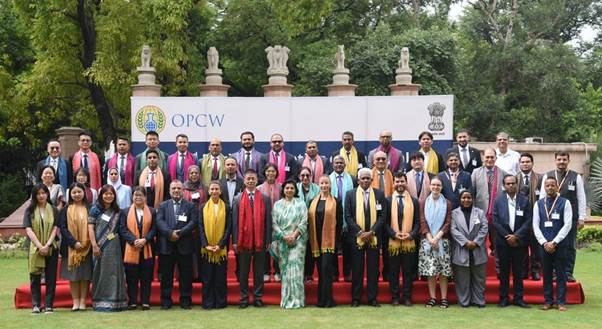
The Organisation for the Prohibition of Chemical Weapons (OPCW), in collaboration with India’s National Authority Chemical Weapons Convention (NACWC), convened the 23rd Regional Meeting of National Authorities of States Parties in Asia from July 1 to 3, at Vanijya Bhawan, New Delhi. The meeting brought together senior officials from OPCW, international delegates from across Asia, and representatives from India’s Ministry of External Affairs and Cabinet Secretariat.
This regional meeting is part of the OPCW’s ongoing efforts to support the effective implementation of the Chemical Weapons Convention (CWC), which came into force in 1997. With 193 member states, the OPCW is the global authority overseeing the verifiable and permanent elimination of chemical weapons. The organisation was awarded the Nobel Peace Prize in 2013 for its commitment to global chemical disarmament.
India, an original signatory to the Convention, has played a significant role in furthering its objectives. The NACWC, the national body responsible for implementing the CWC in India, recently mentored Kenya’s National Authority under the OPCW’s Mentorship/Partnership Programme, aimed at enhancing implementation capacities worldwide.
The Indian Chemical Council (ICC), the country’s oldest chemical industry association, also received international recognition for its work in promoting chemical safety and compliance. In 2024, ICC was awarded the OPCW-The Hague Award, marking the first time a chemical industry body anywhere in the world received this honour. The award acknowledged ICC’s contributions to advancing the goals of the Convention and improving industry-wide safety and security practices in India.
This year’s regional meeting in New Delhi served as a platform for 38 delegates from 24 Asian countries — including Australia, Bangladesh, Bhutan, China, Japan, the Republic of Korea, Singapore, and the United Arab Emirates, among others — to share experiences, discuss national implementation challenges, and exchange best practices. The discussions addressed key topics such as legislative frameworks, chemical safety and security, the role of industry stakeholders, and the emerging use of Artificial Intelligence in chemical monitoring and compliance.