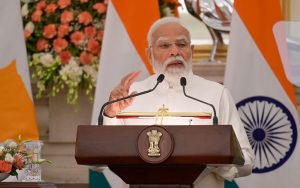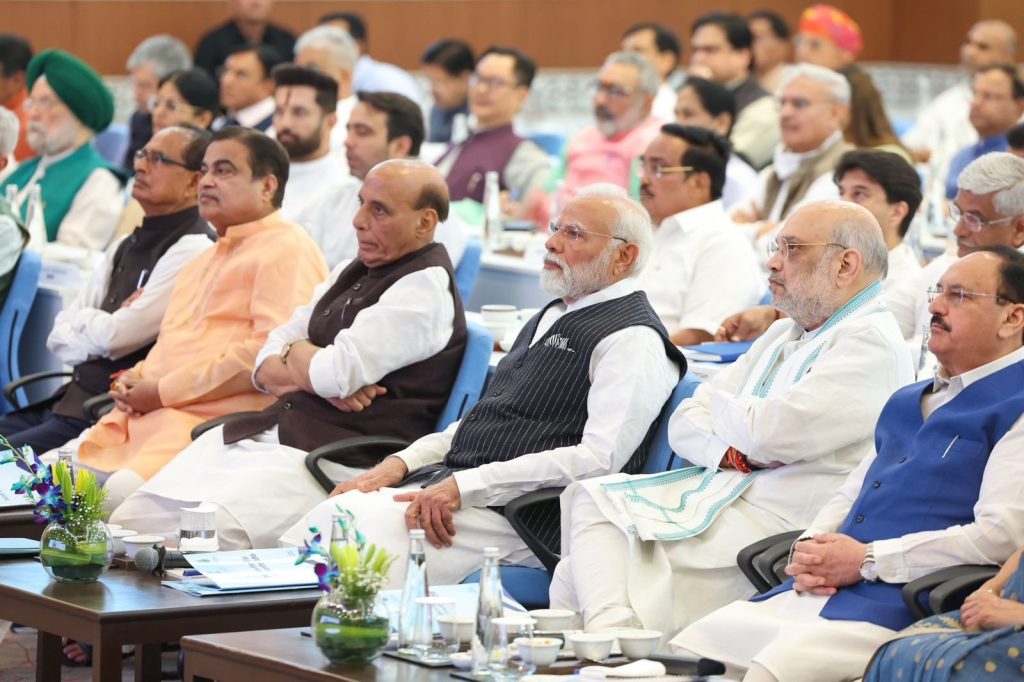
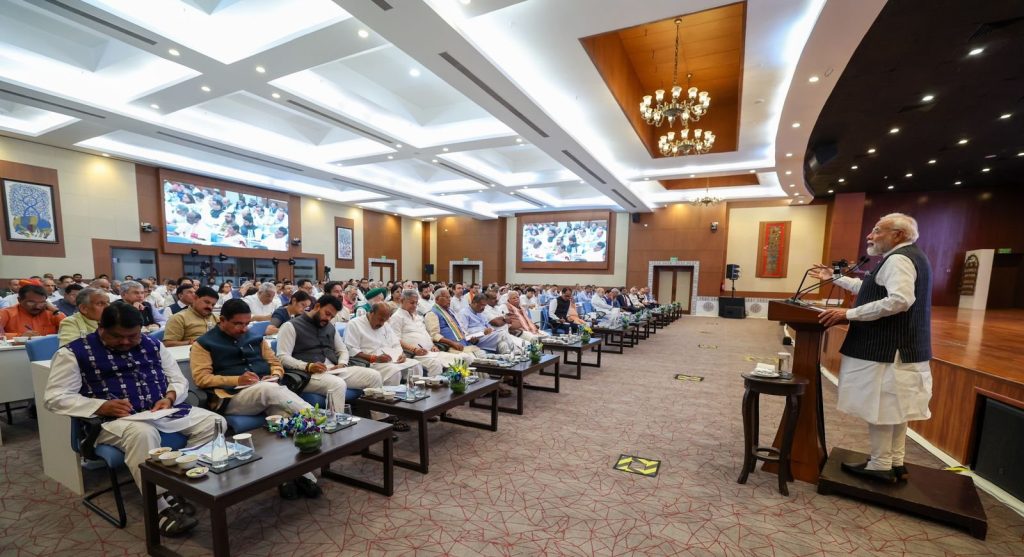
Prime Minister Narendra Modi on Wednesday reiterated his government’s unwavering commitment to the welfare of the poor, calling the past 11 years of National Democratic Alliance (NDA) rule a period of transformative and inclusive governance.
In a post on X, Prime Minister Modi said the government’s sustained efforts had helped lift more than 25 crore people out of poverty. “Over the past decade, the NDA Government has taken pathbreaking steps to uplift several people from the clutches of poverty, focussing on empowerment, infrastructure and inclusion,” he said. Citing key welfare schemes like the Pradhan Mantri Awas Yojana, PM Ujjwala Yojana, Jan Dhan Yojana and Ayushman Bharat, the Prime Minister said these initiatives had expanded access to housing, clean cooking fuel, banking and healthcare, particularly for marginalised communities.
The Prime Minister also underlined the role of Direct Benefit Transfer (DBT), digital inclusion, and investments in rural infrastructure in ensuring the transparent and efficient delivery of benefits. According to him, these initiatives, driven by a governance model rooted in compassion, have ensured that help reaches the last mile, offering citizens the dignity of self-reliance.
The NDA government, he said, remains committed to building an inclusive and self-reliant India—“where every citizen has the opportunity to live with dignity.”
A key element of this welfare architecture has been the Pradhan Mantri Garib Kalyan Anna Yojana (PMGKAY), a food security programme launched in 2020 as part of the Atmanirbhar Bharat package. Initially introduced to provide free food grains to migrants and economically vulnerable sections during the COVID-19 pandemic, the scheme has undergone several extensions over the past few years.
In its latest phase, the PMGKAY has been extended for five years starting January 1, 2024, at an estimated cost of ₹11.80 lakh crore. More than 81 crore beneficiaries—including Antyodaya Anna Yojana (AAY) households and Priority Households (PHH) identified under the National Food Security Act (NFSA)—will receive free food grains as per their monthly entitlements.
Under the scheme, wheat is being distributed in six states and Union Territories—Punjab, Haryana, Rajasthan, Chandigarh, Delhi and Gujarat—while rice is allocated to the rest of the country. Beneficiaries include families falling under the Antyodaya Anna Yojana (AAY) and Priority Household (PHH) categories, as identified by respective state governments and UT administrations.
AAY households are those headed by widows, the terminally ill, disabled or elderly persons without assured means of subsistence. Other eligible groups include primitive tribal families, landless agricultural labourers, marginal farmers, rural artisans, slum dwellers, daily-wage earners in the informal sector, and Below Poverty Line (BPL) families of HIV-positive individuals.
Earlier in the evening, the Prime Minister also chaired a meeting of the Union Council of Ministers, though no official details from the meeting were immediately released.