India’s energy story is entering a new chapter, one where clean power, innovation, and self-reliance meet. As the nation works toward becoming a developed country by 2047 and achieving Net Zero by 2070, the focus has shifted from traditional fuels to cleaner, sustainable alternatives. Leading this shift is the National Green Hydrogen Mission (NGHM), a bold and transformative initiative launched in 2023. While laying out India’s roadmap for green growth, Prime Minister Narendra Modi said that the mission reflects India’s “resolve to become a global hub of green energy and ensure energy independence.” His words capture the essence of India’s approach: not just reducing pollution, but creating new industries, jobs, and technologies that define the future of energy.
Earlier, India’s energy mix was dominated by coal, oil, and gas, fuels that powered growth but also increased the carbon footprint and import bills. The need for cleaner, more secure energy sources was growing. That’s when green hydrogen emerged as a game-changer, a fuel that emits no carbon when produced from renewable sources like wind and solar power. The National Green Hydrogen Mission was designed as a strategic response to this opportunity, aiming to make India one of the largest producers of green hydrogen in the world. Today, the country is moving decisively toward its target of producing 5 million metric tons (MMT) of green hydrogen annually by 2030.
As of now, India has made significant progress in turning its ambitions into action. Nineteen companies have been allocated production capacity for 8.62 lakh tonnes of green hydrogen every year, and 15 firms have been awarded licenses to manufacture 3,000 MW of electrolysers.
The key equipment used in hydrogen production. Green hydrogen hubs have been identified at Deendayal Port in Gujarat, V.O. Chidambaranar Port in Tamil Nadu, and Paradip Port in Odisha, turning them into coastal powerhouses of clean energy. The commissioning of India’s first port-based green hydrogen pilot at V.O. Chidambaranar Port marks a historic milestone, showcasing that the transition is not just on paper but unfolding on the ground.
The mission has also extended its reach beyond production, touching industries, transport, and research. In steel and refinery sectors, where fossil fuels once dominated, pilot projects now test hydrogen-based processes to cut emissions. In mobility, 37 hydrogen-powered vehicles, including buses and trucks, have been launched across 10 routes, backed by new refuelling stations. Even in the high-altitude terrains of Leh, hydrogen buses have started operating, proving that India’s green innovation can work in extreme environments. These efforts together show a clear message: green hydrogen is not the future; it’s already here, shaping how India moves and manufactures.
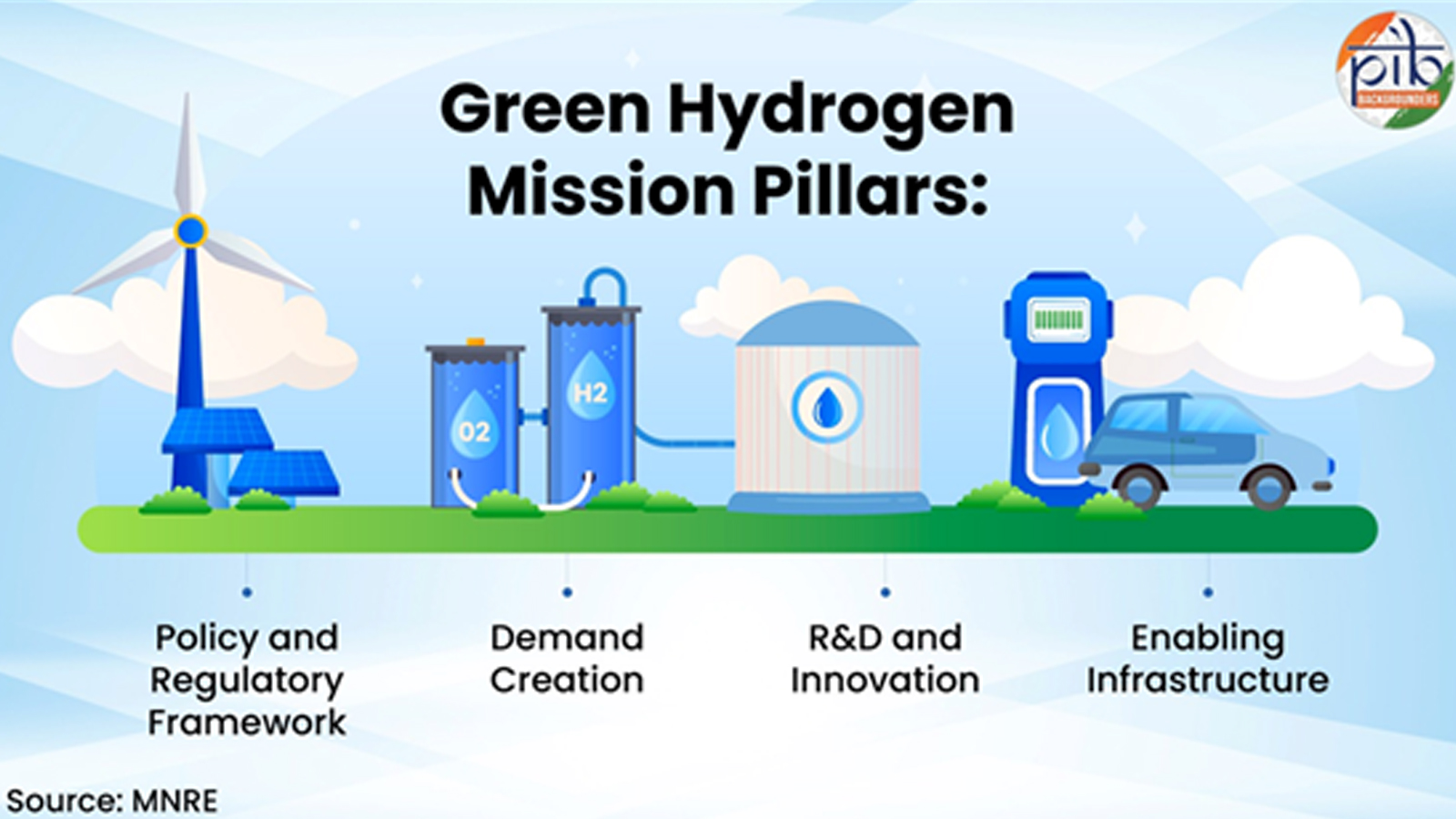
Behind this transformation lies a strong foundation of policy and planning. With an investment potential of ₹8 lakh crore and an expected creation of 6 lakh jobs, the National Green Hydrogen Mission is built around four key pillars: demand creation, innovation, infrastructure, and regulation. Through the Strategic Interventions for Green Hydrogen Transition (SIGHT) program, financial incentives worth ₹17,490 crore have been announced to promote local manufacturing of electrolysers and production of hydrogen. Simultaneously, the Green Hydrogen Certification Scheme of India (GHCI) ensures that every molecule of hydrogen labelled “green” meets strict emission standards: not more than 2 kg of CO₂ equivalent for every 1 kg of hydrogen produced. This certification framework, managed by the Bureau of Energy Efficiency, builds trust and transparency across industries and global markets.
What sets India’s approach apart is the balance between domestic progress and international collaboration. From partnerships with Germany’s H2Global Foundation for export frameworks to joint hydrogen technology projects with the European Union, the UK, and Singapore, India is placing itself firmly on the global hydrogen map. The Strategic Hydrogen Innovation Partnership (SHIP) is encouraging public-private research through a ₹400 crore R&D fund, supporting 23 advanced projects and start-ups in areas like hydrogen storage, safety systems, and industrial applications. This growing ecosystem is expected to unlock new business models, reduce production costs, and open the door for India to become a green hydrogen exporter.
The benefits of this mission extend far beyond numbers. Green hydrogen will help reduce India’s fossil fuel imports by over ₹1 lakh crore, cut 50 million tonnes of greenhouse gas emissions annually, and strengthen the country’s energy security. It’s not just an environmental effort; it’s an economic revolution that links sustainability with self-reliance. With a focus on skilling over 5,600 trainees in hydrogen technologies and developing ports as energy hubs, India is ensuring that its clean energy future is built by its own people, using its own innovations.
In essence, the National Green Hydrogen Mission isn’t just about replacing one fuel with another. It represents India’s larger story, a story of transformation, vision, and leadership. From dependence on imported fuels to exporting clean energy solutions, India’s journey toward a green hydrogen future stands as a model for the world, one that promises clean air, strong industries, and a truly sustainable tomorrow.