









India on Tuesday underscored the urgent need to preserve strategic stability and prevent a renewed arms race, cautioning that global security frameworks are under increasing strain amid mounting geopolitical uncertainties.
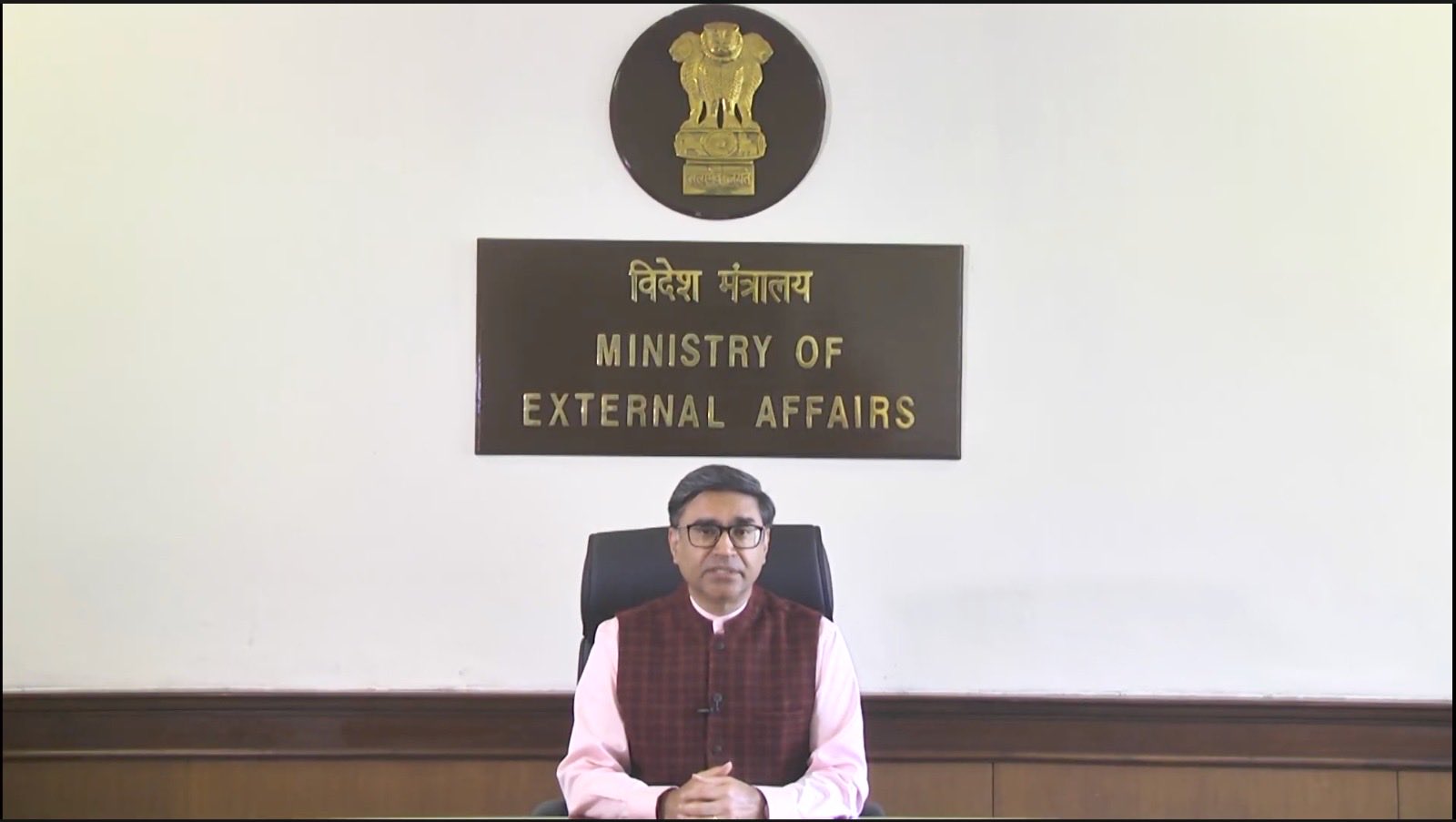
Addressing the 2026 High-Level Segment of the Conference on Disarmament in Geneva, Foreign Secretary Vikram Misri said the recent expiration of the New Strategic Arms Reduction Treaty (New START) represents a setback for global arms control efforts.
“The recent expiration of the New START poses a significant setback for global arms control. Preserving strategic stability and preventing an arms race remain vital, more than ever, for global security,” he said.
The Foreign Secretary noted that the high-level meeting was being held against the backdrop of a “profoundly uncertain geopolitical and security environment,” marked by rising military expenditure, stressed arms control arrangements and rapid technological advances with military applications.
Reiterating India’s nuclear doctrine, Misri said India, as a responsible nuclear weapon state, remains committed to maintaining a credible minimum deterrent and adheres to a policy of “no-first use” and non-use against non-nuclear weapon states.
He affirmed India’s commitment to achieving universal, non-discriminatory and verifiable nuclear disarmament through a step-by-step multilateral framework. He also expressed support for negotiations on a Fissile Material Cut-off Treaty (FMCT) based on the established mandate within the Conference on Disarmament.
On emerging technologies, the Foreign Secretary said advances in science and technology are reshaping military effectiveness while introducing new vulnerabilities and competition. India has called for a UN system-wide assessment of the impact of such developments on international security, he added.
Referring to artificial intelligence, Misri said India is committed to its responsible use in the military domain. “Human judgement and oversight in the use of AI in the military domain is essential to mitigate risks and ensure compliance with international humanitarian law,” he stated.
He added that India has developed a domestic framework for evaluating trustworthy AI in defence, centred on principles such as reliability, safety and transparency. He clarified that decisions regarding nuclear weapons would remain under human control.
The Foreign Secretary also highlighted the recently concluded India AI Impact Summit 2026 in New Delhi, which adopted the New Delhi Declaration on AI Impact and saw participation from more than 100 countries. The summit focused on democratising access to AI and leveraging it for development, particularly for the Global South.
On outer space security, Misri stressed that outer space should remain a domain of cooperation rather than conflict, reiterating India’s support for negotiating a legally binding instrument to prevent an arms race in outer space.
He also referred to India’s hosting of a conference marking the 50th anniversary of the Biological Weapons Convention in December 2025, along with capacity-building initiatives undertaken in partnership with the UN Office for Disarmament Affairs.
“India continues to highlight the need for constructive dialogue and engagement. We call on all states to demonstrate the required political will, taking into account the collective security interests of all states,” he said.
-ANI