







India’s push towards self-reliant and sustainable energy received a major boost with the progress of the Prototype Fast Breeder Reactor (PFBR), Union Minister Dr. Jitendra Singh said on Friday, highlighting it as a key milestone in the country’s long-term energy strategy.
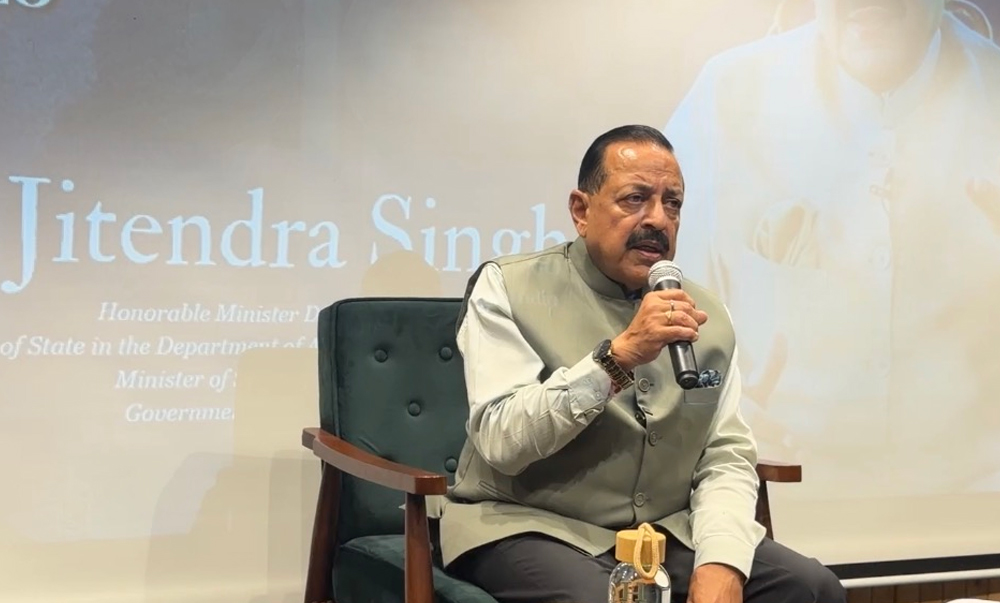
Speaking at VAKTAVYA 2026 hosted by Hindu College, the Minister underscored the significance of the indigenously developed reactor, noting that it uses plutonium fuel and liquid sodium coolant to generate higher energy output with lower input. He said the PFBR would play a crucial role in advancing India’s transition to thorium-based nuclear energy, leveraging the country’s vast thorium reserves.
He described the development as a major step towards achieving clean energy goals and strengthening India’s energy independence.
AI to Shape Governance and Everyday Life
Addressing the growing role of technology, Singh said Artificial Intelligence (AI) is set to become integral to governance and daily life. He emphasised that AI should be used as an enabler to enhance research, analysis, and decision-making, while maintaining a balance with human intelligence.
He advocated a “hybrid model” where technology complements, rather than replaces, human capabilities.
Startup Growth Expanding Beyond Metros
Highlighting India’s rapidly expanding startup ecosystem, Singh noted that the country now has over two lakh startups, placing it among the world’s leading innovation hubs. Significantly, nearly half of these startups are emerging from tier-2 and tier-3 cities such as Sonipat, Panipat, and Surat.
This trend, he said, reflects the democratisation of innovation and the spread of entrepreneurial opportunities beyond major metropolitan centres. He also pointed to the growing participation of women in the startup ecosystem.
Education Reforms Driving Flexibility
The Minister credited the National Education Policy with transforming the education landscape by allowing students greater flexibility in choosing and switching academic streams. He said the policy enables interdisciplinary learning, helping students align their education with their interests and career goals.
Bridging Talent and Opportunity
Singh also highlighted key government initiatives aimed at fostering innovation and talent. He spoke about the “VAIBHAV” programme, which connects the Indian scientific diaspora with domestic institutions, and the “Pratibha Setu” portal, which links UPSC aspirants with potential employers.
These initiatives, he said, are helping build a more inclusive and opportunity-driven ecosystem.
Call for Mindset Shift
Urging students to adapt to a rapidly changing world, the Minister emphasised the need to move beyond conventional career paths and embrace new opportunities. He stressed that growth in today’s interconnected environment cannot happen in silos.
Concluding his address, Singh said the current era offers unprecedented opportunities driven by technology, policy reforms, and access to information, and encouraged young people to actively contribute to India’s development journey.