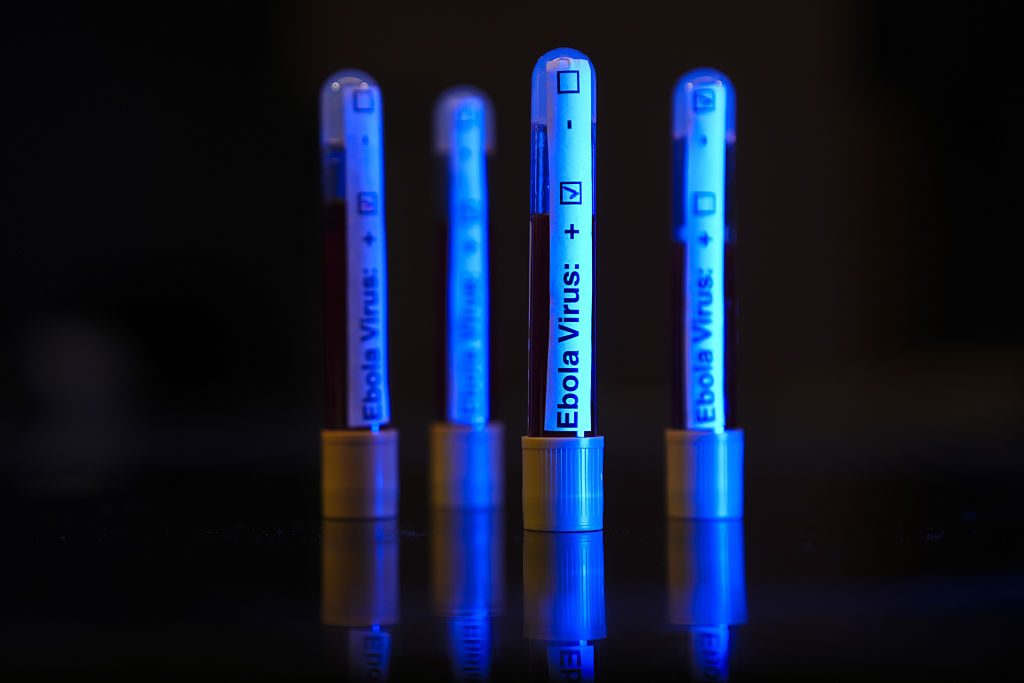
The race to produce a rapid antigen test to diagnose the rare Bundibugyo Ebola virus has closed in on five possible manufacturers that could begin field trials in eastern Congo within weeks, a global alliance for diagnostics leading the effort told Reuters.
A rapid test would let health workers get results on the spot, which would help them identify and isolate cases and better contain the ongoing outbreak that has killed more than 400 people across three Congolese provinces.
There is no rapid test currently approved for the Bundibugyo virus, and officials often have to wait days for laboratory test results.
The five potential test manufacturers – selected from 21 candidates – include two in West Africa, one in the U.S. and two in South Korea, according to FIND, the Geneva-based nonprofit that works on developing diagnostics.
In previous Ebola outbreaks, rapid tests have only been used to test dead bodies. But Kavi Ramjeet, head of business development at FIND, said the goal is to develop rapid tests that could be used on blood samples of live patients.
Ramjeet said the first tests could reach the field in mid-July, and that manufacturers had been selected based on criteria that included the ability to quickly roll out thousands of tests. The timing for the rollout would depend on progress getting approval, which was too early to define, he said.
CURRENT TESTING CAPACITY CONSTRAINED
The outbreak, declared on May 15, has so far infected 1,406 people and killed 438 across the eastern provinces of Ituri, North Kivu and South Kivu, according to government data released on Wednesday.
Sources have told Reuters that officials are also tracing possible exposures in two more provinces.
Responders are grappling with an under-prepared health system strained by sweeping foreign aid cuts and a population scarred by decades of war and deeply distrustful of officials and outsiders.
There are now 10 laboratories able to test for Bundibugyo and three types of test being used. However, a lack of infrastructure, including reliable power and paved roads, as well as issues with insecurity, add to the challenge of getting timely results from lab-based tests.
Antigen rapid diagnostic tests “have the potential to dramatically accelerate case identification and isolation decisions – deployable at a cost, scale and speed that molecular testing, however decentralised, cannot match,” the International Pandemic Preparedness Secretariat (IPPS), a global alliance that aims to improve the response to pandemics, said in an update published this week.
FIND is also hoping to identify manufacturers that can provide molecular tests in cartridges that are accessible to laboratory workers with limited training and can be more easily deployed closer to the point of care.
(Reuters)