01/08/24 | 4:17 pm

Print

Rain, debris, leeches: Wayanad landslide survivors recall ‘night of horrors’

Whenever it rains very heavily in the hills of Wayanad, many people stay awake, recalling a 2019 landslide that killed about 20 people.

Last Monday too, housewife M Fathima said she and her extended family in Mundakkai village stayed awake as incessant rain poured down during the day and into the night.

“When the first landslide hit around 1 a.m., we were all awake,” said Fathima, 52. “Everyone in the room was crying. It felt like death was imminent.” At least one other landslide followed.

The family of about 20 people moved out early on Tuesday with other villagers who survived the two landslides, Fathima said. It was night, and houses were scattered so they were unaware that scores had died in the area.

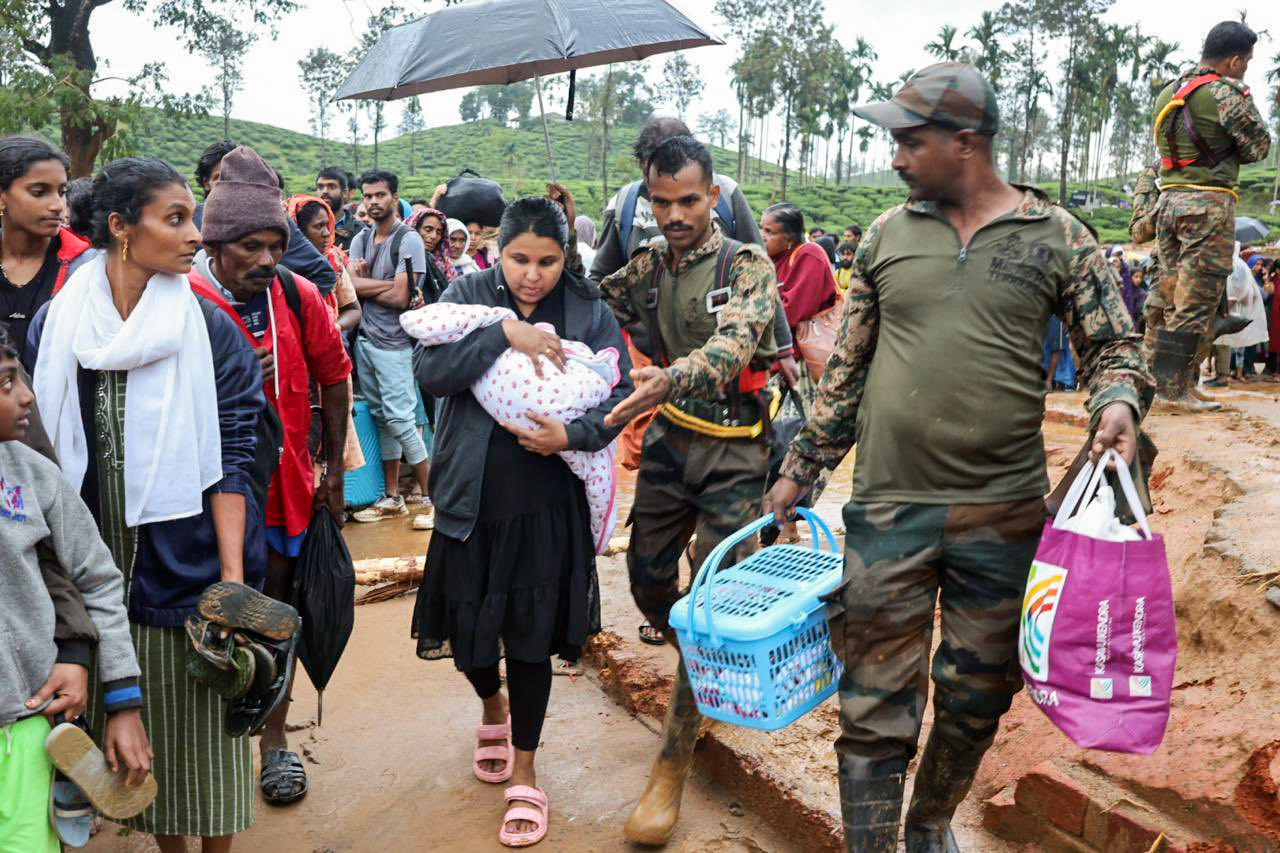
Nearly 100 of the villagers, including children and pregnant women, trekked for miles through the devastation of debris, wet soil, large rocks and uneven terrain downhill, Fathima said.

Rescuers reached them soon and shifted them to a relief camp in the town of Meppadi, but Fathima remains distressed. “We don’t know what is left of our houses once we go back,” she told Reuters from the camp.

The landslides on Tuesday that hit Wayanad district in Kerala state, a popular tourist destination, killed more than 170 people and left hundreds homeless, with more than 8,000 people sheltered in the safety of camps.

Most victims died in their sleep, as torrents of mud, boulders, water and trees swept through tea and cardamom estates and plantation villages, burying people or washing them away.

CAN’T AFFORD ANOTHER HOUSE

Authorities and some experts have blamed the disaster on unexpected very heavy rain caused by the warming of the Arabian Sea. Rescue has been slowed by incessant rain, with the army racing to build a temporary bridge across a swollen river to reach Mundakkai, the most affected area in the hills.

“It was truly a night of horrors,” said K. H. Abbas, 46, a labourer who fled his house after the first landslide with seven family members including a four-month-old baby. “We spent the night by a small forest with rain, leeches and what not.”

Abbas said he found out that his house has not been damaged but is afraid to return.

“I don’t feel confident enough to go back, it would be a nightmare to stay there again,” he said. “Then again, we can’t afford another house either.”

Aliyar Kutty, 59, who runs a small business, was not as fortunate although he escaped with his life while two neighbours stayed back and are dead.

“Everything was swept away by the rains,” Kutty said. “We have to rebuild everything from scratch. We had only taken some important documents of my daughter and some spare clothes. Everything else has been lost.”

Muzammil Haque, a migrant worker from the distant northeastern state of Assam who is employed at a local tea estate, faces additional problems as he doesn’t know the local language, Malayalam.

“It has been very distressing…I have never seen anything like this before,” he said. “Big rocks were breaking, trees uprooted, and homes, shops, everything lay destroyed. There were many dead bodies all around.”

“We do not know where to go or what to do, nor do we understand the local language,” he said. “Food and money are a problem because we are daily-wage workers.”

(Reuters)

Print

Rain, debris, leeches: Wayanad landslide survivors recall ‘night of horrors’

Whenever it rains very heavily in the hills of Wayanad, many people stay awake, recalling a 2019 landslide that killed about 20 people.

Last Monday too, housewife M Fathima said she and her extended family in Mundakkai village stayed awake as incessant rain poured down during the day and into the night.

“When the first landslide hit around 1 a.m., we were all awake,” said Fathima, 52. “Everyone in the room was crying. It felt like death was imminent.” At least one other landslide followed.

The family of about 20 people moved out early on Tuesday with other villagers who survived the two landslides, Fathima said. It was night, and houses were scattered so they were unaware that scores had died in the area.

Nearly 100 of the villagers, including children and pregnant women, trekked for miles through the devastation of debris, wet soil, large rocks and uneven terrain downhill, Fathima said.

Rescuers reached them soon and shifted them to a relief camp in the town of Meppadi, but Fathima remains distressed. “We don’t know what is left of our houses once we go back,” she told Reuters from the camp.

The landslides on Tuesday that hit Wayanad district in Kerala state, a popular tourist destination, killed more than 170 people and left hundreds homeless, with more than 8,000 people sheltered in the safety of camps.

Most victims died in their sleep, as torrents of mud, boulders, water and trees swept through tea and cardamom estates and plantation villages, burying people or washing them away.

CAN’T AFFORD ANOTHER HOUSE

Authorities and some experts have blamed the disaster on unexpected very heavy rain caused by the warming of the Arabian Sea. Rescue has been slowed by incessant rain, with the army racing to build a temporary bridge across a swollen river to reach Mundakkai, the most affected area in the hills.

“It was truly a night of horrors,” said K. H. Abbas, 46, a labourer who fled his house after the first landslide with seven family members including a four-month-old baby. “We spent the night by a small forest with rain, leeches and what not.”

Abbas said he found out that his house has not been damaged but is afraid to return.

“I don’t feel confident enough to go back, it would be a nightmare to stay there again,” he said. “Then again, we can’t afford another house either.”

Aliyar Kutty, 59, who runs a small business, was not as fortunate although he escaped with his life while two neighbours stayed back and are dead.

“Everything was swept away by the rains,” Kutty said. “We have to rebuild everything from scratch. We had only taken some important documents of my daughter and some spare clothes. Everything else has been lost.”

Muzammil Haque, a migrant worker from the distant northeastern state of Assam who is employed at a local tea estate, faces additional problems as he doesn’t know the local language, Malayalam.

“It has been very distressing…I have never seen anything like this before,” he said. “Big rocks were breaking, trees uprooted, and homes, shops, everything lay destroyed. There were many dead bodies all around.”

“We do not know where to go or what to do, nor do we understand the local language,” he said. “Food and money are a problem because we are daily-wage workers.”

(Reuters)

RELATED ARTICLES

18 hours ago | Cold wave in Kashmir

Cold wave continues in Kashmir; day temperature drops to 7

Due to nightlong cloud cover, the minimum temperature improved on Sunday and rose above the freezing point throughout Kashmir Valley, while the maximum temperature dropped further. The Meteorological (MeT) department officials said that due to night...

12/12/25 | 3:32 pm

Environment Minister reviews NCSCM’s coastal research, calls for stronger science–community integration

Union Environment Minister Bhupender Yadav on Friday chaired the third General Body meeting of the National Centre for Sustainable Coastal Management (NCSCM) in New Delhi, where he reviewed the institute’s scientific work and set directions for its...

12/12/25 | 12:19 pm | AQI

Biting cold, air pollution, falling water levels add to winter woes in Kashmir

Biting cold with no prospect of major rain or snowfall till the end of the month continued in Jammu and Kashmir on Friday, as minimum temperatures remained several notches below the freezing point across the Valley. Srinagar recorded a minimum of mi...