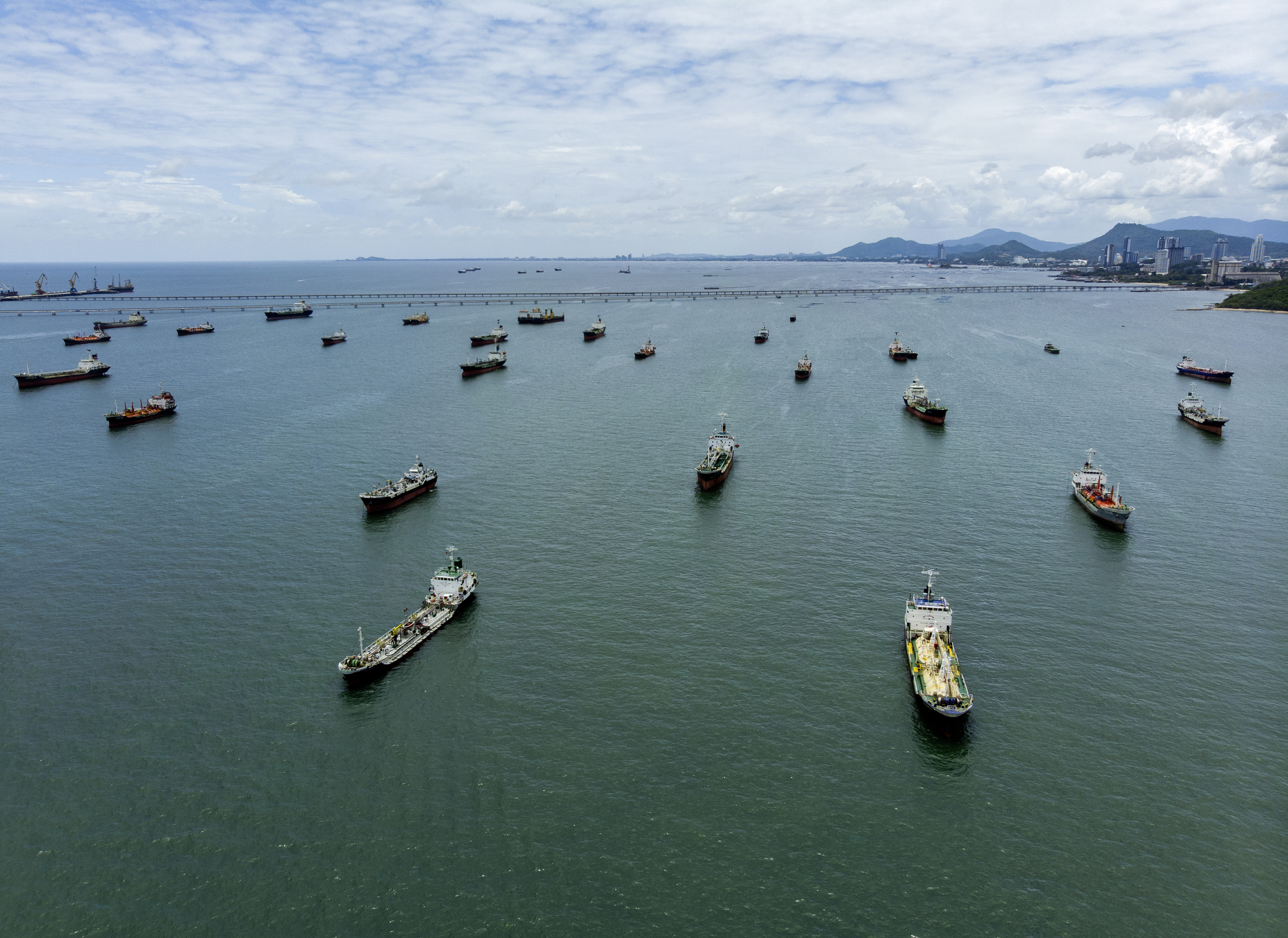
A group of ships made an unsuccessful attempt to exit the Gulf on Friday evening, ship tracking data showed, as shipping companies cautiously welcomed Iran’s announcement that the Strait of Hormuz is open.
Iranian officials said on Friday that the key waterway was open to all commercial traffic during a 10-day ceasefire in Lebanon, triggering a drop in oil and other commodity prices and lifting stock markets.
Around 20 vessels began sailing towards the Strait of Hormuz on Friday evening but soon halted, with some turning back, MarineTraffic data showed. It was the largest group of vessels to attempt the transit since Iran effectively closed the strait in response to U.S.-Israeli strikes that began on February 28.
It was not immediately clear why the ships stopped. The group included three container ships operated by French shipping group CMA CGM, which declined to comment.
As of 2100 GMT, most vessels in the group had turned back, but tracking data showed several new ships, mainly tankers, heading towards the strait.
Shipping companies cautiously welcomed Iran’s announcement but said they needed further clarifications before resuming transits, particularly around security risks such as the presence of sea mines.
All commercial ships, including U.S.-flagged vessels, can pass through the strait, but transit plans must be coordinated with Iran’s Islamic Revolutionary Guard Corps, a senior Iranian official told Reuters.
Ships would be confined to lanes deemed safe by Iran, while military vessels would remain barred, the official said.
“We are currently verifying the recent announcement related to the reopening of the Strait of Hormuz, in terms of its compliance with freedom of navigation for all merchant vessels and secure passage,” said Arsenio Dominguez, secretary-general of the U.N.’s shipping agency, the International Maritime Organization.
UNCERTAINTY PERSISTS
Norway’s Shipowners’ Association said key issues remained unresolved, including the presence of mines, Iranian conditions and how the measures would be implemented in practice.
“If this represents a step towards an opening, it is a welcome development,” said CEO Knut Arild Hareide.
Shipping group BIMCO cautioned members against returning too quickly, citing uncertainty over mine threats. A U.S. Navy advisory seen by Reuters also warned about the danger of mines.
German shipping firm Hapag-Lloyd, however, said it was working to resume transit “as soon as possible” but noted that several outstanding questions remained.
Its Danish peer Maersk said it was closely monitoring the situation. Norwegian oil tanker group Frontline declined to comment.
Matt Wright, lead freight analyst at data intelligence firm Kpler, also said it remained uncertain which sea lanes the ships could take to exit the Gulf.
A recent route imposed by Tehran through its territorial waters near Larak Island would present navigational challenges even if vessels were not required to pay a toll and would raise questions regarding compliance and insurance, he added.
(Reuters)